Showing posts with label blues. Show all posts

Sunday, 28 November 2021

Hoodoo Man Blues - Junior Wells


Provenance: I'm still chugging through my Toronto thrift store purchases.

Review: As a long-time blues aficionado this album should be catnip, putting the spotlight on estimable harmonica-jockey Junior Wells, and featuring my close relative Buddy Guy as a sideman.

I have had more than one friend complain that blues music doesn't feature enough variety to hold the attention, and I can grok that. Formally, most blues music (with notable exceptions) follows a few set templates in terms of chord progressions, scales and even subject matter. How many times have you heard trains a-rollin' or a woman stepping out on her man?

That being the case, I think one of the keys to creating memorable blues music is the way you play the damn thing. Muddy Waters imbued his with an irresistibly sly boastfulness, Freddie King aimed for the bleachers with buzzsaw guitar soloing and Howlin' Wolf sounded like a one-man demolition team; seriously, his opening cry to 'Smokestack Lightning' sounds like a cave-in at a coal mine. Like any pursuit with a set of rules to be observed, the joy can be found in the manner with which the game is played, or subverted. 

So now we come to Hoodoo Man Blues, the first solo album credited to Junior Wells. Already a veteran sideman, having replaced Little Walter in Muddy Waters' band in the 1950s, Wells assembled a crack band in an attempt to recreate the hot sound of an electric Chicago blues band. In doing so, he birthed a masterpiece, echoes of which could be heard in popular music for decades to come.

Firstly, it must be said that Wells is not the greatest vocalist around; he's probably not even the best singer in the band (that accolade, aka 'The Michael Anthony Award', going to Buddy Guy); but he was no slouch on the blues harp. It's a testament to the supreme level of musicianship that the whole confection was recorded in two days, and that takes into account amplifier issues that led Guy to playing some of his guitar parts through a Leslie organ speaker. Can you imagine that happening today? Ain't it wild that some bands, not too further down the line, would spend a week in the studio trying to capture a decent snare sound only to release a load of old pony?

As a consequence, Hoodoo Man Blues has an electrifying live sound to it. Stylistically it treads the fine line between sophisticated and tough (like the best Chicago blues does), Guy's lacework guitar sparking against Wells' rough-house harmonica. Which, by the way, isn't to say that Guy couldn't land a few stingers himself; a couple of his licks in 'Hoodoo Man Blues' and 'We're Ready' are as sharp and clean as a wet shave from a Turkish barber. I think it needs to be emphasised just how good the playing is here; pocket drumming, locked-in bass and guitar work that possesses the neatness of prestidigitation. 

So how influential was this joint? The ripples can be heard in acts like The Paul Butterfield Blues Band, Canned Heat, Stevie Ray Vaughan, Rory Gallagher, early J Geils Band and, especially to my set of lugholes, Dr Feelgood. The combination of lean orchestration, musical adroitness and aggression would solidify (and perhaps, falter) in the blues-rock sound of the late 1960s into the 1970s; a good example is Ten Years After's supersonic take-off of the Wells' band's version of 'Good Morning Schoolgirl', which booms with a proto-metal heaviness but also contains the seeds of self-indulgence that would lead to dead-ends and sclerosis. None of that is evident on Hoodoo Man Blues - a smoky, punchy, vital testament.

Wednesday, 24 March 2021

The Essential Collection - Muddy Waters


Provenance: A question to those of you who play musical instruments - when you first started to squeeze out some sounds, what were you attempting to play?

For me, on a Hohner Rockwood Pro RP250 (one of the heaviest guitars I've ever played, incidentally), it was blues music.

Prior to picking up the guitar I had no real regard for blues music, albeit the majority of bands I was listening to at the time played material heavily derivative of the genre. I had - have - no natural musical ability, as friends, bandmates and neighbours can attest to; furthermore, there is a fine balancing act to be performed when learning an instrument relatively late on, inasmuch as the frustrations need to be tempered with the green shoots of progress.

For me, that proved to be blues music - as my guitar instructor showed me, with just three chords and knowledge of the minor pentatonic scale, a beginner can sound halfway accomplished. It worked, and twenty years down the line I still enjoy the simple pleasures of improvising over the three-chord trick, especially as working within such strictures makes you, the player, focus on how you're playing, every bit as much as what you're playing.

So, as a newly-minted bluesman, the future king of the Stour Delta, I needed to do some homework. Boy, did I. I became that most insufferable of individuals, a teenage blues buff. Knowing, at the very least, who Muddy Waters, Howlin' Wolf and BB King were became something of a litmus test (though BB wasn't really my cup of tea, you see - a little too sleek and urbane for this adolescent purist!). I wouldn't even worry my fellow young millennials about the likes of Pinetop Perkins, Mississippi John Hurt, Blind Willie McTell and the rest, however - from my lofty perch, I simply couldn't imagine the hoi polloi were able to tear themselves away from the pabulum of Mogwai, Creed and Linkin Park and join me on the blues highway. Think of the worst kind of black metal gatekeeper, multiply by about six, and you've got me, the 17 year-old blues fan.

Anyway, I obviously had to start somewhere, and I think this followed hot on the heels of Stevie Ray Vaughan's Texas Flood (and there was me chaffing BB King!) as a formative blues purchase.

Review: Well, I suppose the first observation that needs to be made is that this album contains a good number of tracks written by the masterful Willie Dixon, performed by the legendary Muddy Waters, and backed by what is considered to be the greatest Chicago blues backing band ever assembled; Jimmy Rogers on guitar, Little Walter blowing harp, Elga Edmonds on drums and Otis Spann tinkling the ivories. That is, Little Walter of 'Juke' and 'Blues With a Feeling' fame, Jimmy Rogers, who popularised 'That's All Right' and 'Walkin' By Myself', and Otis Spann, who worked with Fleetwood Mac, Eric Clapton, Chuck Berry and John Lee Hooker, to name a few. None too shabby.

But here I am getting ahead of myself - I am already assuming you know these folks, and can nod along with these achievements. For the uninitiated, I'll say this - these guys were giants, backing a colossus. 

I almost feel like ending it here and imploring you - ordering you - to hunt down Muddy tearing through tracks like 'I Got My Mojo Working', 'Baby, Please Don't Go', 'I'm Your Hoochie Coochie Man', 'I Just Want to Make Love to You' and 'Mannish Boy'. It's the kind of canned heat we should be blasting off to Mars and beyond, because if any space aliens found this shit they'd soon a) realise that we're not an entire waste of galactic space and b) give pause about invading us. It'd a pre-emptive strike, folks, and by hittin' em with the low smoke (to borrow a phrase from Joe Frazier) we might just survive unscathed. 

For those of you unaware of the Muddy Waters experience, the man is one of those people - like Howlin' Wolf - who explodes out of the speakers, his singing an extension of his personality. And what a personality! He's already middle-aged by the time he's cutting numbers and heads with Chess Records, but that's entirely to his advantage - the swagger, the virility, the braggadocio is shot through with an effortless authority. His rough, soulful voice would be a great weapon regardless, but for Waters the blues wasn't about keening or moaning; no, for him it was a vehicle for boasting, for tall tales, for hairy metaphors, sawdust on the floor and guaranteed good times. Even when Waters is ostensibly playing the puppy-eyed wooer in 'I Want To Be Loved', it still sounds as if he's already got the hotel room booked and champagne on ice.

However, the rather bargain hodgepodge of The Essential Collection doesn't just focus on what is considered by critics to be his zenith; it also contains tracks from later albums, so we get two from his 'lions-in-winter' album Can't Get No Grindin'; and 'Mannish Boy' from his psychedelic effort Electric Mud, a collection that revels in a one-and-a-half star review on Allmusic but powerful enough a testament for Chuck D of Public Enemy to reassemble some of the session players to re-record the big numbers for a documentary (one I would love to see again, but cannot find online). There are some curios here, too, such as a solo performance of 'Rollin' Stone' and a 'She Moves Me' featuring label boss Leonard Chess accompanying Waters on bass drum with an almost majestic level of incompetence.

What more can I say? It's a 'best of', from one of the bests, whose electric blues was simply tougher, more raucous and, in the toss-up, more exciting than almost anything else going. I don't need to sign off with a 'buy this album' plea, just find any collection of his Chess recordings as a starting point and have yourself a ball.

Sunday, 17 January 2021

Led Zeppelin IV - Led Zeppelin

Provenance: My mum owned this on vinyl.

How much of your taste in music is down to your parents? For me, it's a huge factor. I never saw the need to particularly rebel, because by and large my parents knew their onions.

Off the top of my head, in terms of albums my parents own that are mirrored in my collection, there's this and Led Zeppelin III, Tapestry by Carole King, a couple of Alice Cooper albums, ditto Frank Zappa, An Electric Storm by White Noise, a bit of Hawkwind. Not bad.

I didn't really take to Emerson, Lake and Palmer nor Rod Stewart, but although I haven't (yet) purchased Gryphon's Raindance, evidently I'd heard enough to make me curious. It was all very listenable, even if some of my parents' latter day choices (Mika's Life In Cartoon Motion, anyone?) might take a bit of digesting.

However, Led Zeppelin IV (or Zoso, if you're so inclined) was not only instantly gettable, it would also prove to be a watershed moment; I recall walking through the door one day after school, and evidently my mum had cued this bad boy up a moment beforehand. What I was to hear would essentially make me go, "yep, playing guitar, that's what I want to do", setting me on a course of joy and lifelong discovery. 

Review: Per the above paragraph; I heard Robert Plant's wailing, sure, but I felt the guitar in 'Black Dog'. It really was a few seconds, that's all it took, to convert me to a guitar player (albeit, at that time, sans guitar). I'd grown up listening to guitar bands like the Rolling Stones and Cream, and although I had liked what I'd heard, this was something different. Listen to Jimmy Page's opening guitar riff in 'Black Dog' again and you can hear a swagger, an arrogance almost, a sound that didn't just groove or roll, but strutted. Underpinned by John Bonham's thunderous drumming, there was only one word that came to mind: power.

Amazingly, given the time and distance between then and now, little has diminished my original teenaged assessment. Since that time I've become better acquainted with Led Zeppelin's overall body of music, which contains its share of missteps, and I must admit my opinions have been occluded by the impression given that they weren't a particularly likeable bunch; I have also wearied of the kind of pub bore who will insist Led Zeppelin are superb, and that everything else is a pile of horseshit created by computers or young people or whatever. Oh yes, and they were massive plagiarists.

But Led Zeppelin IV? A work of rare genius.

What I love about this album is that it jumps from the very 'eavy 'Black Dog' to the nitro-glycerine boogie of 'Rock And Roll' to the pastoral Tolkien-folk of 'Battle Of Evermore' - and then an amalgamation of all these qualities on 'Stairway To Heaven' - yet it still sounds conceptually tight. And that's just side one. An album that covers so many bases could (should?) be a mess, but it hangs together perfectly. The pacing is exquisite, a rollercoaster in the truest sense inasmuch as each track takes the listener in a different direction, whether it's mood, atmosphere, tempo, and yet each oxbow and undulation remains part of the same overall journey.

In my callow youth my favourites were 'Black Dog', 'Rock And Roll', 'Stairway To Heaven' and 'Misty Mountain Hop', all the muscle and blood tracks basically; now, although I cannot say any of the aforementioned have gone stale (yes, even 'Stairway...'), it's the more ruminative moments such as 'Battle Of Evermore' and the swooning 'Going To California' that have wormed their way deepest into my affections. Special mention must go to Sandy Denny's imperious singing on 'Battle...', a performance that alone impelled me to pay closer attention to Fairport Convention. I have, however, omitted one very important track. It ain't 'Four Sticks' (NB: a good song, but it comes across a little fidgety and half-formed for my tastes).

'When The Levee Breaks' may have been an old Kansas Joe McCoy and Memphis Minnie blues from 1929, but even now the version on IV induces a sense of awe and sublimity. As brilliantly wrought as the rest of the album is, there's sorcery at work here, friends. By a variety of measures there is heavier music out there, but little comes as close to being as weighty or portentous as 'When The Levee Breaks' is. Into the admixture is the haunting, otherworldly harmonica, Page's droning, modal guitar and Plant's anguished vocal; but the true star is Bonham's drumming. Eschewing flash or intricacy, Bonham instead booms away on a beat that sounds like depth charges being detonated. The overall effect is that 'When The Levee Breaks', a song about the Great Mississippi Flood of 1927, comes across every bit as doomy and apocalyptic as its subject matter. Eat that, Randy Newman.

There you have it - simply, in terms of my own personal relationship with popular music, one of the most important landmarks. There's a straight line between IV and me picking up a guitar, which in turn took me down avenues of exploration around blues music, heavy metal and all points in-between. An immense album, and one that has never ceased to be a pleasure. Perhaps those saloon bar stalwarts had a point, eh?

Sunday, 1 November 2020

Townes Van Zandt - Townes Van Zandt


Provenance: This is slightly odd, insofar as a half-remembered post on a music message board percolated away for more than a decade before breaking through into my consciousness.

Back in 2018 my partner was away for a few days, and I was idly lounging around on my bed trying to think of something new to tickle the tympanic membrane with. For some reason, the name 'Townes Van Zandt' floated to the surface, and as we own a couple of those accursed Amazon Echoes, I asked it to play me some of his music.

The only reason I even knew of TVZ was due to a single poster on the forum, who during the mid-2000s would respond to every 'best songwriter', 'most underrated songwriter', 'most overlooked artist', etc., thread with the same answer: Townes Van Zandt. Going purely by a few detail-light posts sandwiched between threads on John Corabi and Bang Tango, I has assumed he was some sub-Neil Young Laurel Canyon folkster.

Ten minutes after commanding my personal surveillance device, I felt like punching myself. I'd heard what sounded like the strangest, most pungent, deep country music I'd ever encountered - the mighty, cinematic double-cross ballad 'Pancho and Lefty', the harrowing 'Waitin' Around To Die' and one of the most singular compositions ever, the ominous, apocalyptic two-chord blues 'Lungs'. I bought this album, which features the latter two, and The Late Great Townes Van Zandt, almost immediately.

Review: I like discussions about great songwriters - in fact, just last night my father-in-law and I were marvelling together at the prodigious output (and success) of the Brill Building stable of the 1960s and 1970s. A few nights previous, I was advancing to a group of friends that Ray Davies of the Kinks has to be considered in the same bracket as Lennon and McCartney, at least where British performers are concerned. There's no real answer, obviously, because what are you looking for in a song? Beautiful music? Storytelling? Mood creation? Nonetheless, if I were to put together a Mount Rushmore of American songwriters, Townes Van Zandt would be my first nomination.

Here, on his third album, is the most consistent and cohesive collection that TVZ put out in his career. For the most part it's three- or four-chord country music, with acoustic guitar to the fore, songs driven by Van Zandt's deceptively complex fingerpicking and swooning, keening Texan drawl. Although it's absolutely the kind of album to inspire me to dribble out inanities like 'timeless', there are signs of an era; hand drums on 'For the Sake of the Song' and a harpsichord to back that and subsequent track, the pure romance of 'Columbine', mark it as a product of the late 1960s.

These two are perfectly good compositions and would be standouts on any other singer-songwriter collection, but it's on 'Waitin' Around To Die' where things get interesting; an itchy, nervy drum tattoo and tubercular harmonica underscore a tale of almost grotesque woe, taking in abandonment, infidelity, criminality and drug dependence. Reflecting some of the bummer endings creeping into popular cinema at the time, this doozy ends on one of the grimmer twists in country. 

What's abundantly clear is that Townes Van Zandt is a testimony of an artist fully in command of his talent and his craft. In any other hands, 'Colorado Girl' would be pedestrian, perhaps even a little goofy. However, TVZ's ability to imbue his simple, homespun poetry with untold depths of feeling make this remarkable. When he steps outside his established metre to deliver the line "I got to kiss these lonesome Texas blues goodbye" it just about breaks your heart. If you're missing somebody in your life right now, perhaps save this one for later. A few tracks later, he's back to making you feel like utter dogshit again on the tender, consolatory 'I'll Be Here in the Morning'.

Betwixt and between moments where he's duffing your into an emotional wreck, something else remarkable happens - the ominous, hallucinatory 'Lungs', apparently written whilst in an illness induced delirium. Crossing the imagery of the Book of Revelations with the haunted Texas blues of Blind Lemon Jefferson, 'Lungs' feels like an entire dread universe has been called into being in the span of two and a half minutes. As mentioned previously, it's a whole two chords, with a needling guitar riff and some gunslinger slide playing added in to spice the recipe, but that doesn't tell half the story. Above it all is TVZ sounding both fearful and mighty, as if he knows the spell he is weaving possesses a rare and unpredictable power. Lightning in a bottle.

In just ten songs, and less than thirty-five minutes, Townes Van Zandt manages to do something peculiar. The palette of sounds Van Zandt works with is not particularly diverse, and nor does he ever demonstrate much vocal range (albeit, the singing is gorgeous). Nonetheless, this album takes in the ache of romance, existential horror, teary-eyed wistfulness and the depths of insanity. Both 'Lungs' and, say, the delicate country waltz of '(Quicksilver Dreams Of) Maria' are indelibly TVZ songs, yet in terms of sensibility couldn't be any further apart. This is one of the many reasons why I feel Townes Van Zandt ranks right up there: it's not just brilliant, it's also substantial, and maybe even important.

Sunday, 29 March 2020

Locked Down - Dr John

Provenance: One hundred percent sure that my brother got me into Dr John, although how and when he did remains a mystery. One moment there was no Dr John in the house and then suddenly a 'best of' CD appeared in my brother's room. Anyway, it was very cool.

Happy to say that my brother and I got to see the late Mac Rebennack together at the Barbican Centre, as part of the 2014 London Jazz Festival in a special performance paying tribute to that other favoured son of New Orleans, Louis Armstrong.

Review: There are loads of Dr John albums out there, and I own about four. Why this one? Well, having been stuck in a rut bumping out easy-rollin' rhythm 'n' blues alongside a slew of guest musicians, some bright spark decided that the good doctor needed a bit of lead in his pencil. Enter Dan Auerbach of the Black Keys as producer to stoke the boiler a bit, yet could also be relied upon to be sympathetic towards his subject. Interestingly, Auerbach encouraged Dr John to step away from the piano and onto a range of rather grungy sounding keyboards, whilst he handled guitar duties. Crucially, every song on Locked Down is an original, co-written by Dr John, Auerbach and the band assembled for the album.

As a consequence, Dr John's final studio album of original material sounds fresh, organic, loose and live. Auerbach also gets the production spot on - dusty like the first Wu Tang long player, reverb turned all the way up to spooky, and there's a supreme indifference as to whether instrumental tracks bleed into each other. The end result can only be summed up as sounding downright mean; this is a platter that sounds like it'd beat your granny up for her pension and kick the dog for a laugh. Rather cleverly, it also harks bark to the grimy, indistinct stew (must - not - write - gumbo) of Gris-Gris, the Nite Tripper's very first outing under his own steam.

Whilst this doesn't contain anything quite as weird or demented as 'I Walk On Guiled Splinters' (one of the more disturbing cuts ever committed to tape), Locked Down is dark, swampy and sinister. Dr John spits some surprisingly downbeat, even paranoid, lyrics to the likes of 'Ice Age' (where he compares the CIA to the KKK - nice) and 'Kingdom of Izzness'. I love these songs, with their janky guitars and slightly queasy timekeeping in some quarters, which manage to sound both ramshackle and powerful at the same time.

This sickly, feverish mood persists throughout until the final cut, 'God's Sure Good', at which point the McCrary Sisters come to the fore. On such a necromantic album, it's almost a relief to hear the affirmative, joyous wallop of traditional black gospel, which the sisters provide with gusto at each chorus. Even here, on what should be the most straightforwardly positive song, the denouement morphs into a wild, abandoned jam. Despite the protestations of affinity towards a nominally Abrahamic God, darker forces always seem closer to hand.

In summation, Locked Down is a superb Dr John album - greasy, ugly and shorn of the tameness that had crept into some of his latter-day output. Credit must go to Dan Auerbach. By shutting the door on pipe-and-slippers guest spots and woodshedding a crack band, he managed to coax a set of performances more fiery and vital than anything had sounded in years. Is this Dr John's best album since Goin' Back to New Orleans? Is this Dr John's best since City Lights? You be the judge. Meanwhile, I'm going to skip back to 'Eleggua', which hitches marble-mouthed Nawlins hokum onto a tumbling woodwind riff and rides it all the way home.

Dr John was a big loss. Like his hero Professor Longhair, you knew it was him within seconds; those trilling triplets on the high keys, that entirely unmusical, strangulated rasp that nonetheless sounded perfect atop the jazzy, funky rhythm and blues that was his trademark. I saw him perform twice, and he was spectacular on both occasions. Now all I can do is cue up 'Iko Iko' and daydream about the time I spent back in the Crescent City ten years ago. That's not a bad consolation prize, though, is it?

Sunday, 22 March 2020

Texas Flood - Stevie Ray Vaughan

Provenance: Back in the mists of time, long before your Facebooks and Tweet-O-Grams, people did things like collect stuff, get drunk, and attempt to master an instrument. Yes, your humble scribe did some of the former (Panini football stickers, matchboxes) and much of the latter (guitar, a bit of mandolin). As for the drinking? I couldn't possibly say! [Insert winking emoji here.]

My parents very kindly paid for a guitar teacher to do things like point out the wiry bits were called strings, and that it would help if I used both hands. Once basics had been raised to a level of competence, he was keen that I learn to improvise - in essence, to hold enough theory in my head that I was able to react and adapt lead playing, in real-time, to musical structures. A good foundation for this is blues music, which uses the minor pentatonic scale extensively (the bedrock for most rock music) and which often relies on familiar chord progressions.

So, how do you engage a teenage classic rock and metal fanatic with the blues? Give him something suitably rocky and pyrotechnic to aspire towards - and thus, the first blues I ever played was Stevie Ray Vaughan's 'Pride and Joy', which appears on today's album, Texas Flood. I loved it, even the tricksy turnarounds and unfamiliar shuffle feel. Plus it proved to be a watershed moment, as I am now a fully-fledged blues fan; my favourite players are people like Mississippi Fred McDowell and especially the merciless Lightnin' Hopkins, but I'll always retain a soft spot for SRV for providing me with the gateway drug.

Review: Stevie Ray Vaughan came to prominence during the 'blues boom' of the 1980s, which saw the emergence of artists like Robert Cray and the resurrection of others like John Lee Hooker, whose star-studded 1989 album The Healer won a Grammy award. So what was SRV's contribution to the genre? One could argue, nothing new. There are parallels to be drawn between Vaughan and the British guitarist Alvin Lee, who was similarly lionised for his hyperkinetic rhythm 'n' blues playing. An argument could be made that Vaughan was an improvement - defter, more accurate, a better songwriter and, crucially, in possession of a genuine grit 'n' diesel Texas drawl, as opposed to the dorky facsimile that Lee (and, in fairness, many others) tried to conjure up. Unlike Lee, Vaughan didn't stray far from the blues either; yes, he made a cameo on a Bowie album, but his own material was locked down, and when he did interpret the music of others, it was to emphasise its bluesiest elements (his take on Jimi Hendrix's 'Little Wing' being a prime example). There was no meandering into psychedelia with Vaughan, which cannot be said for Alvin Lee and his band Ten Years After.

Let's start off with my own personal bone that requires picking with regards to Texas Flood; 'Pride and Joy' and 'I'm Cryin'' are the same freaking song. I get that the first is celebratory and the latter strikes a more consolatory tone, but dude, write some new music. It's a ten track album that doesn't even top forty minutes and yet here are a couple of 'companion pieces', I guess. A bit of a 'fuck you' to the blues buying public, but I must admit a sneaking respect for this approach. It's like writing a song for your girlfriend, and when she dumps you trying to fit the name of the new squeeze into the melody. Writing the same song for when you're both happy and sad about your partner is, upon reflection, quite an alpha move.

Duplication issues aside, this is a quality slice of 1980s rock-influenced blues. The clean production sound works when recording what is a small combo - Vaughan is backed by bass and drum-mongers Double Trouble throughout - as it brings his ultra-precise lead playing to the fore. Remarkably, for such a polished product I was later to learn that the entirety of Texas Flood was recorded in two days and features no overdubs. Give or take some messing around with the levels, what you're hearing is the live band, it's extraordinarily tight. The vocal performances are fantastic too, and it's boggling to try and comprehend how SRV managed to wring such impassioned performances from both hands and larynx without any need to go back and fix anything.

All the hallmarks of Vaughan's playing are there from the get-go, too; heavy vibrato on bent notes, daggerish little single-fret slides and almost percussive use of double stops. The latter is especially evident on 'Love Struck Baby', a twitchy, fidgety shuffle blues that begins more like the commencement of a boxing bout than a blues song. The most comprehensive displays of SRV's guitar trick-bag are to be found on the instrumentals 'Testify' and Stray-Cats-on-amphetamines rockabilly whirlwind 'Rude Mood', although the dizzying 'Mary Had a Little Lamb' runs them close; and that aforementioned deftness comes to the fore on the closer 'Lenny', another instrumental, in this instance an glimmering, iridescent tribute to Vaughan's partner Lenora Bailey (she thought 'Pride and Joy' had been written for another woman, so SRV wrote her a brand new song - wise man).

And yet.

I can't claim to hold too many original opinions on music; I think my takes on most of these albums resonate with the critic pool at large, albeit not as well written. I do adhere to the odd heresy, like my belief that Neil Young's Trans is misunderstood and ZZ Top's Recycler is not devoid of merit, but by and large I'm reasonably vanilla. Thus, here's my lukewarm take on Texas Flood that anyone familiar with SRV has probably seen ambling over the horizon for a while now - it sacrifices soul at the altar of technical ecstasy.

The problem is probably me and my relation to blues music. When I interrogate my own feelings about Stevie Ray Vaughan and the blues I feel a bit queasy, to say the least; am I like the martinet Ewan MacColl, insistent on "authenticity" above all else? Would I have pulled the plug on Dylan? I've been a good boy, I read Elijah Wald's Escaping the Delta and feel clued up enough not to fall into the authenticity trap (I've written about this before now), so why do I have such a problem with Texas Flood? Is it merely because this is tagged as a blues album, and so I'm bringing a whole mess of expectations to the table that really shouldn't be there? How come I can enjoy the 'newgrass' movement begun in the 1970s (which sought to fuse bluegrass to styles such as jazz - and this has just reminded me to go and listen to some David Grisman Quintet) without my appreciation of bluegrass colouring the experience? Perhaps because my knowledge of bluegrass is dwarfed by what I (think I) know about blues music, and is unencumbered by those strange gatekeeper tendencies that can sometimes evolve alongside a burgeoning personal passion.

Sadly, I must conclude that I'm simply too smart to properly appreciate Stevie Ray Vaughan.

Genuinely, though, I really must stop sorting things into boxes and weighing up their merits accordingly. Because taken at face value, Texas Flood is a rollicking good time. It's an album full of good singing, good playing and lots of whizzy guitar licks, and so in the future I'm going to endeavour to meet the album on these terms alone. Even if 'Pride and Joy' and 'I'm Cryin'' are the same freaking song, goddamn.

Sunday, 9 February 2020

Beggars Banquet - The Rolling Stones

Provenance: I received this as a 17th birthday present from two friends, Stef and Amy. Pretty good going for two 16 year-olds who admittedly didn't share my taste in music.

Review: The Rolling Stones have floated around my consciousness ever since I can recall being aware of music, albeit in compilation formats. This was my first Rolling Stones studio album, and it was one of the few CDs that followed me to university. As such, I've listened to it a lot, and it's fair to say that I'm deeply smitten. However, as with many ageing partnerships, one party (me) is starting to get a little rattled by some of Beggars Banquet's peculiarities.

The first one is that I simply don't like what is probably the most celebrated track on the album, 'Sympathy For the Devil'. Just as I don't like whistling on record, neither do I enjoy the weird hooting that plagues half the track. I could possibly tolerate a few bars of hoots here and there, I'm not an unreasonable man; and I positively love 'Sympathy's...' sulphurous lyrics and the hypnotic, insistent candomble rhythm. Yet I almost find myself dreading the commencement of the hoots, because it smothers all those elements that otherwise make the lead-off number a corker. For what it's worth, those nabobs of taste and sensibility over at Rolling Stone rank this the 32nd greatest song ever, so what do I know?

The other issues I have go a little deeper than simply not liking a musical choice or two. A good fifty years and change has passed since Beggars Banquet came into being, so I wish to be careful that I don't slip into anachronism here, but I also claim it as my right in 2020 to find 'Stray Cat Blues' unpleasant. I wasn't too keen on glam-metal guttersnipes Faster Pussycat making approving noises about underage girls, and the same applies to the Stones, no matter that they're treated as the more august and accomplished act. The shame here is that 'Stray Cat Blues' is a smashing rock song, a grinding, swaggering thing, but it's completely undermined by the grim subject matter.

An extremely feeble justification, perhaps, is that 'Stray Cat Blues' is documentary-as-art, a chronicling of the spirit of the age. Because in the world of rock, vulnerable girls were undoubtedly being abused by men, many of whom we now consider to be national treasures. We're happy to (rightly) shun the predator who farted out bubblegum like 'I'm the Leader of the Gang', but less keen to mete out the same treatment to the guys behind 'Space Oddity' and 'Stairway to Heaven', whose transgressions may have been more opportunist or incidental, but which would hardly escape censure if they were carried out by the Average Joe living down the street. Will popular music face its reckoning, or are we just going to wait for these alleged abusers to die quietly?

My other big problem with Beggars Banquet is one that I feel is a little more complex. 'Prodigal Son' but just be my favourite cut on the album - a faithfully downhome recreation of Reverend Robert Wilkins' blues parable. It's the song that pushed me to try open tuning for the first time, opening up new musical vistas for this bodger. So what's my beef? Well, at what point does a tribute, or an attempt at authenticity cross over into something a tad more...problematic? The Rolling Stones made much hay from assimilating / appropriating / popularising (delete as applicable) black blues and R&B music, and in fairness to them Jagger and Richards have never hesitated to publicise the names behind the music. Undoubtedly, all blues-based music contains its own gestures and semiotics, one of which is the almost ubiquitous 'mid-lantic' voice adopted by British exponents, which I have no problem with. However, on 'Prodigal Son' it feels like Jagger takes it a step or two too far, and steps over a line into minstrelsy. One can be generous and hope that the intentions were pure, but the fact remains: it's an uncomfortable listen.

I always think of Beggars Banquet as the most bluesy of the Stones' albums, but closer examination suggests that only about half the joints qualify. We've got the aforementioned 'Prodigal Son', the grisly 'Parachute Woman', 'Dear Doctor' and the beautiful, pining 'No Expectations'. Maybe my mistake is down to these being my personal picks. Nothing else, aside from 'Sympathy For the Devil' is bad, but 'Jig-Saw Puzzle' floats by a little and the country gospel closer 'Salt of the Earth' feels a mite wan and insincere for my tastes. There's no fucking with 'Street Fighting Man' though, which contains a bit of welcome bite and snap, plus the cryptic lyric 'Well now what can a poor boy do / 'Cept for sing in a rock 'n' roll band / 'Cause in sleepy London Town there ain't no place for a street fighting man'. I wonder whether, given the unrest on the continent, and the protests against the Vietnam War in America, Jagger and Richards weren't throwing a couple of jabs at the relative torpor of London? The Stones do politics, eh?

I'm sorry I haven't talked about the music so much here, because much of it is really fun. Beggars Banquet is loose, shambling and a bit scruffy in places, but hangs together through will and personality. It also contains good examples of what Keith Richards called 'acoustic glue' in his autobiography, essentially keeping an acoustic guitar strumming away whatever is happening out front in a bid to force some cohesion to proceedings. If you can stomach the shit bits, Beggars Banquet is otherwise a tour-de-force of British R&B. It's a big 'if', though.

Sunday, 22 December 2019

Mojo Working: the Best of Ace Blues - Various Artists

Provenance: Learning how to play guitar, blues was almost one of the first things I gravitated towards. The songs largely stuck to a formula I could follow, it gave me the foundations upon which to fumble around with the minor pentatonic, plus it sounded really cool.

I think I picked this little doozy up in my late teens. I definitely had it before university, because I used Little Willie Littlefield's 'Happy Pay Day' on a video project.

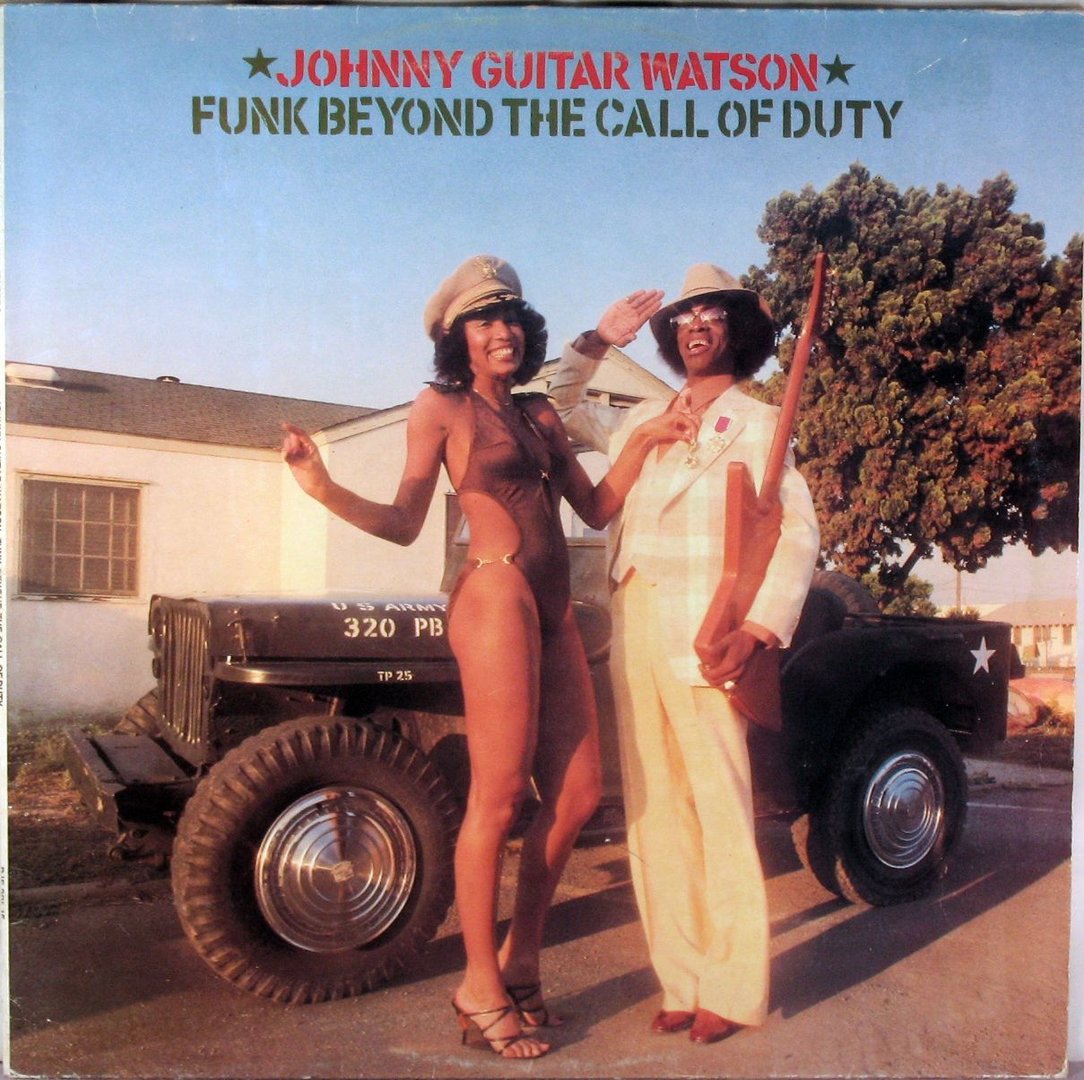
Review: Twenty tracks and not a duff amongst them. I must have picked this up because I recognised a few of the names - BB King, John Lee Hooker, Lightnin' Hopkins - but it's the lesser lights who make this interesting. For a genre that is sometimes dismissed as too simplistic for true sophisticates, it also runs the gamut, from the minimalist vamping of Hooker on the immortal 'Boogie Chillen' via the skronkin' sax-fest of Littlefield's jubilant 'Happy Pay Day' to the lamplit comedown blues of Johnny 'Guitar' Watson's wonderful, idiosyncratic 'Three Hours Past Midnight'. The vast majority of this stuff comes from the 1950s but still packs a right ol' wallop in the speaker department, and makes a lot of what was on the pop charts at the time sound insipid and neutered.

Honestly, this collection probably came along at just the right time. Having (somewhat) shaken off my thraldom to Stevie Ray Vaughan, I was dangerously close to becoming that most dreaded specie amongst blues fans, the Purist. Any taint of commerciality, any hint that the guy I was listening to hadn't flogged his soul at the crossroads, and I wasn't interested. For me, half the excitement was the mystery, the notion of singular men "emerging fully-formed from the Delta", as Elijah Wald has it in Escaping the Delta, his excellent deconstruction of the mythology and assumptions made about Robert Johnson, probably the blues' most totemic figure (a book that also ably demonstrates that Johnson was every bit as swayed by his peers, and contemporary tastes, as any other artist). So, for me, the perfect blues artist had an unknown birthdate, a sketchy recording history, and an early, hopefully disputed, and perhaps grisly, death. Oh, and they played solo.

The archetype, then, was someone like Blind Willie Johnson and his 'Cold Was the Night, Dark Was the Ground'; a piece of music so powerful that it was blasted into the galaxy for space aliens to enjoy, performed by an artist who met a suitably gothic demise. Not quite as tragic, but even more haunting was Skip James' breathtaking 'Devil Got My Woman', used to such good effect in the underrated movie Ghost World. You see, it all resonated with that key watchword for me - authenticity.

So, thank goodness for Mojo Working, with its stylistic breadth and judicious choice of cuts. Yes, it still had those choons that got me all shivering and misty-eyed about southron twilights - the spare, sinister 'Lonesome Dog Blues' from Lightnin' Hopkins chief amongst them - but it also opened my ears to the richness and variety not just of the sonic template of the blues, but also its moods. I've already mentioned the knockabout 'Happy Pay Day', but there's also the sly insinuations of Arthur Gunter's chooglin' acoustic number 'Baby Let's Play House' and the more forthright swamp-braggadocio of Slim Harpo's 'I'm a King Bee' (which features a sound used to create the instrumental hook - I'm not even sure whether it's a bass or harmonica - that I'm yet to hear anywhere else).

Mojo Working basically became by blues primer, the springboard for exploration which has led me to buying albums of at least half of the artists that feature on the compilation. Hell, I've even reviewed a couple of them! But the one I want to dwell on just for a moment is an artist who first tasted success with rhythm and blues in the 1950s, and then again during the 1970s. I am, of course, talking about Johnny 'Guitar' Watson. I am actually more familiar with his hepcat funkster output, but the 1956 joint that appears on Mojo Working sounds astonishingly modern. 'Three Hours Past Midnight' is remarkable not only for its pin-sharp production but the tone Watson coaxes out of his guitar. On an album full of distinctive guitar work (from Elmore James's slashing slide playing to Little Johnny Taylor's busy, jazzy runs up and down the fretboard), Watson's lead sounds like it was beamed in from another galaxy. It's utterly strange! A kind of clucking, quacking noise that's accentuated by Watson's staccato attack (apparently using his thumb alone, which boggles my noggin), but something I can't imagine all the available ProTools plugins could ever replicate.

They might get close, but they'll never quite make it. And what is that unassailable quality that cannot quite be replicated, if it isn't that magic notion, authenticity?

Of the hundreds of albums I own, few have burnt themselves into the memory quite like Mojo Working. Every track appears in the mind's eye as distinct and as whole as entire universes. When I give this a spin, I can convince myself that this is the alpha and omega; no other music exists. And for the span of an hour, perhaps, it doesn't.

Sunday, 3 November 2019

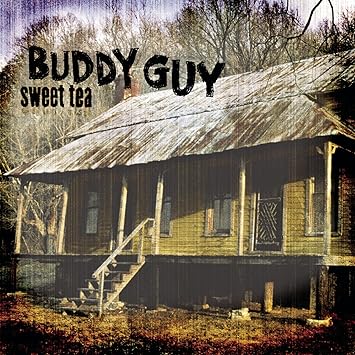
Sweet Tea - Buddy Guy

Provenance: I think anyone with a more than passing interest in the electric blues knows who Buddy Guy is. Still kicking, still playing, with a slew of solo releases and guest appearances to his name, Guy is considered a living legend.

I also have one of the most distant personal connections imaginable. My partner's stepdad's sister married one of Buddy Guy's sons. So, yeah, usual caveats apply when reviewing the work of a close family member.

Review: I pointedly mentioned the electric blues in my introduction, because this is what Guy is most famous for. And on Sweet Tea, fans of his spiky, fluid playing have got more than enough to chew on. Most tracks are over the five minute mark, with 'I Gotta Try You Girl' stretching its legs for well over twelve minutes. You wanna hear some electric guitar, friend? You got it.

So it's strange that the most arresting track on the whole album - the opener, 'Done Got Old' - is a relatively concise three-and-change minutes long, and consists of a close-miked Guy and sparse acoustic guitar. It's a weird song, too - because many of Guy's direct influences would flip their dotage on its head, bragging about their experience or ability to keep up with the youngbloods. Think Muddy Waters with 'Young Fashioned Ways' - "there may be snow up on the mountain, but there's fire down under the hill". 'Done Got Old', however, is a straightforward lament - no braggadocio, machismo or defiance, just a quiet sadness that his body is giving up on him. It's a sombre introduction.

And maybe it's supposed to be the banner that hangs over proceedings, a memento mori to accompany the startlingly vital racket he conjures up on Sweet Tea. 'Baby Please Don't Leave Me' has a title that sounds like a Chess cut from the 1950s, but the clattering drums and skronky overdriven bass makes it sound, early doors, more like a particularly sludgy desert rocker. The guitar riff, when it kicks in, sounds like one of the blues tracks that Led Zeppelin stole, if it was played on high-tensile cables. It's a noise you might expect more from All Them Witches than a guy who literally played with Muddy Waters and Junior Wells.

The highlight of Sweet Tea is 'Stay All Night', another relatively short number. It stalks, it prowls, it rumbles; and a flint-eyed Guy doesn't so much ask for love as commands it. It's down-low and nasty, lower than a snake's belly. At this juncture, I should mention that, aside from the quavering opener, Guy sings wonderfully, with a similarly strained, edgy style as Elmore James, albeit dialled down a notch or two. He was still hitting some impressive high notes at the age most people this side of the Atlantic anticipate receiving free bus passes.

Production is a factor that can make or break a record. As much as I love the bells and whistles approach on albums by the Beatles, Jellyfish, Pink Floyd and other studio cosmonauts, most blues music is served by the KISS maxim; keep it simple, stupid. Going back to Chess, some of those Muddy joints are raw as hell; there's a 1951 cut called 'She Moves Me' where Leonard Chess himself provides inexpert but effective backing on a bass drum to accompany Mud's elastic guitar. Back in the twenty-first century, Dennis Herring has kept some of that magic alive, whilst compensating for advances in technology. You can hear amps humming, snares rattling and the odd clam or two from Guy. It doesn't matter; this is more about capturing a mood and a moment than technical ecstasy (Joe Bonamassa and Kevin Shirley, take note). To these untrained ears, it also sounds like the instrumentals were performed live-in-studio.

The overall effect is very in-your-face, and all the better for it. The guitar isn't overly processed; a dab of echo here and there, but otherwise letting an overdriven tube amp, and of course Guy's expert fingers, do the heavy lifting tone-wise. On 'Tramp', cleaving the old soul classic with an arrangement that sounds like ZZ Top circa the kooky Deguello, Guy bends those strings so aggressively you can hear the muscle and blood through the speaker; the same can be said for the portentous closer 'It's A Jungle Out There'. Meanwhile, on 'Look What All You Got' and 'Who's Been Foolin' You', it sounds like Buddy Guy is fronting Dr Feelgood. It's a genuine pleasure to hear the greatest living exponent of the Chicago blues reminding us all why Clapton, Richards, Beck and the rest bend the knee.

I hear two Kings in the way Guy plays; he's got the pyrotechnic flair of Freddie but hits his bends like Albert (a fellow who, at his best, sounded like he was bending the very molecules of existence). There's something else there, though - a simmering malevolence that gives his every solo or interpolation that bit more bite and excitement. Perhaps 'Done Got Old' was a trickster move, a little juke to throw us off guard before proving, over and over, that he's still got the fire burning down below.

Sunday, 28 April 2019

New Orleans Heat - Albert King

Provenance: Yeah, I picked this up for a fiver somewhere. I'm a big blues fan, and I've a solid regard for New Orleans musicianship, so this one seemed like a slam dunk.

Review: When people talk about superstar producers, names like Mutt Lange, Joe Meek, George Martin, Phil Spector, Quincy Jones and Rick Rubin readily come to mind. Now, it's possible that he's over-represented in my music collection because of the direction in which my tastes skew, but I'd include Allen Toussaint in that crowd. In my mind, he is the central figure of 20th century New Orleans R&B, acting as a triple threat of songwriter, performer and producer. It's no surprise, then, that when Albert King pitched up in the Crescent City to try to inject a new lease of life into some of his classics that we find Toussaint producing, arranging and playing on New Orleans Heat.

As one of the 'Three Kings' of the blues, Albert can sometimes find himself lost in the shuffle. Way out in front is the late B.B. King, a man who came to signify the blues for many, even if his sleek, city-sophisticate take on the genre never quite jived with purists. Then you had the volcanic talent of Freddie King; a big man with a gritty soul voice and a flamboyance on stage that was only matched by his scintillating guitar playing. Then you had the six-and-a-half-feet of Albert King, pinging needly guitar bends around an upside-down Flying V, cooing his songs in a warm, keening moan. Maybe he didn't quite have B.B.'s versatility, nor Freddie's chops, but to me Albert thoroughly deserves his place in the pantheon if only for 1967's Born Under a Bad Sign, recorded with Booker T and the MGs and pound-for-pound one of the greatest rhythm and blues albums, period.

However - despite the marriage of two colossal talents in Albert King and Allen Toussaint, New Orleans Heat doesn't really click. Why so? Well, I think Allen Toussaint's work with soul, funk and even jazz musicians eclipses his production of blues artists; his tendency is to deliver something smooth and sly, whilst King thrives with a more knockabout backing. Perhaps it's King's mellow voice that gulls one into thinking that he can fit in with the Toussaint template, but opener 'Get Out Of My Life Woman' can't hold a candle to Lee Dorsey's version (which was, of course, both written and produced by Allen Toussaint). The next track fares no better - the immortal 'Born Under a Bad Sign' brought to heel by Toussaint's tendency to smooth out rough edges.

Sounds like I've got some real beef with Allen Toussaint, huh? Think again. His work with Lee Dorsey in the mid-1960s is sublime (he wrote 'Working in the Coal Mine', fercrissakes) and in Life, Love and Faith and especially Southern Nights he wrote and performed two of the most remarkable funky New Orleans soul albums of all time. At his best, Allen Toussaint could be untouchable; but New Orleans Heat isn't anywhere near his best. It's simply a bad pairing, with some unfortunate results such as the insipid 'The Very Thought of You' and the embarrassing funk of 'We All Wanna Boogie' (though artists who started off in the blues certainly could produce very credible funk records - King's near-contemporary Johnny 'Guitar' Watson springs to mind).

On a few occasions the King-Toussaint collaboration hits the mark. Despite sounding a little neutered, 'Born Under a Bad Sign' is too good a song to ruin; 'I Got the Blues' has a sinuous minor-key groove running through it and leaves enough room for King's guitar to stretch out; and Leo goddamn Nocentelli's chanky rhythm playing injects some spice into 'I Get Evil', in spite of its too-glossy horn arrangements.

One final thought - despite the lead guitar work all being very idiosyncratic to Albert King's wavy, elastic attack, his guitar tone is dogshit. Pure dogshit. In an ill-advised attempt to sound contemporary, I guess, it's got some kind of horrible phasing effect all over it. The one track where they seemed to have forgotten to plug the fucking pedal in, 'Angel of Mercy', coincidentally happens to be the most straightforward blues number of the bunch, and - lo and behold - the guitar playing absolutely cooks. Oh well, it was 1978; in any case, it's not the disaster that Electric Mud was (yeah, some disaster - it sold a quarter of a million copies, but it's a mess).

Sunday, 8 July 2018

Too Many Snakes in the Road - Kent DuChaine

Provenance: Kent DuChaine is a real one. He's played tens of thousands of gigs and, by his own estimation, has travelled somewhere between two and a half and three million miles as a consequence (after all, what's a spare half a million when you're grinding away on the road?). I've seen him play five times now, and the deal has been the same every time - it's Kent, his 1934 National Steel guitar 'Leadbessie' and a peck of the blues. Never once has he disappointed.

The first time I saw him was at the Lansdown Arms in Lewes. A couple of friends of mine recommended it as a good night out, knowing I was a blues fan. They also mentioned his absolutely bonkers tour schedules, which are a work of art in themselves worth checking out. I had grown to expect blues gigs to be a bit mannered, perhaps a little tame - but a Kent DuChaine gig is nothing of the sort. In a packed sweatbox of a venue he hammered away with a hard-driving attack that instantly got people up on their feet. It was one of the most boisterous and joyous shows I had witnessed in a long while.

I suppose it shouldn't come as a surprise that DuChaine is able to move a crowd - he's been doing it for years, and has honed his craft to an expertly-paced set liberally sprinkled with anecdotes and tall tales. I'm sure he'll be back soon, criss-crossing the country and playing to rooms large and small; go see him if you get the chance.

Review: As I mentioned before, Kent DuChaine has been a consistently excellent live act so I've bought a couple of his CDs at gigs I've been to. After all, a guy who gets by primarily by touring can't survive on applause alone. The double album Too Many Snakes in the Road is interesting because not only are the tracks recorded live, many of them are preceded by the stories that DuChaine tells to introduce them to his audience. A pretty cool twist, but does it work?

In a word, yes. To develop it further, I think it's worth digressing a little to talk about how blues music is treated - namely with the kind of reverence usually reserved for museum exhibits or particularly long-lived politicians. Lots of ink has been spilled about blues music as a genre born out of African-American suffering, which is absolutely not incorrect, but with that has come an attendant solemnity that simply does not fit. By focusing on the bleaker end of the spectrum there's been a tendency to ignore or downplay the bawdier, funnier, lighter side to the music, which if anything was predominant. By trapping it within the amber of authenticity and gravitas, I fear many historians and critics also deny its power as a live phenomenon. This wasn't music you were supposed to scratch your chin too!

Whether consciously or not, Kent DuChaine grasps both of these issues. He doesn't omit to retell the odd myth about luminaries such as Robert Johnson, but then there's also stories of going fishing with Johnny Shines, playing Bukka White's guitar and sharing reefer and champagne with Muddy Waters. Furthermore, when he's playing 'Little Red Rooster' he's not expecting his audience to sit in rapt silence - he's asking them to howl along with him. Hell, the first time I saw him he had people on tables throwing beer around and belting out 'When the Saints Go Marching In'. In DuChaine's hands, the blues is a vital, muscular music.

As he demonstrates on Too Many Snakes... he's also a mean, mean player. Eschewing flashiness, instead he plays with a heavily percussive approach, hammering away on the strings with his right hand whilst slashing away on slide with his left. Nowhere is this better exemplified than on his version of 'Aberdeen Mississippi Blues', which features a bludgeoning intro that sounds like nothing other than the clattering of a freight train, that old favourite avatar of the blues. Elsewhere, DuChaine's full-blooded approach breathes new life into old bones; the popular standards 'Fever' and 'Summertime' are not so much reinvigorated as given a total blood transfusion and a side order of monkey glands to boot.

Given the richness of the blues tradition, and DuChaine's obvious affection for its greatest exponents, it's unsurprising that most of the songs on Too Many Snakes... are covers. However, a true highlight for me is an original composition that is preceded by a wonderful story; '16 Gauge Steel' is a tribute to Johnny Shines, who underwent something of a renaissance after DuChaine himself got him back recording and touring, acting as his sideman until his death. Every time I hear the verse "I have stood in the Georgia pines / With the legendary Johnny Shines" I'm not embarrassed to say that I catch my breath a bit. So simple, yet so evocative.

By his own admission DuChaine is not the best singer out there, but as he advised your author, "you just gotta go for it" and that's what you hear. It honestly doesn't matter though, not at all, when his right arm is pumping up and down like a steam piston and he's chugging his way through 'Rock Island Line'. Kent DuChaine is a superb emissary for the blues as a music that is both varied and vital, and Too Many Snakes... is a very fine testimony to the fact. Now go see the man perform!

Tuesday, 5 June 2018

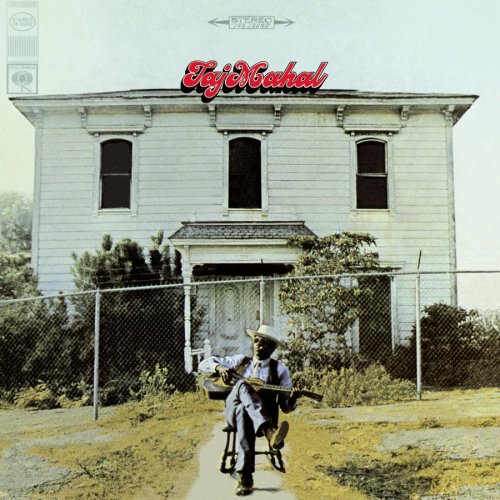
Taj Mahal - Taj Mahal

Provenance: From the moment I picked up a guitar I was interested in the blues. When it came to learning riffs or copping licks, the pentatonic scale seemed to be all-pervasive, looming as it does to this day over a century's worth of popular music. For a while, I was just all about cats like Stevie Ray Vaughan, guys who could shift around the fretboard. Yet even then I was dimly aware of names like BB King, Muddy Waters, Howlin' Wolf, Robert Johnson. These days each one, coming from different times, places and styles of the blues as they do, sound utterly distinctive - but at the time they were old blues guys.

So whilst learning 'Pride and Joy' and 'Crossfire', I was delving backwards and finding some awesome, overpowering stuff. Mississippi John Hurt and Blind Willie McTell became favourites, as did Clarence 'Gatemouth' Brown (whose birthday, I distinctly recall, was marked on a Simpsons calendar our family once had), Son House, Fred McDowell, Pinetop Perkins, Sonny Terry and Brownie McGhee, and of course the incredible Lightnin' Hopkins. Man, you can put 'Lonesome Dog Blues' on right now and I'll still reflexively crack a grin at Lightnin's "po' dog" aside during the first verse.

Later on at university my housemate Ben and I devoured the Martin Scorsese-produced series of documentaries on blues music and that's when I first encountered Taj Mahal. Later, for my birthday, Ben bought me the Taj Mahal 'best of' that accompanied the series and I was away. That was it - I was a Taj Mahal guy from then on.

Now, my partner credits me with hepping my father-in-law to Taj Mahal - which is cool, because if I did, I'm indirectly response for the fact that he's now writing a biography of the man. Coming full circle, it was thanks to him that I was able to go backstage after Taj's show in London last year. He's a man who, I suspect, meets scores of people every night on the road, but he took one look at me and already knew my name, who I was and my backstory. I, a fairly insignificant cog in the grand scheme of things, was impressed, surprised and humbled. We had a good chat, incidentally, about Cool John Ferguson, who is another guy you need to check out. Oh, and at the same time I also met a true broadcasting hero of mine, Dotun Adebayo (he was a prince, by the way, making a mockery of the adage that one should never meet one's idols).

Review: This is where it all began - almost. Here is Taj Mahal, taking his first solo strides after playing with the Rising Sons (who also featured Ry Cooder and future Spirit drummer Ed Cassidy), with a self-titled straight shot of the blues. At a shade over half an hour it's a tight little collection but across the eight tracks Mahal roams around the blues landscape, executing everything from electrified rock to gutbucket country. With a crack band featuring his erstwhile Rising Sons colleagues, it's every bit as impressive as it is eclectic.

Dig this, too - the opening harmonica trill on 'Leaving Trunk' is lodged firmly in my top five ways to start an album. It's startling and joyous, acting almost as a heraldic fanfare or a clarion call to arms, before locking in with a funky, choppy rhythm that causes one's thighs to twitch involuntarily. All this and Mahal hasn't even started shouting the blues in a voice that contains all the grime and passion you could ask for. Yes, yes, yes.

One thing that I have omitted to suggest so far is this album's importance. I genuinely think that without Taj Mahal and a few other American electric blues releases of the era, the renaissance the genre enjoyed in the 1980s wouldn't have happened. Here was an African-American artist contemporaneous with the Rolling Stones, Canned Heat and the rest, creating music at once so recognisable yet so vital as to be quietly revolutionary. Despite the fact that almost every song is a cover Mahal's arrangements sound fresh, injecting fire into the veins of hoary old favourites such as 'Dust My Broom' and 'Statesboro Blues' (NB: the latter is excellent but, alas, my third-favourite rendition of the song; the best being by Blind Willie McTell and the runner-up emanating from the Rising Sons, whose clattery breakneck version is a revelation).

I suppose that's the genius of Taj Mahal - it straddles old and new without ever seeming to compromise or accommodate. There are no swirling Hammond organs or phased drums here - you've got drums, bass, guitar, harmonica, piano; we could be talking the same kind of setup that Muddy Waters was using when storming the clubs and cutting heads in Chicago a decade or more before. The closest Taj Mahal comes to anything that has an obvious genesis in the 1960s is 'E Z Rider', which has a couple of chord changes in the turnaround that Jimmy Rodgers probably wouldn't have put together; and the Sleepy John Estes number 'Diving Duck' gets the same hard-hitting, funky treatment that would come to characterise the best-known version of Albert King's seminal 'Born Under a Bad Sign'.

There's space for one more, and perhaps the most important, song on the album. Mahal stretches out 'The Celebrated Walkin' Blues' to almost nine minutes long, building a slow song slowly. In doing so, room is provided for some dirty slide guitar, keening harmonica and a mandolin counterpoint that serves to remind the listener that blues may live in the city but was born in the country. It lollops along methodically, hypnotically, voice and instruments weaving in and out of the unceasing plod of the bass and drums. It's masterful in its simplicity and stateliness, and served notice on all the British guys trying to sound like Jeff Beck or Alvin Lee. It says: this is the blues served neat, and you boys aren't getting close. I love it.

Later on the scholar and restless spirit that is Taj Mahal would seek out common threads between African-American folk cultures and those of both sub-Saharan Africa and Hawaii, recording some of the most startling collaborations I've been privileged to hear. And it's all there - even when he's rocking out in Zanzibar or Honolulu, that blues root that is so firmly delineated on Taj Mahal is always pulsing away in the background. To the novice Taj Mahal listener: start here, push forward and, as the man himself does, keep pushing - you'll be rewarded.

Thursday, 5 April 2018

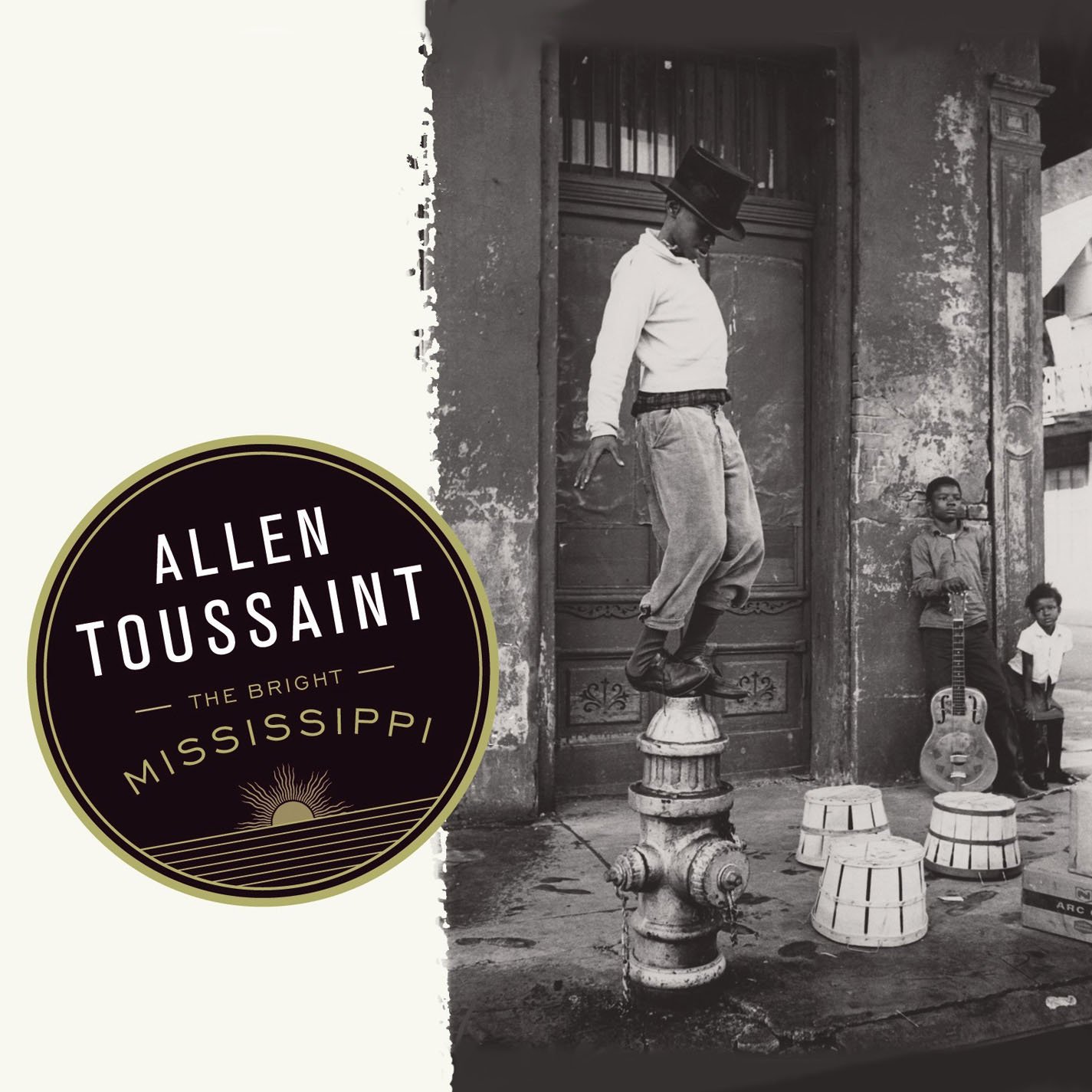
The Bright Mississippi - Allen Toussaint

Provenance: There's three things I am sure of in life; I want my coke to be diet, my football to be catenaccio, and my piano players to come from New Orleans. Just take a look at some of the luminaries to come from the Crescent City - Dr John, Professor Longhair, James Booker, Fats Domino and Allen Toussaint.

When I was in New Orleans (my favourite American city - and the least American city?) I was fortunate enough to catch the Preservation Hall Jazz Band, playing the trad stuff unamplified in a small room. It's rare, I think, to see musicians of that calibre performing without any kind of PA in such an intimate venue; and from the moment they kicked into 'Sheik of Araby' I was captivated.

When I heard that Allen Toussaint had decided to make a jazz album that honoured the legacy of New Orleans I didn't need any more encouragement to go out and buy it.

Review: Sheer, unadulterated joy.

It genuinely feels like a privilege to hear the ensemble of crack musicians Toussaint gathered for this album to perform with such casual virtuosity. What could have been a tired jog through a clutch of musty old standards instead feels like a vital, ebullient celebration of a city and the music to which it is umbilically linked. It's both remarkable that The Bright Mississippi took a mere four days to record, and yet totally believable, as the sound is so organic that one imagines the band all set up in the room together, running through two or three takes and picking the best of the bunch. If there are overdubs to the live sound, my guess is that they are minimal.

From the very first bar of Sidney Bechet's 'Egyptian Fantasy' one can sense magic swirling around, but for me the album really moves into the realms of the sublime during 'St James Infirmary', a song I've heard many different times in various iterations but rarely does it reach such a degree of majesty as it does here. From then on, everything is immaculate - whether it's a sleepy-eyed rendition of 'Winin' Boy Blues' from jazz's ur-pianist Jelly Roll Morton, an iridescent 'Day Dream' (Duke Ellington) or my personal highlight, a languid interpretation of Django Reinhardt's already wonderful 'Blue Drag'. It might even top any version I've ever heard played by the Belgian master.

Every performer on The Bright Mississippi acquits themselves superbly, though I feel special mention should go to both trumpeter Nicholas Payton and clarinettist Don Byron. The contributions they make to each song on which they feature elevate each piece, with Payton playing some especially imaginative solos. However, the name on the CD is Allen Toussaint, and so it's only fair to pay attention to what he's playing.

Fortunately, Toussaint rises to the occasion splendidly. His playing is light and supple, hands moving across the keyboard with the twinkling grace of Fred Astaire in motion. Toussaint rarely elects to bang out big meaty solos, instead accenting his stylish playing with clusters of dancing notes, little trilling figures that complement the more sinuous sounds of the trumpet and liquorice stick (check me out using that hepcat jazz lingo, daddy-o). However, for all his panache Toussaint is also a two-fisted New Orleans piano player, and that generous, wide-open easy-rolling blues sound is given voice on King Oliver's 'West End Blues' and the traditional number 'Just A Closer Walk With Thee'; and I wouldn't want it any other way.

In every sense The Bright Mississippi is a triumph. The sound is such that it almost feels tactile - can you taste that thick Gulf air on your tongue as you luxuriate in the music? Do your eyes prick at a hint of cayenne pepper and onion? It is, of course, illusory; the jumbled symptoms of an imagination stirred by aural stimuli. But goodness me, what stimuli! I find in such situations that it's best just to sit back, pour a measure of something expensive and laissez le bon temps rouler.

Thursday, 23 November 2017

Bridge Of Sighs - Robin Trower

Provenance: Ah, the rowdy old days of the internet at the turn of the millennium. I was (just) getting into guitar, and my dad had come home from work with a suggestion from one of his colleagues; give a guy called Robin Trower a go.

Naturally I booted up the PC, opened Napster (the repository of all music back then, kids) and found a file called something like 'xXx2_Rolling_Stoned_0105xXx'. I knew that, unless it had been mislabelled or was just a bunch of white noise, if I left the download going overnight in a mere eight or nine hours I'd be listening to my first Robin Trower track.

To breakfast next morning, and I was in luck! Not only did the song match the title, but I had the whole thing bar the last twenty seconds. I could rule this a success. What a tune, too. Funky, soulful and spacey all at once; I spent no time delaying my trip to the local HMV.

Review: This is another collection I don't need to listen to in order to write about it, but will do so for the sheer pleasure of it.

Over the years, I've come to regard Bridge Of Sighs as a top ten all time album. There's simply nothing bad or even mediocre about it, at all. I've heard a lot of idiots talk shit about Trower being too derivative or a poor Hendrix imitation, and whilst the latter's influence is undoubtedly the most obvious in his playing, Trower is a sublime craftsman in his own right. You can call his style bluesy but he never seems to fall back on the hackey cliches of the more prosaic blooz-rockers. You could say he was stoner rock before the genre had been properly pinned down, but Bridge Of Sighs is neither lumpen nor plodding. The moods conjured up sometimes hint at space rock, but where Hawkwind clatter into deep space on the whoosh of their thrusters, Trower glides along on the Sea of Serenity.

If I could play guitar like one individual on this planet, it would be Robin Trower.

The difficulty I have with Robin Trower, and Bridge Of Sighs specifically, is that after I listen to it much else seems so prosaic, shackled to the earth, never able nor destined to take flight. The sheer ability to impose his will so fully upon his chosen instrument and coax all those weeping, howling, swirling sounds out of it is mystifying. Little tops the excitement I still feel when the first staccato notes of 'Day Of The Eagle' explode out of the speaker; to have that followed up by the stately, mournful title track is so indulgent as to be the aural equivalent of a lemon cheesecake, topped by a Black Forest gateau, topped with ice cream.

One aspect of his sound is that, although the guitars can seem thick or even sludgy, in fact what they play is almost always fragmentary, or at most arpeggiated. It's as if each song is a mosaic that Trower assembles from shards of electric guitar. Couple this approach to his signature style, namely masterful sustain and fluid legato picking, feed it all through some trippy effects and you have a the fundaments of a very singular sound that, when wrapped around the songs, can be a thing of wonder. I should also add that Trower's vocalist (and bassist) at the time, the late James Dewar, was one of rock's most underrated white soul voices. His performance on 'About To Begin' prickles the hairs on your skin.

I'm not going to talk about individual tracks too much here. Bridge Of Sighs is sensational and should be listened to front to back, but as that's less fashionable these days, here's one of the many, many highlights:


I count myself lucky to have seen Trower a few times live. The first of these was in Exeter with my then-girlfriend at the time, Sarah - or rather, then ex-girlfriend, as we had broken up not long beforehand due to my terrible behaviour. Nevertheless, I had tickets and for reasons that still remain a mystery, Sarah consented to go with me. Not only was Trower magical but Sarah also took me back that evening (which I absolutely didn't deserve), and we would spend the rest of university and some time beyond together.

We've since gone separate ways but I still remember Sarah with great fondness. She's a brilliant person, with a cool yoga business, and not only gives classes in the Bath area but also organises retreats in some fabulous locations. As someone who has never tried yoga I can't comment on Sarah as an instructor, but the tolerance and forbearance required to put up with me for such a long time bespeaks someone with the patience of a saint. In any case, it's something Sarah has an enduring passion for, so I am adamantine in my certainty that she's ace.

We all graft our own stories and meanings to the things in life that affect us in a profound way - be it music, literature, places or people - and so it goes with this. The wistful, foreboding, luminous, beautiful Bridge Of Sighs has for me become inextricably bound to my time with Sarah. I wouldn't wish it any other way.

Thursday, 16 November 2017

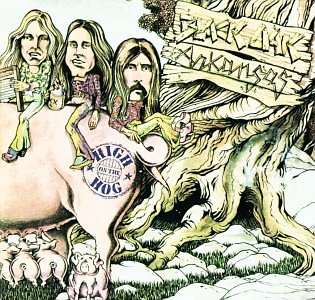
High On The Hog - Black Oak Arkansas

Provenance: I saw these chaps at Sweden Rock Festival one year and had a fine time. Online consensus seemed to suggest that this was a good album for the beginner, so here I am, listening to High On The Hog.

Review: God bless Black Oak Arkansas. They've been around since protozoa first slimed their way onto the primordial beaches of Pangaea, around fifty or so people have passed through their ranks, the rhythm guitarist has two, separate, unrelated nicknames and the lead singer doubles up on the washboard. On that basis alone I am a fan of Black Oak Arkansas. If only they did that cool double drumming thing that .38 Special had going on we might be talking about the world's greatest band.

Alas, they didn't, but a pre Ozzy Osbourne / Whitesnake / born-again Christianity Tommy Aldridge can be found thumping the tubs on this release, though it is unrecorded as to how many nicknames he earned whilst serving his time in 'the Oak'. All kidding aside, this is a really fun slice of southern rock; looser than Skynyrd, less virtuosic than the Allmans, rootsier than Molly Hatchet or Blackfoot, Black Oak Arkansas had a more overt country music influence than many in their genre. What sets them apart is frontman Jim 'Dandy' Mangrum, he of the washboard and a voice that wavers between hillbilly rasp and Beefheartian growl. A curious guy, he's part good ol' boy, part flower child, the self-proclaimed blueprint for David Lee Roth with a penchant for fast living that saw him suffer his first heart attack around age 30.

What I like about High On The Hog is that it's a bit of a grab-bag, with each song inhabiting its own little patch of dirt somewhere below the Mason-Dixon. So 'Swimmin' In Quicksand' has an infectious, funky Memphis groove, 'Happy Hooker' is a fairly straight blues (with a, shall we say, less than progressive lyric?), 'Moonshine Sonata' is a mellifluous instrumental in the vein of the aforementioned Allman Brothers Band and both 'Back To The Land' and 'High 'N' Dry' are down-home, deep-fried, back-porch country; the latter is especially, and unexpectedly, gorgeous.

Where High On The Hog really excels, however, is when it mines a seam of heavy redneck psych that is both slightly unsettling and quite unique. Thus 'Red Hot Lovin'' (these guys love a contraction) 'Why Shouldn't I Smile' and 'Mad Man' all have a faintly ominous atmosphere about them which really works to their advantage in the context of the rest of the album, which is all rather upbeat and rambunctious. Around the same time British bands like Atomic Rooster, Edgar Broughton Band and the Groundhogs were all recording albums swirling with unease and paranoia, so it's interesting to hear these moods given a southern rock twist.

Saying that, for me the masterpiece on the album is the rollicking boogie stomp of 'Jim Dandy', featuring guest vocals from the late, leather-lunged singer Ruby Starr. Doesn't it look like everyone's having the best time?


Given the prodigious turnover of personnel, just by being in the same field as the band there's a good chance that I'm actually a member of Black Oak Arkansas right now. Frankly, if I got to play 'Jim Dandy' and 'Uncle Lijah' (from their first album) and hang out with 'Risky' Rickie 'Ricochet' Reynolds every night, I wouldn't mind one bit. Great album cover, by the way. Top entertainment.

Sunday, 4 June 2017

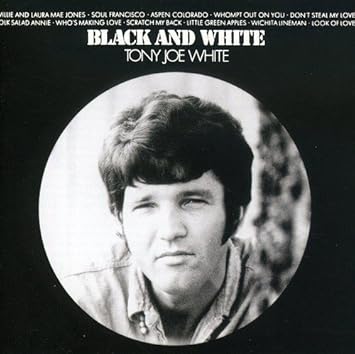
Black and White - Tony Joe White

Provenance: The origins of where and how I first encountered Tony Joe White are now obscured by the mists of time.

I can definitely state that I was aware of the man and his music before September 2010, which I spent in the USA. Here's why:

a) I vividly recall hearing a god-awful song chronicling the downfall of some poor southron maiden or other set to the music of 'Willie and Laura Mae Jones' on the radio. I was near Nashville at the time.

b) I managed to finagle my way into a private function at Graceland, and the Elvis tribute band (no pressure there, lads) played 'Polk Salad Annie'.

c) I met a guy in Louisiana who claimed to have known Tony Joe White a little in his youth.

Don't get me wrong, my road trip around the Deep South wasn't some kind of extended Tony Joe White-themed promenade, he just happened to crop up a fair amount. I wish I hadn't encountered that re-write of 'Willie and Laura Mae Jones' though, because it was like an ice-pick to the ears. I've tried to locate it for this review but no dice, so if anybody knows what I'm talking about, please get in touch.

Review: Mere words are inadequate to describe how much I fucking love this album. Yet I also find that words are hard to come by in articulating why Tony Joe White's debut had such a profound impact on me; a clear-eyed (or clear-eared?) reviewer would no doubt highlight the flaws and half-developed ideas littered throughout the album. I, however, don't fall into the clear-eyed category; in fact, I was not a little lachrymose when I finally saw 'the Swamp Fox' himself in London last year with my friend Rachael.

(Can I just add something about the TJW live experience? White played a guitar plugged directly into an onstage amp, with precisely two pedals at his disposal - a wah-wah and a deafeningly loud overdrive, which transformed his music into proto-metal garage rock every time it was activated. His only accompaniment was a drummer, which meant the sound could sometimes feel a bit empty when TJW played lead breaks. Yet he could be absolutely mesmerising, even when he talked to the audience in his indecipherable molasses-thick drawl).

Listening to it again now, I still feel both comforted and excited by the sounds coming from my speakers. Firstly, that voice. That drawling, cool, subterranean baritone is absolutely perfect. It's not particularly well-recorded, and sometimes distorts when he fails to moderate his volume. Yet this is precisely why I love it - unlike so many modern recordings where a vocal is tracked numerous times, levelled out and compressed, this is an unadorned and honest record of one man's utterly peculiar instrument. It also helps that White possess a collection of weird vocal tics, smattering his performances with lusty grunts and non-lexical vocables.

All this is performed over what can be described as country-funk, at least on the originals that make up just over half the album. When it hits its stride, Black and White really cooks. Aforementioned opener 'Willie and Laura Mae Jones' is a fine example. Covered by Clarence Carter, Brook Benton and Dusty Springfield amongst others, it's a soulful and powerful little fable about race relations between poor blacks and whites. 'Aspen Colorado' is a quietly poignant story vignette about a young man trying to make his own way in the world, and the famous 'Polk Salad Annie' (a staple in Elvis Presley life performances) is belting rocker about an indigent girl and her 'no account' family. In all these instances, White proves to be a deft caricaturist, able to breathe life into his subjects with his wry, nuanced eye for detail.

There's a fair amount of sex on offer too. 'Whompt Out On You' portrays White as a callous lothario, and contains a drum break every bit as funky as 'Amen, My Brother' by the Winstons. 'Who's Making Love' is a soul-power cautionary tale to every dude stepping out with a side-slurp, and he even imbues the Bacharach standard 'Look of Love' with a breathy, languid eroticism. In fact, for such a good and prolific songwriter, White is a very able interpreter, showcasing his ability to inhabit a song on both 'Little Green Apples' and 'Wichita Lineman', the latter possibly just outflanking the Glen Campbell version (heresy!) in my estimation (burn him!).

Deep, seductive, slow and loose, Black and White is a quirky yet colourful slice of downhome escapism. White's idiosyncratic singing only serves to make this a more affecting collection, and Rachael can no doubt attest to my fondness for White's turn of phrase (we still text each other references to 'corn pone', mentioned in 'Willie and Laura Mae Jones' every now and again). Essential listening, y'all.

Monday, 8 May 2017

Hot Shots: #10 - Roy Buchanan - The Messiah Will Come Again

Despite the 1.4 million hits this video has garnered, in his day Roy Buchanan was more a musician's musician rather than a household name. Oft cited as an influence, most notably by Gary Moore (you can hear Buchanan's fingerprints all over 'Parisienne Walkways'), Buchanan was a maestro of the Telecaster. Just listen to him wringing emotion out of practically every note he plays in this wonderful live performance.

Sadly, yet another person who left us too early, Buchanan died by his own hand (though friends dispute this) in a Virginia jail cell aged just 48.

Thursday, 23 March 2017

Hot Shots: #6 - Skip James - Crow Jane

If you've heard of Skip James it's probably down to you being a blues fan, or you were arrested by his haunting 'I'd Rather Be The Devil' in the movie Ghost World. 'Haunting' is an understatement - it's otherworldly, chilling and dark. That one man and a guitar could transmit create a world of anguish and isolation is astonishing. Go give it a listen if you haven't yet.

Here's some latter day Skip James, with an ostensibly more upbeat song - but that sepulchral falsetto remains, and the subject matter is horribly misogynistic. Check out James' wonderfully fluid fingerpicking in the Piedmont style as you enjoy this rather nasty murder ballad.


Sunday, 13 November 2016

Funk Beyond The Call Of Duty - Johnny 'Guitar' Watson

Provenance: I'm fairly sure it would've come through hearing Watson on one of my Dad's Frank Zappa records. You can hear him on 'Andy' and 'In France' (most prominently in the latter). It's also possible I heard him on one of the many blues compilations I bought as a teenager; he's certainly on a couple I own. I can't even remember the impetus behind buying this particular album. There's a (very) good chance I just liked the cover.

Review: Here's a guy. Johnny 'Guitar' Watson started his career playing jump blues in the 1950s. Later in the decade he recorded a riot in reverb and feedback called 'Space Guitar', and a personal favourite, 'Three Hours Past Midnight', featuring Watson's curious clucking guitar riding atop a sophisticated urban blues backing.

But Watson was never one to stick with a tried and tested formula, and so by the mid 1970s he's traded in the pompadour for an Afro, paid a visit to Iceberg Slim's outfitter and switched up his R&B sound for a sleek soul-funk. Such a wholesale reboot can often seem like a desperate betrayal of artistic principals in order to maintain a foothold on the contemporary scene, and it's traditionally been tricky for blues musicians. Here I'm thinking of Muddy Waters' 'psychedelic' adventure with Electric Mud, or Albert King's marginally more listenable I Wanna Get Funky, neither of which will go down in the annals as classics (though I recall a documentary made by Chuck D of Public Enemy wherein he declared Electric Mud to be a favourite; and I've already fessed up to being a big fan of Neil Young's Trans, so I've got form in the contrarianism department too).

Happily, Johnny 'Guitar' Watson and funk were made for each other. It probably helps that he was an active and willing agent in this change of direction. Watson's natural facility for the genre suggests he actually listened to and appreciated the music, as opposed to being shoehorned into performing it by record label suits. It's also unsurprising that a man who was so pioneering with guitar sounds twenty years before Funk Beyond The Call Of Duty would relish the chance to play around with the expanded palette of sounds that funk orchestration afforded.

In terms of the sound, FBTCOD is closer to the lighter, lush funk of the Cate Brothers than the wigged out bass-heavy Parliament P-Funk noise. Alongside guitar, Watson helms a variety of keyboards and synthesizers, and these tend to operate as a bed for his singing and the unobtrusive horn arrangements. But what Watson really brings to the table is a huge dollop of personality. Every track is imbued with the irresistible Watson chutzpah; sly, bantering and humorous, it's hard to reach any other conclusion that he's having a shit ton of fun making this record, and as a listener you really want to join in.

The other joy is that FBTCOD is shot through with Watson's trademark guitar sound. You could put him through a barrage of amplifiers and effects pedals and he'd still be identifiable. His attack gives the game away; wiry, itchy, staccato, bereft of sustain, never staying in one place. There's also a quirky lyricism about his solos, guitar acting as proxy to the human voice - and on 'It's A Damn Shame' as if to hammer it homes, Watson scats along with his own playing (it's glorious).

Watson is good as a soul troubadour on 'Give Me My Love', but even better as a rueful, witty street philosopher on 'It's A Damn Shame', 'Barn Door' and the superb 'It's About The Dollar Bill' ('If you wanna buy chinchilla / It's a pocket killer-diller' is advice I'll treasure for the rest of my days). Whilst FBTCOD isn't an album that will be top of anybody's list (aside from Chuck D's, perhaps), it's never failed to tug on the corners of my mouth whenever it gets an airing. Billion dollar idea: the next title in the Call of Duty video games series should be called Funk: (Beyond the) Call of Duty. That's as far as I've got in terms of detail, but it's surely got to be better than larking around in space like Roger Moore's stunt double in Moonraker, right?