Showing posts with label jazz. Show all posts

Sunday, 1 August 2021

Jazz På Svenska - Jan Johansson


Provenance: In a Classic Rock article about the music that influenced them, one of the members of Opeth mentioned Jazz På Svenska. The concept behind it - Swedish folk music played on piano and double bass in a jazz idiom - intrigued me, so I bought it.

Review: I like jazz, I like Sweden, I like the piano. What I don't tend to like is minimalism, particularly. Or, to be more accurate, its sparseness that tends to turn me off. I've bought music, damn it - so why would I be content paying for the gaps in between?

Of course, those gaps are as integral to the sound as all the noisy bits I treasure so dearly. Nonetheless, I would guess there is an impatience lurking within my heart that finds most music that is meditative and ruminative in nature to be lacking. It's not quite the "don't bore us, get to the chorus" celebration of hooks, melodies and concision that admittedly has worked as a formula for much superb pop music; rather, I think I just like stuff to happen. As much as I clowned Gryphon for their strange an unaccountable pretensions, at least their music constantly shifted and probed, at times to bamboozling effect. Fundamentally, I could tolerate being guided through a maze of keyboards and krumhorns due to the energy and propulsion that went into their dizzying souffle of sound.

Here, on Jazz På Svenska, we are presented with a very different proposition; Jan Johansson on piano, Georg Riedel on double bass and...that's it. Two guys playing jazzy folk music, with no virtuoso moments or dazzling solos. Or vocals. It's the most barebones sounding thing I own, because as far as I can tell everything is done live with nary a hint of an overdub or any other production wizardry. There isn't even a producer listed on the liner notes, just a recording engineer (shout out to my boy, Olof Swembel).

In the past I've made much of how I love the sound of jazz albums of a certain vintage - essentially, that the music lives and breathes through all ensemble members being in one room and playing with each other, as music has been performed for millennia. As basic a concept as this is, it's unlikely to feature on any music that makes it to the charts. As such I cannot help but feel that huge swathes of modern audiences are missing out on the pure and crystalline beauty of hearing music played without stultifying layers of studio 'magic' mediating the experience between performer and listener.

Of course, there's plenty of music that relies on this membrane of teases and tweaks to achieve the intended result, but there's a small thrill in hearing music being played the way its done on Jazz På Svenska. And hey, you could argue that I'm cheating, what with volume knobs, stereo equalisation, even the concept of microphones. "Listen Swinetunes," I hear you say, "why don't you just go and listen to some fucker playing a flute in the woods if you think it's so great?" and yeah, I won't do that. But I did see - before buying this album, incidentally - the Preservation Hall Jazz Band in New Orleans. Some might find their strictly trad repertoire hokey, but hearing it being played in a small room, with the musicians almost at arm's length, with zero by way of amplification, really brought home to me just how distorting a lens technology can be when in the service of music.

However, I'm not about to become the music blogosphere's version of the Unabomber (on this issue, at least); rather, this perspective on the creation and playback of music has, I feel, given me a greater appreciation for Jazz På Svenska as a work of art. Next to the congested sound of rock, pop and the rest, it's a lovely, refreshing thing, redolent of clear mountain springs and wide blue skies. One could quite easily have this playing at a dinner party or a dentist's waiting room, sure - but that's only because its understated, unobtrusive charm lends itself to such settings. Active listening is advised.

On a couple of numbers, such as 'Berg-Kirstis polska', there are echoes of Brubeck's playfulness with tricky time signatures in Johansson's playing. In the main, however, Johansson relies on the tasteful lyricism of interspersing the sparse arrangements with jazzy little touches, such as diminished and minor seventh chords that were unlikely to have existed in the original folk songs. Nonetheless, the playing is deceptive, with even a novice pianist such as myself being gulled into thinking I could replicate much of the right-hand work on tracks like 'Visa Från Utanmyra' or 'Gammal Brollopsmarsch' until I listen again. Combined with the strolling bass of Riedel, there's more going on than is obviously apparent in these sweet, mournful little songs.

Despite being recorded at the dawn of the post-bop era, there is nothing exploratory, swinging or dissonant on Jazz På Svenska; on that basis, one could charge it with being perhaps too polite and conservative. No matter - mood, subtlety and elegance are the watchwords here. A peculiar album in relation to the rest of my collection, but one I treasure immensely. 

Sunday, 10 January 2021

The Bridge - Sonny Rollins


Provenance: I read an article about The Bridge and its gestation period, and decided to buy the album. Simple as that, really.

The hook to the whole project was that Rollins felt he wasn't quite up to snuff, so took a three-year hiatus to hone his craft. As he could not practice at home in his New York City apartment without disturbing his neighbours, he instead took to practicing on the Williamsburg Bridge.

Incidentally, there is a campaign to rename the Williamsburg Bridge; the proposal is to call it the Sonny Rollins Williamsburg Bridge instead. Well, why not? We commemorate all kinds of daft or evil people through statues, roads, even whole cities; let's have a significant landmark named after someone cool for a change, eh?

Review: Oh dear, once again I am reviewing jazz, without either the requisite vocabulary or knowledge to do so. Deep breaths, my boy, this isn't so tough. Just...listen to the music. And - perhaps - jot down your impressions? Don't worry too much about what some hepcat scribbled away in Melody Maker or DownBeat, and concentrate on your own inner stirrings.

So...The Bridge, by Sonny Rollins...it's...good.

Alright, it's better than good; The Bridge is pretty damn good if you're into bop. Which I am, insofar as I have just enough wherewithal to say something stupid about it in a crowded room. Whilst I couldn't ever recommend this as an entrepot into jazz - my Damascene moment came via Charles Mingus' Mingus Ah Um - for those who have been snuffling around for even a short will find much to savour here. 

The best moments on The Bridge come via the two original Rollins compositions, 'The Bridge' and 'John S'. Although the playing throughout is immaculate, it's on 'John S' where guitarist Jim Hall really gets to dazzle with his fluid, kaleidoscopic fretwork, whilst 'The Bridge' features a break from drummer Ben Riley that skitters and rolls about the place, before kicking back in to the tumbling twin sax-and-guitar lines that herald the coda. Both cuts exhibit an intensity that bespeaks a restlessness; perhaps I am being overly fanciful, knowing about Rollins' retreat from the public eye, but they seem to be shouting "here I am! And just listen to this!"

There's nothing on here that one could suggest is innovatory; when this was recorded, we already had the Free Jazz by Ornette Coleman to puzzle over, and Eric Dolphy's brain-twister Out To Lunch! was just around the corner. Instead, we're treated to a kind of bop Rolls Royce, positively purring with class and assurance. From opener 'Without A Song' to the closing stroll of 'You Do Something To Me', the playing oozes taste, technique and assurance; the latter a quality that presumably Rollins did not feel he was in command of when beginning his monastic withdrawal from the jazz world in 1959. Just listening to the saxophone solo in 'You Do Something...' is confounding, as it mixes an almost bullying aggression with a wry playfulness. Certainly, not the product of someone who doubted his own talents.

It's also interesting to pause and note what isn't on The Bridge; there's no modal improvisations going on, none of the knockabout rhythm 'n' blues influence that Mingus explored so well, and hey, there's not even a piano to tinkle away or pound out big meaty block chords. What this does do, however, is elevate the interplay between the principals, most notably Rollins and Hall. Here, with bass and percussion providing a solid frame, they are able to chase each other's tail, and whilst Rollins dominates, through his quicksilver runs Hall sometimes seems to be goading his leader into a drag-race. Nonetheless, proceedings never devolve into a free-for-all; this is, after all, a serious effort, a line-in-the-sand statement from Rollins that simply says: I'm back.

The Bridge wasn't the giant step forward that one might have anticipated after Rollins' self-imposed sabbatical; looking back, though, that wasn't the point. Rather, this collection of finely-wrought music, played with seriousness and no little fire, stood as an exclamation mark in the Sonny Rollins story. Don't view The Bridge as a comeback, but rather the end of an exile, a terminus that was as emphatic as it was welcome.

Sunday, 29 March 2020

Locked Down - Dr John

Provenance: One hundred percent sure that my brother got me into Dr John, although how and when he did remains a mystery. One moment there was no Dr John in the house and then suddenly a 'best of' CD appeared in my brother's room. Anyway, it was very cool.

Happy to say that my brother and I got to see the late Mac Rebennack together at the Barbican Centre, as part of the 2014 London Jazz Festival in a special performance paying tribute to that other favoured son of New Orleans, Louis Armstrong.

Review: There are loads of Dr John albums out there, and I own about four. Why this one? Well, having been stuck in a rut bumping out easy-rollin' rhythm 'n' blues alongside a slew of guest musicians, some bright spark decided that the good doctor needed a bit of lead in his pencil. Enter Dan Auerbach of the Black Keys as producer to stoke the boiler a bit, yet could also be relied upon to be sympathetic towards his subject. Interestingly, Auerbach encouraged Dr John to step away from the piano and onto a range of rather grungy sounding keyboards, whilst he handled guitar duties. Crucially, every song on Locked Down is an original, co-written by Dr John, Auerbach and the band assembled for the album.

As a consequence, Dr John's final studio album of original material sounds fresh, organic, loose and live. Auerbach also gets the production spot on - dusty like the first Wu Tang long player, reverb turned all the way up to spooky, and there's a supreme indifference as to whether instrumental tracks bleed into each other. The end result can only be summed up as sounding downright mean; this is a platter that sounds like it'd beat your granny up for her pension and kick the dog for a laugh. Rather cleverly, it also harks bark to the grimy, indistinct stew (must - not - write - gumbo) of Gris-Gris, the Nite Tripper's very first outing under his own steam.

Whilst this doesn't contain anything quite as weird or demented as 'I Walk On Guiled Splinters' (one of the more disturbing cuts ever committed to tape), Locked Down is dark, swampy and sinister. Dr John spits some surprisingly downbeat, even paranoid, lyrics to the likes of 'Ice Age' (where he compares the CIA to the KKK - nice) and 'Kingdom of Izzness'. I love these songs, with their janky guitars and slightly queasy timekeeping in some quarters, which manage to sound both ramshackle and powerful at the same time.

This sickly, feverish mood persists throughout until the final cut, 'God's Sure Good', at which point the McCrary Sisters come to the fore. On such a necromantic album, it's almost a relief to hear the affirmative, joyous wallop of traditional black gospel, which the sisters provide with gusto at each chorus. Even here, on what should be the most straightforwardly positive song, the denouement morphs into a wild, abandoned jam. Despite the protestations of affinity towards a nominally Abrahamic God, darker forces always seem closer to hand.

In summation, Locked Down is a superb Dr John album - greasy, ugly and shorn of the tameness that had crept into some of his latter-day output. Credit must go to Dan Auerbach. By shutting the door on pipe-and-slippers guest spots and woodshedding a crack band, he managed to coax a set of performances more fiery and vital than anything had sounded in years. Is this Dr John's best album since Goin' Back to New Orleans? Is this Dr John's best since City Lights? You be the judge. Meanwhile, I'm going to skip back to 'Eleggua', which hitches marble-mouthed Nawlins hokum onto a tumbling woodwind riff and rides it all the way home.

Dr John was a big loss. Like his hero Professor Longhair, you knew it was him within seconds; those trilling triplets on the high keys, that entirely unmusical, strangulated rasp that nonetheless sounded perfect atop the jazzy, funky rhythm and blues that was his trademark. I saw him perform twice, and he was spectacular on both occasions. Now all I can do is cue up 'Iko Iko' and daydream about the time I spent back in the Crescent City ten years ago. That's not a bad consolation prize, though, is it?

Sunday, 15 December 2019

Heavn - Jamila Woods

Provenance: My partner went to a Jamila Woods show and bought a copy of Heavn. They said that "I might like it", and it's ended up in our shared, monolithic CD collection (only Blue Oyster Cult and Michael Jackson are kept reverentially separate), so here goes.

Review: I'm really not qualified to talk about Heavn at all.

Now, regular readers of this benighted blog will no doubt be wondering why I've only awoken to my almost crippling limitations this far down the line. And it's fair, I don't consider myself a Robert Christgau (nice website mate) or anything of that calibre. I poke and pry, and sometimes alight on the odd insight or two; I tend to be more at home with metal than other genres; heaven forfend that I try and step up to the plate with a jazz review. I would suggest, humbly, that one of my strengths is that I know what I know, and correspondingly I have a fair idea of what I don't know.

So, I know that I don't know enough to appraise Jamila Woods' full-length solo debut Heavn in anything other than the most superficial aesthetic terms. Why? Because unlike the person I am sharing a life with, I have no idea what it's like to be raised as a black woman in America, and this notion of the beating heart of the song cycle. Okay, you might counter, what could I possibly share with the guys in Motley Crue or ZZ Top, or with Tom Waits? My answer - lots of cultural touchstones, a collective musical inheritance (which ironically appropriates tons from black-origin forms) and a society that is happy to propagate the notion that the least amongst us white folk is still better than someone else. And in the USA, that's black people, Latinx, indigenous peoples, queer folk - and good fucking luck if you intersect across any of these designations.

Here goes, then - this is pretty damn great. The production is whipsmart, all wobbly electro-dreamscapes and snappy beats. Woods is a rather lovely singer - sweet and mellifluous, which honeys some incredibly stark messages. Eric Garner's choking at the hands of the police is referenced in 'Vry Blck', a track that sounds like a playground chant, and I'm sure that the dazzling, swirling 'Heavn' slips in a reference to the slave trade with the same sly, allusory quality employed by Randy Newman on 'Sail Away'.

I like the way that Heavn swings between moods; at times it exhibits a playful, wilful strain of juvenilia that's also present on cuts by Tank and the Bangas; at others, there's a dense, layered jazz-tinged soul-pop sound that resembles KING's first album, which I properly loved. Collaborations are judicious, which makes a change; Chance the Rapper, to take one instance, shifts the pace nicely in 'LSD' with a dense, push-pull verse that abuts Woods' sleeker versifying very effectively.

Perhaps even more than the black female experience, however, is how strikingly personal Heavn is. Little nuggets of a life zoomed in at microscopic level shine through every now and again, to the extent that a line like "I be in my nightgown, chicken wings ready" feels both utterly humdrum and utterly voyeuristic. This intimacy is heightened by the spoken-word interludes studded throughout Heavn, which are made to sound as if Woods is talking down a phone line. It genuinely feels like engaging in a conversation, listening to Woods' joy at unexpectedly being able to bond with other black women through shared schoolyard games, or sharing the story of how she got her name, or musing about living a life true to oneself. It's all apiece conceptually with everything else on Heavn, and it's wonderful.

I'm very sorry if I've blundered through the album, missing any number of references that Woods has painstakingly woven into the tapestry of Heavn. For what it's worth, I'm smitten with this cerebral, passionate, reflective, sumptuously crafted offering. It feels apt that Heavn finishes up on a reprise of the most affirming track, 'Holy' - "woke up this morning with my mind set on loving me / I'm not lonely, I'm alone / And I'm holy by my own" - a message of self-love that everybody could do with, from time to time.

Sunday, 26 May 2019

Mingus Ah Um - Charles Mingus

Provenance: This is the first jazz album I ever bought and it's entirely thanks to a friend I met at university, Mike.

I was in his room during the first year and we were chatting away about music. Despite christening me 'Hair Metal', a nickname that would stick for a good three years, we found each other fairly simpatico in terms of likes and dislikes. That is, until the subject of jazz arose.

'I don't think I like jazz,' I said. 'It's too complex.' It speaks to Mike's good taste and geniality that, instead of berating my ignorance, he loaded Mingus Ah Um into his stereo and pressed play.

In only a few short moments I couldn't believe what I was hearing. And by Toutatis, it swung like nothing else I'd experienced before! After allowing me the time to listen to a few cuts, Mike turned to me and said 'so what is so difficult about this?'

Nothing. Like an idiot, I thought jazz was either some lame-ass big-band granddad music played by dorks in bow ties, or it was a cigarette paper away from the pretentious gubbins parodied on The Fast Show's 'Jazz Club' skits. (NB: jazz can also be both of these things, much like rock music can encapsulate something as wonderful as Terry Reid's River and Kiss' Hot in the Shade).

Review: The last time I reviewed a jazz album I spent an entire paragraph complaining about how difficult I find it to write about this particular genre. I'll spare you the plaint once more, but suffice to say, I feel lost at sea with anything that falls outside of the popular music paradigm. Feel free to go back and read about my utter lack of qualification to write about jazz right now; but if you're feeling particularly masochistic, my friend, read on!

I have a clutch of albums from bandleader (and double bass player) Charles Mingus but this was my first, and still my favourite. From the off, those very first few notes in 'Better Git It In Your Soul', one feels a sense of weight and pregnancy. It's as if the band are straining at their leashes, or waiting for the traps to open. Sure enough, after those first few establishing motifs on bass and piano, the band kicks in with a swagger that is unmatched in almost anything I've ever heard. It's post-bop but in a way that sounds directly plugged into gospel and the blues, riding a tricksy 6/8 time signature but shimmying and simmering along to something elemental and raw.

From that most ebullient number, Mingus Ah Um shifts down into something more mellow and elegiac, the beautiful 'Goodbye Pork Pie Hat', Mingus' tribute to saxophonist Lester Young. A composition that's been covered by a fair few artists, my exposure to 'Goodbye...' first came about thanks to Jeff Beck's Wired album. It was the standout cut on that LP, but here, with horns taking centre stage, it's a whole new universe. In a world where the tenor saxophone is (too) often deployed for its potential to bring a note of brashness to proceedings, it's a revelation to hear it moaning the melody with a rare solemnity.

I vividly recall what Mike said about the third track on Mingus Ah Um, 'Boogie Stop Shuffle'; every time he put it on, it brought to mind a car chase scene in some 1940s gangland caper. He's spot on. As with 'Better Git It In Your Soul', 'Boogie Stop Shuffle' really shifts, motoring along with the kind of propulsion I had hitherto believed didn't exist in jazz. It's pretty close to a headbanger. It's enough to make a guy want to invest in a zoot suit and Tommy gun combination.

Mingus also excels when stepping into the jazz tradition of paying respects to other composers. Both 'Open Letter to Duke' (Duke Ellington) and 'Jelly Roll' (Jelly Roll Morton) paraphrase elements of each musician's work. 'Open Letter to Duke' especially does a fine job, starting off at a clip before gearing down to an easeful stroll, nodding to Ellington's ability to introduce shades of nuance and mood to the swing palette. 'Jelly Roll' is a little stranger; it's like some kind of ragtime fever dream, both utterly familiar and non-traditional all at once. It's a hell of a lot of fun, I'll say that!

Perhaps the album's centrepiece, however, is the eight-minute 'Fables of Faubus'. I had initially believed that the title came from antiquity ('Faubus' looks plausibly Latin in origin) but curiosity led me to learning of a much more contemporary source of inspiration. It turns out Mingus was referencing an unpleasant little shit called Orval Faubus; no doubt familiar to Americans but a name that would elude the majority of Brits. What he is associated with, however, is relatively well-known; he was the Governor of Arkansas who called in the National Guard in 1957 to prevent African-American students from attending Little Rock Central High School after a federal order to desegregate schools.

Thus 'Fables of Faubus' introduces a comic-buffo theme from the start, which crops up every now and again almost as a refrain to Faubus himself. The changing moods and time signatures within 'Fables...', which nevertheless always return to its opening theme, means that it could be read as a tone poem of sorts. Despite the events that undoubtedly fired Mingus to write the piece (Mingus Ah Um was released in 1959), motifs that bespeak sadness or frustration never linger too long; instead, 'Fables...' is defiant and satirical. Even the mock-heroic title jabs at the pomposity of the objectionable Faubus.

In conclusion; an amazing album, that came hot on the heels of another landmark, Blues and Roots. Whilst that one was a celebration of blues and gospel music, Mingus Ah Um twists some of those influences into a thoroughly modern and adventurous sound. I'm no jazz expert (being the son-in-law of a professor of jazz music has proved humbling at times) but this was the gateway drug for me to go out and explore artists such as Miles Davis, Herbie Hancock, the Sun Ra Arkestra, Rahsaan Roland Kirk, Sonny Rollins, Horace Silver and more. With the live-action Aladdin just released into cinemas, I can't pass up the opportunity to suggest that this was a whole new world to me, and one that I don't intend to return from any time soon.

Saturday, 18 August 2018

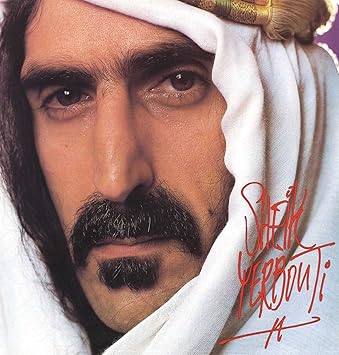
Sheik Yerbouti - Frank Zappa

Provenance: In a not insignificant number of ways I am my father's son, and nowhere is this more evident than my tastes when they edge towards the weirder end of the popular music spectrum. White Noise, Gryphon and today's subject - Frank Zappa - all came into my orbit as a consequence of my dad's listening habits.

In the instance of Sheik Yerbouti, I bought this to signal a small amount of independence. How so? Because dad didn't own this album. I distinctly recall as a youngster being impressed by cover art of both Overnite Sensation and Hot Rats, I thought the guy's name was cool (it sounds like a freakin' laser) and some of the songs made me laugh. Thus when I was older and casting around for my own bit of Zappanalia, I went for an album that was considered one of his more 'hard rock' efforts, as per my own inclinations at the time. Hence Sheik Yerbouti.

May I drift a little here? When it comes to worst fanbases of all time, you have to consider those of the Grateful Dead, Britney Spears and Pantera. They all have their demerits, but for me nothing comes close to being stuck with a Zappa fan when the topic of conversation is Zappa. I've had my head forcibly banged for me watching Iron Maiden, met some Megadeth fans who were happy to show me their Neo-Nazi tattoo collections and saw not one but three fights break out within spitting distance during a Madness gig. I'd happily endure all that again, and then some, if I didn't have to spend another moment in the presence of a Frank Zappa fan (my dad excluded, who is the epitome of the exception that proves the rule).

Review: Well, this is a bit of a disappointment.

I can imagine that, aged sixteen, I found some of this stuff funny. However, I've never found scatalogical humour particularly engaging, and any youthful proclivity I may have had towards it has certainly dimmed with age. In terms of my Zappa listening these days, it tends towards the more instrumental side, Mothers of Invention era cuts or Hot Rats (because 'Willie the Pimp  features the greatest violin riff in rock music). Sheik Yerbouti has slipped to the bottom of the pile, and giving it a listen for this review has done little to rehabilitate it.

You know, 'I Have Been In You' might have elicited the odd yuk back when Peter Frampton was a ubiquitous presence in the homes of Middle America, but pastiche is a dodgy thing to pull off at the best of times. It's saying something that the parodical Bob Dylan harmonica stylings on 'Flakes' is the highlight of 'Flakes'. And revisiting the notion of jokes ageing poorly - whew - 'Jewish Princess' (yep) and 'Bobby Brown (Goes Down)' (a discotheque staple on continental Europe, which is enough to make me a full on Brexiter) would've surely been offensive forty or so years ago. In 2018 they come across as positively Neanderthal with their depictions of Jewish women and homosexuality, respectively. A former English Literature teacher of mine once felt moved to describe Zappa as a 'poet'.

I'm happy to say that, amongst the more overtly comedic songs, one still holds up - 'Dancin' Fool' is a stabby little lampoon of the disco scene that works through a combination of splenetic observational humour and metrical tricksiness, the latter effectively turning it into a disco track that can't be danced to. 'Tryin' To Grow a Chin' is also a lot of fun, drummer Terry Bozzio providing a demented vocal. Plus I like false endings, and this song's got one (sorry to spoil it for you, folks - but are you really going to listen to Sheik Yerbouti any time soon?).

Here's the frustrating part; the first track that appears to privilege musicianship above cheap thrills, the instrumental 'Rat Tomago', hits the mark. The push-pull percussion, jazzy keys and wild guitar improvisations afford a glimpse into realms beyond this album's - consciously applied - limitations. Oh, enjoyed that music, did ya? Never mind, here's some wisecracks about fisting. With Sheik Yerbouti we've reached a point in Zappa's career where he needed to do the stoopid stuff (and take it out on tour) to fund his more serious compositions, which had become prohibitively expensive, especially where recording orchestral works were concerned. At least, that was the line trotted out at the time. Who knows? Maybe that was the case, but then again maybe he just got a kick out of stigmatising homosexuality via the medium of comedy song.

As I have intimated, there are hints of a better (and shorter) album here; all the instrumental cuts are great, with 'The Sheik Yerbouti Tango' coming out on top because it sounds just that little bit out of control. Zappa fans might scream that their formalist hero knew exactly what he was doing, but I think it's sometimes pretty neat to hear the seams of the music. (Isn't this where improvisation becomes truly interesting? When instead of falling back on the rock / jazz / blues playbook of licks, they take their instrument on a journey that teeters between inspiration and failure?). Of the 'straighter' rock stuff, 'Broken Hearts Are For Assholes' has a certain appealing mania to it, even if it does descend into a coda about 'poop chutes'. 'Baby Snakes' is here and gone far too quickly, which is a shame because it's a little gem of hard-edged surrealism. 'City of Tiny Lites' really kicks out the jams - a spacey and strangely soulful number that skips along on busy percussion and a rubbery bass line. The guitar solo is fucking badass too.

I will say this - aside from the more objectionable extremes of Zappa's lyric writing, I enjoyed the experience of revisiting Sheik Yerbouti more than I had expected. It's also told me something about myself, and the ageing process. When I was in my teens, I would often skip the 'boring' instrumental tracks so I could get to the next chucklefest. Now, it would be the other way around. Once upon a time, this would've been my favourite Zappa album because it had some rawk 'n' roll on it, but now I gravitate towards his jazzier output (which coincides with a general awakening to jazz as a genre, I guess). Anyway, Sheik Yerbouti certainly treats the ol' lugholes to some interesting snippets of music, but you have to ask yourself whether it's worth wading through all the snark and calculated dumbassery to reach.

Thursday, 28 June 2018

Pretzel Logic - Steely Dan

Provenance: I became familiar with two Steely Dan songs right around the same time - 'Do It Again' from Can't Buy a Thrill and 'Rikki Don't Lose That Number' from this bad boy, and I bought both albums close together.

Review: I struggle, sometimes. The easiest reviews to write, or so it seems, are those where I find some little scab to pick at, such as an undertow of misogyny; and goodness knows I enjoy giving a band a good shoeing every now and again. The tough ones are when I'm confronted with something I unabashedly love and, furthermore, take seriously. Case in point - Pretzel Logic.

I remember reading stories about how Persian carpet makers would deliberately introduce a single flaw into their otherwise expert designs. This was done to assert that only God's creations could be considered perfect, and that no man should get ideas about his station in life. Well, if there's a Persian Flaw in Pretzel Logic I'll be damned trying to find it. The first two Steely Dan albums were - are - superb, but here they shift gears into another realm altogether. Everything here is fine-tooled, finessed, wrought so delicately that the music itself seems to glint and gleam in a kind of audio pearlescence.

Attempting to play advocatus diaboli for a moment here, I'll try to level a charge or two against the album whilst giving it a listen. For one, it doesn't exactly throb with a primal swamp rhythm. It's certainly not shack-shaking primitivism of the stripe one would encounter with Jerry Lee Lewis, Little Richard or even Motorhead. This is music that wipes it feet before entering, for sure. It's an accusation heard often against Steely Dan - that in attempting to achieve technical ecstasy the finished product ends up rather bloodless. I get it. I'm not going to psyche myself up before playing sport by blasting 'Any Major Dude Will Tell You'. Of course not.

And hey, some people just plain don't like the Dan. And those people are wrong.

I'm not going to talk about key changes or thirteenth chords, though as my music professor father-in-law would assert, those things are totally legit to consider when unpacking why Steely Dan (and Pretzel Logic in particular) are so good. I will say that having so many jazz elements bubbling away underneath the surface of eminently hummable and hooky pop songs is a tough thing to pull off, however. And I guess this is why I take Steely Dan seriously, because hearing such consideration and sophistication in popular music is rare (and, I would argue, increasingly so).

Take, for example, the wonderfully kinetic 'Parker's Band'. As a tribute to Bird it's a canny and multifaceted little gem, one in which we don't even hear a snippet of Parker-inspired music until the cavalcade of horns ushering in the end of the track. The lyrics, meanwhile, begin on the same declarative note as music labels adopted to advertise their wares at the time - "Savoy Sides presents a new saxophone sensation!" Just how immersive is that! It's a small detail, no doubt, but exactly the kind of thing that Becker and Fagen agonised over to ensure that their music hit all the marks. Plus the middle eight is perfect:

We will spend a dizzy weekend
Smacked into a trance
Me and you will listen to
A little bit of what made preacher dance

In four lines we get a nod to Dizzy Gillespie, a nod to nodding out and the merest equation of jazz as a surrogate spiritualism. It's true that Steely Dan's lyrics can often seem elliptical to the point of opacity, but my counter to that would be what's the problem? Does everything need to be so literal? Is it not metonym, metaphor, allusion and the rest that work as the very stuff of poetry? Don't get me wrong, I'm not ordaining Steely fucking Dan as the inheritors of James Joyce's mantle. What I'm groping towards is that sometimes the hazy, ill-defined mirages conjured up on Pretzel Logic are perhaps more effective than a more prolix versifying at creating mood. It asks the listener to bring something to the game. I'm pretty sure Edgar Allan Poe was thinking of 'Charlie Freak' when he wrote "music, when combined with a pleasurable idea, is poetry."

(I should add, for the uninitiated, that Steely Dan is anything but hard to get into. Even the most teasingly obscure lyrics are wrapped up in the chewiest, sweetest jazz-rock you're likely to hear. Plus, if you watch movies there's always an olive branch to grab hold of - "If the dawn patrol gotta tell you twice / They're gonna do it with a shotgun" crops up in the flinty 'Night By Night', for example. I've mentioned before now the massive influence of cinema I have perceived in Fagen's songwriting.)

As someone who grew up away from American classic rock radio I don't have the ubiquity of Steely Dan to process. When I first became conscious of the fact I was listening to Steely Dan I was already (in law, if not in spirit) an adult. Thus, to a guy who had gorged on all the lumpen blooz-rock the 1970s had to offer, Steely Dan sounded fresh, curious and fizzing with musical ideas. A few years on, and now as the owner of their entire discography, nothing's changed. To me, Steely Dan represent the apogee of what popular music can be, which is a technicolour meld of virtuosity, wit and a blue flame of emotion. The only thing left to add is that, despite lacking the Persian Flaw, I don't even regard Pretzel Logic as their best work. That's for another day...

Sunday, 22 April 2018

Alice - Tom Waits

Provenance: This was one of the ten Tom Waits albums my wonderful partner Sea got me one Christmas. Thought it about time I reviewed another of these buggers.

Review: I don't have many albums comprised of music written specifically for plays - by my estimation, two, both of which are by Tom Waits. One is The Black Rider, and the other is this darkly shining shard of anthracite, Alice. God damn, this is good. But then again, so much of his 'latter period' stuff is. That he hasn't released an album since 2011 is a minor crime - to paraphrase Alan Partridge, "come back on, Tom Waits, and play some more."

For the record, I've never seen the play Alice, so I don't have any real sense of narrative on which to hang this song cycle on. There's a part of me that dearly wishes I do get to see a production one day and another part, the one that enjoys the play of the imagination when it's coupled with music, that does not. Waits' music on Alice conjures up vivid moods and atmospheres at every turn; and maybe I don't want the innerspace universe I've built around it to be disturbed.

On Alice, Waits visits many different styles and switches masks with ease, but there's always a unifying element that is hard to define. Whether he is bellowing out angular Beefheartian rollickers replete with junkyard percussion, or tentatively nosing his way through a torch song, it's indelibly Waits. Which is what? A kind of Pop High Gothic, a kind of Low Jazz and a relish for the macabre every bit as full-blooded as Edgar Allan Poe. He's a barroom versifier, sweeping profundities from the floor 'round 'bout closing time, but also able to fashion a song about fictional 19th century nobleman Edward Mordake that is wrapped in the faded, crumbling elegance of Grey Gardens. About the only time I was transported from my reverie during the first half of the album came during the early stages of 'Kommienezuspadt', purely because Waits sings in a voice that sounds uncannily like that of Herve Villechaize, he of Fantasy Island fame.

(NB: I would be the first in line if Tom Waits were to release a song that consisted of him screaming 'ze plane, ze plane' whilst, in the background, a honky-tonk piano fell down a flight of stairs.)

The other element that I think has percolated to the surface throughout Waits' career, and is in evidence here, is a clear love of acoustic instrumentation that is warm and wobbly. There are dashes of electric guitar here and there, and sometimes Waits does use a Mellotron (one of the most underrated - and underused - instruments in popular music?), but my goodness, one has to just stand back in admiration at his dedicated to the fucking pump organ. What a wonderfully asthmatic sound it has though! Any song it features on thus sounds like a tuberculosis-wracked cabaret has-been, desperate for one final turn in the limelight. Glorious.

Located somewhere between Nat King Cole, Captain Beefheart, Lou Reed, Kurt Weill, nursery rhyme, Cormac McCarthy, late era Scott Walker and Jimmy Webb; that's where you'll find the Tom Waits of Alice. Hell, there are even faint echoes of post-millenium Bob Dylan, with Alice acting as the drunken, perverted uncle to Love and Theft and Modern Times. It's a disconcerting, seductive, sad, wry (someone should write something in-depth about Waits' sense of humour - just not me), startling journey, but one of the most rewarding ways to spend fifty minutes of your life. Immense.

Thursday, 5 April 2018

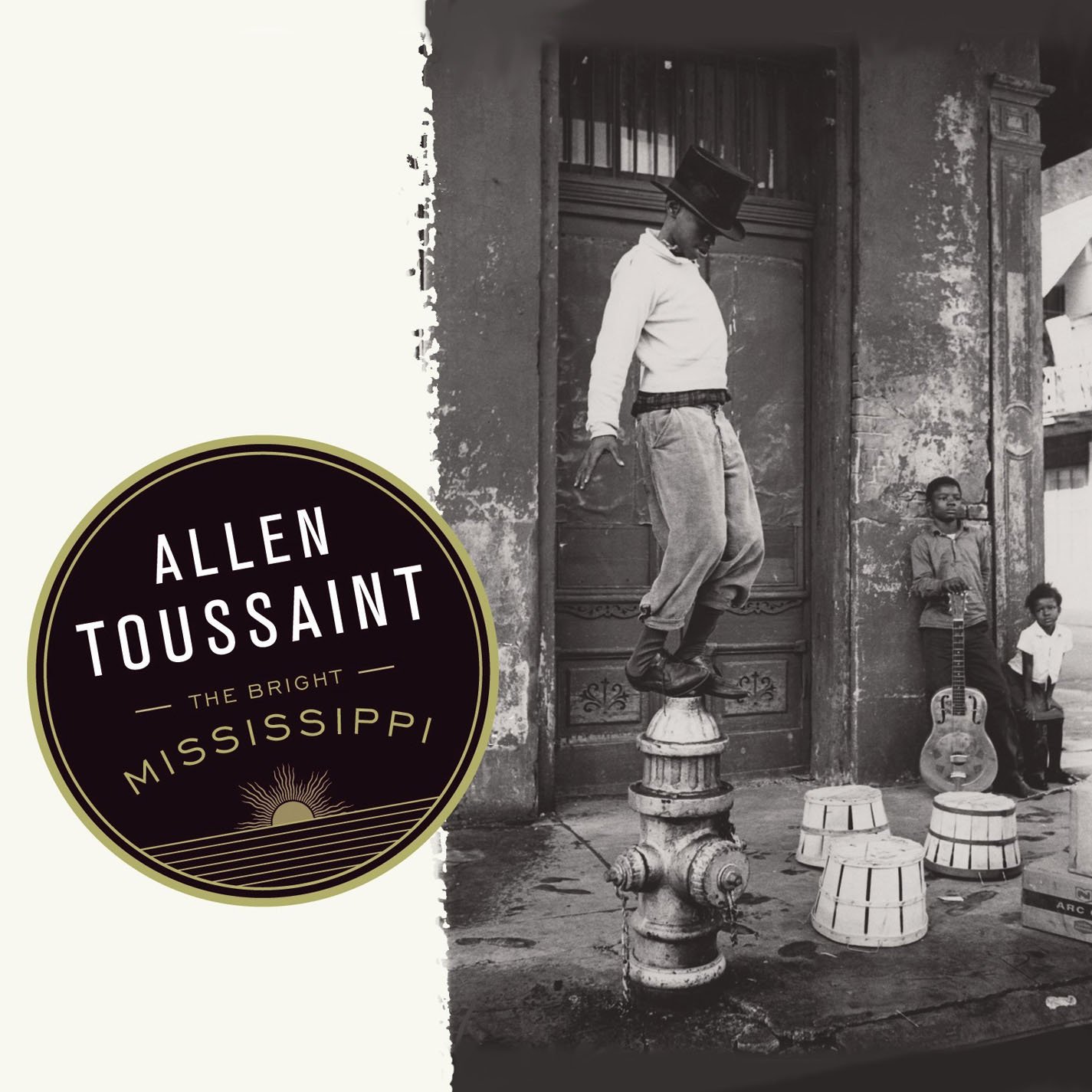
The Bright Mississippi - Allen Toussaint

Provenance: There's three things I am sure of in life; I want my coke to be diet, my football to be catenaccio, and my piano players to come from New Orleans. Just take a look at some of the luminaries to come from the Crescent City - Dr John, Professor Longhair, James Booker, Fats Domino and Allen Toussaint.

When I was in New Orleans (my favourite American city - and the least American city?) I was fortunate enough to catch the Preservation Hall Jazz Band, playing the trad stuff unamplified in a small room. It's rare, I think, to see musicians of that calibre performing without any kind of PA in such an intimate venue; and from the moment they kicked into 'Sheik of Araby' I was captivated.

When I heard that Allen Toussaint had decided to make a jazz album that honoured the legacy of New Orleans I didn't need any more encouragement to go out and buy it.

Review: Sheer, unadulterated joy.

It genuinely feels like a privilege to hear the ensemble of crack musicians Toussaint gathered for this album to perform with such casual virtuosity. What could have been a tired jog through a clutch of musty old standards instead feels like a vital, ebullient celebration of a city and the music to which it is umbilically linked. It's both remarkable that The Bright Mississippi took a mere four days to record, and yet totally believable, as the sound is so organic that one imagines the band all set up in the room together, running through two or three takes and picking the best of the bunch. If there are overdubs to the live sound, my guess is that they are minimal.

From the very first bar of Sidney Bechet's 'Egyptian Fantasy' one can sense magic swirling around, but for me the album really moves into the realms of the sublime during 'St James Infirmary', a song I've heard many different times in various iterations but rarely does it reach such a degree of majesty as it does here. From then on, everything is immaculate - whether it's a sleepy-eyed rendition of 'Winin' Boy Blues' from jazz's ur-pianist Jelly Roll Morton, an iridescent 'Day Dream' (Duke Ellington) or my personal highlight, a languid interpretation of Django Reinhardt's already wonderful 'Blue Drag'. It might even top any version I've ever heard played by the Belgian master.

Every performer on The Bright Mississippi acquits themselves superbly, though I feel special mention should go to both trumpeter Nicholas Payton and clarinettist Don Byron. The contributions they make to each song on which they feature elevate each piece, with Payton playing some especially imaginative solos. However, the name on the CD is Allen Toussaint, and so it's only fair to pay attention to what he's playing.

Fortunately, Toussaint rises to the occasion splendidly. His playing is light and supple, hands moving across the keyboard with the twinkling grace of Fred Astaire in motion. Toussaint rarely elects to bang out big meaty solos, instead accenting his stylish playing with clusters of dancing notes, little trilling figures that complement the more sinuous sounds of the trumpet and liquorice stick (check me out using that hepcat jazz lingo, daddy-o). However, for all his panache Toussaint is also a two-fisted New Orleans piano player, and that generous, wide-open easy-rolling blues sound is given voice on King Oliver's 'West End Blues' and the traditional number 'Just A Closer Walk With Thee'; and I wouldn't want it any other way.

In every sense The Bright Mississippi is a triumph. The sound is such that it almost feels tactile - can you taste that thick Gulf air on your tongue as you luxuriate in the music? Do your eyes prick at a hint of cayenne pepper and onion? It is, of course, illusory; the jumbled symptoms of an imagination stirred by aural stimuli. But goodness me, what stimuli! I find in such situations that it's best just to sit back, pour a measure of something expensive and laissez le bon temps rouler.

Sunday, 18 March 2018

Helen's favourite songs - part two

Last time out I rather optimistically said that they'd be a regular review or two between part one of this round up and the following installation. That was before I went away to Germany, came back and got lazy. However, a good session with the new Judas Priest album (Firepower, it's magnificent) helped me to regain my mojo and so here are five more of my friend Helen's favourite songs.

I Left My Heart In San Francisco - Tony Bennett


Going by the first five songs, and now this one, I feel Helen has a real affinity for the bittersweet side of life. Languid yet impassioned, '...San Francisco' is a perfect example of Tony Bennett's immaculate, effortless style. Starting off small and perhaps even intimate, the song crescendoes into a widescreen celebration of the city; you can almost picture the fireworks popping over the horizon as Bennett finishes up. This subgenre of jazz has never really been my thing at all, but this is enjoyable and eminently listenable.

Kiss Me - New Found Glory


Ah, now this is strange. As opposed to most of the picks that Helen and I swapped, this is one I remember contemporaneously. I must admit to having very ambivalent feelings around the whole latter day pop-punk scene. On the one hand, lots of my friends were big into it, and it was agreeably rackety. On the other, I didn't like its bland chugging efficiency, inclusive of instrumentation and singing. Nevertheless, this is a pretty fun rendition of the Sixpence None The Richer track, melodically faithful but with an alt-rock breakdown or two thrown in to placate the moshpit. Eh, not my favourite.

Pull Shapes - The Pipettes


The Pipettes - hitherto, my familiarity with them extended purely to their existence, which is to say, I don't recall ever hearing a note of their music. Coincidence is a funny thing, however, and it was only recently that I read an article in the Guardian about member Gwenno Saunders, who has been releasing music in the Welsh and Cornish languages. Colour me intrigued. What an odd song! It falls somewhere between the Ronettes and Steps! I'm rather smitten with how quirky and guileless it is, and in spirit it does seem to be recovering some of that bubblegum naivete of the best 1960s pop. I do find the modern production a bit stifling for what should be a riot of jubilance, but perhaps the marriage of the two period is the point? Maybe I should just shut my mouth, eh?

Don't Worry Baby - The Beach Boys


Now for an echt 1960s experience, the Beach Boys! This is glorious. As someone who has listened to a lot of this kind of music, I can tell you that absolutely nothing about this song comes as a surprise. You can almost anticipate the chord changes, and even the melody, before you've heard the song. It dips into plaintive longing when you expect it to, it soars with a kind of serene radiance when you expect it to. So what? When it's done this beautifully, so what? The different voices weave in and out of each other like spring butterflies. The Beach Boys were, for me, the epitome of post doo-wop, pre-Beatles pop-making, and aside from dorky numbers about being cool to your school, you can stick a pin in their catalogue from around this time and alight upon a gem. This song clouds the eyes and slows the heart, so why wouldn't it be on a 'best of' list somewhere? I kiss each fingertip in turn!

Stand By Me - Ben E King


I don't really feel any requirement to talk about this. It is perfection writ large, the gold standard of popular soul. It exists in the stratosphere, breathing the same thin air as 'I Heard It Through the Grapevine', 'Respect', 'My Girl' and others of that calibre. The bass riff that introduces the song is immediately recognisable, and instantly hummable. Instead of winding up throughout the track, King bites down on the first lyric, managing to tread a path that both manages to be imperious and yearning at the same time. Speaking of the lyrics, they are both simple and yet universal, underscored by strong images of a faintly apocalyptic nature. But the malt-shop eschatology doesn't sound hokey; it only serves to provide a backbone to the ardour professed by King. Three minutes that will leave you staggered.

That was fun! I would like to finish up with a few final thoughts. Ultimately, although we gave critical appraisals of each other's lists, there was a shared sense that the exercise went beyond merely talking about music. Indeed, I felt a little bit exposed, because whilst I'm happy talking about music, to say 'these are my ten favourite songs' can be quite an intimate thing to reveal. When I was younger, a mixtape was both a gift to someone who had feelings for but also both a shorthand way of demonstrating good taste and a discrete way of hinting that, perhaps, still waters run deep. As it so happened, we did indulge in a bit of cod-psychology; I found Helen's list to have a seam of melancholy running through much of it, whilst she identified a very off-brand sexiness to a few of my picks. Helen's feedback, incidentally, was both thoughtful and insightful; I should also add she has a great ear for music she's not necessarily familiar with. I'm glad we did this.

Anyway, back to talking about some overheated guitar crap next time out!

Sunday, 25 February 2018

Helen's favourite songs - part one

I imagine that we've all been asked for our top five - or ten - favourite songs at one point or another. It's a fun, twisty little question that allows you to reveal something about yourself by degrees. It's also one that I associate with my younger days, simply because I haven't been asked that question for years. That is, until my friend Helen put it to me this week.

Although we have convergent tastes in the realm of rock 'n' roll and 1960s pop, Helen and I seemingly differ on a whole lot. So, in order to really dig into what tickles each other's vental tegmental areas we swapped our favourite five (soon expanded to ten) songs and agreed to listen to them critically. Now, we all know that ten 'favourite' songs is an impossibility, as environment, mindset and memory all come to bear on making one's choices. Nevertheless, a selection of ten or so well-regarded songs is, in my estimation, more than a glimpse through the window to a person's soul - so without further ado, here are the first five tracks Helen chose, and my commentary.


Smile - Nat King Cole


I was more familiar with this song's backstory - that the music was written by Charlie Chaplin, and it was one of Michael Jackson's favourites - than the tune itself. The first thing to say is that it is the perfect match for Nat King Cole's effortless crooning, his warm, sad voice perfectly matching the bittersweet lyrics. In that sense, 'Smile' is a triumph - the concept being matched exquisitely by its execution.

To modern ears the instrumentation might sound a bit slushy, but to me it evokes a golden age where it was commonplace for three-minute pop to be treated with the utmost care and respect. So strings swell, woodwinds trill and swoon and a drummer brushes away unobtrusively in the back, providing Cole with a lush backdrop for his inimitable baritone. Sumptuous.

You Don't Know Me - Ray Charles


On to the second song of Helen's selection, and there are similarities with 'Smile' inasmuch as it features yet more baroque orchestration, this time with the addition of a mixed-voice choir. An unhurried torch song, 'You Don't Know Me' is distinguished from Cole's song by the vocal delivery. Where Cole's voice, untutored as it was, nevertheless came from the jazz clubs, Charles' vocals went to church (NB: it's never that simple though, is it? Cole's father was a Baptist minister).

As with much of Charles' oeuvre, that standout element of 'You Don't Know Me' is the barely restrained passion in the delivery of the lyrics. Despite being written by outside writers, the way Charles is able to get inside the viscera of the song is a minor marvel in itself.

George On My Mind - Ray Charles


Wow - even better than the other Ray Charles song in this list. It's one of those tracks, like those cut by Brooke Benton, Glenn Campbell and latterly Tony Joe White, that feel so big and widescreen that you're surprised to find it's only three or four minutes long.

That easy roll of the piano, the way he switches moves between major and relative minor keys, the vocals cracking with emotion - let's just say this is how the big boys do it. The string arrangement in 'George On My Mind' is something else too, intricate without being fussy, blossoming in peaks of high emotion one moment, dying down to allow the piano to breathe in the next. Pop music has rarely sounded this sophisticated since.

Runaround Sue - Dion


If your hearing faculuties are fine and you don't like this crackerjack my suspicions are that you don't possess a pulse. It's got all the stuff I like - five fucking chords, saxophone squalling away in the background, backing vocals that take a cue from doo-wop and a guy that knows how to belt it out. Helen called this a 'slut-shaming classic' half-jokingly, and I imagine if it were released today there'd be an article on medium.com within five minutes decrying it as 'problematic'.

I don't care. Songs like 'Runaround Sue' form one of the main arterial routes away from the beating heart of rock 'n' roll; the smoother, citified version hustled away from its southron birthplace by a bunch of inner-city punk Italian kids. It's an absolute gas. The opening lines speak of a story "sad but true", but nothing sounds further from the truth, given the sheer, giddy ecstasy of its delivery. 'Runaround Sue' is scintillating. 

Breaking Up Is Hard To Do - Neil Sedaka


Oh, I know this one! Yeah, this is cool. 'Breaking Up Is Hard To Do' adheres to a template for a certain kind of song produced during this era - speed it up and there's 'The Night Has a Thousand Eyes' by Bobby Vee, slow it down and beef up the strings and there's Gene Pitney's 'Something's Gotten Hold Of My Heart'. Like 'Runaround Sue', 'Breaking Up...' glories in a doo-wop schooled backing vocal that's every bit as irresistible as it is moronic. The handclaps that accentuate the rhythm are delicious, and herald the latter-day self-conscious bubblegum of a song like 'Sugar, Sugar' by the Archies.

For all the crushing heaviness of Electric Wizard or Sleep, I'm never not going to be a sucker for the unadulterated head-rush of 1960s pop music. I can see why 'Breaking Up...' would be on a list of favourites - it does nothing particularly brilliantly, and does it brilliantly. There's a strange kind of virtuosity in turning out a song so simple and yet so addictive. If this is the musical equivalent of junk food, I want to gorge until I get a coronary.

Well, that's the first five! I'll probably do another album review or two before I tackle the second half of Helen's selections. I've enjoyed this so far, and I look forward to - let me just get my phone out - New Found Glory and, er, McFly, amongst others! 

Sunday, 4 February 2018

Devaju Retro Gold Collection - Django Reinhardt

Provenance: Back when I was first learning how to play guitar I heard tell of a man who, despite a partially paralysed left hand, could play incredible stuff. This was a time when Napster was in its infancy, so I happily shelled out for this cheap two-disc compilation when I spotted it in HMV one day.

The guitarist, of course, was the Belgian-born Romany jazz legend Django Reinhardt. As such, this is probably the first jazz album I ever purchased.

Review: Bear in mind that at the time of buying this my musical diet was a steady intake of Led Zeppelin, Black Sabbath, Deep Purple and other 'eavy bands of the classic rock era. Through picking up the guitar I was starting to learn about blues through the gateway of Stevie Ray Vaughan, albeit one could probably make the case that SRV was only half a step away from classic 1970s blues rock and thus more palatable to my ears than the likes of Charley Patton or Blind Lemon Jefferson.

Despite being a cloth-eared pithecanthropoid, even back then I knew I was listening to something quite sensational. I was one of those guitarists that went through a phase of equating technical brilliance to musical competence, and I saw Reinhardt through the same lens as Joe Satriani and Steve Vai. Almost twenty years later I barely ever whack Satch on the stereo, and can't recall the last time I gave Vai an outing. Reinhardt endures, however. Why?

For one, he was an incredible musician - not just in a technical sense (but let's not forget he was essentially playing with half the regular number of fingers on his left hand for almost his entire recording career) but also as an improviser. You can hear him lean into a song, strike up the melody and then run with it into new and exciting territories. Blazing virtuosity can work when it's in service to something greater than a demonstration of itself.

Secondly - once where I was fixated on the guitar, now I give equal attention to the other master to feature on these recordings, the violinist Stephane Grappelli. The grace and fluidity of his execution is the perfect complement to Reinhardt's quicksilver trickiness; imagine the bluegrass duels you might have heard between banjo and fiddle players, transplant that to a jazz idiom and you're not far off what's going on here. Although the liner notes don't say as much, I'm quite sure that all the tracks here are from their fruitful time together in the Quintette du Hot Club de France string ensemble.

The third thing to mention is that as I've grown older my sensibilities have changed and evolved. My criteria have expanded from 'heavy riffage' and 'cool fingertapping solos', which I suppose can be a sign of maturation. Anyway, when I was a teenager I didn't have an instinctive feeling for jazz, or more specifically swing. Now I've digested a lot more, I can appreciate just how hard some of this stuff swung, even more remarkable as it was achieved without the aid of brass or percussion. The boys playing rhythm (including Django's brother, Joseph) certainly knew their task but Reinhardt also provides some amazing moment of push-pull, throwing in half-bends and double-stops to add variation and spice.

Two CDs in a row is a bit wearying, as the tracks all possess a similar feel, but played sparingly this Django Reinhardt collection still has the ability to wow over eighty years later. The Quintette's output is still the gold standard by which gypsy jazz and string band swing is held to, and rightly so.

Sunday, 23 April 2017

Can't Buy A Thrill - Steely Dan

Provenance: I heard a Steely Dan song or two on the radio and liked them. Consequently, I went and bought their first album. It's that simple.

Or, rather, it isn't. See, I don't just 'like' the music of Steely Dan - I am a swivel-eyed zealot, a slobbering devotee, a man for whom little else matters except the cool embrace of jazz-inflected, complex (but accessible!) soft rock. In short, I'm a fanboy.

For too long the Roman Catholic Church has held a monopoly on holy trinities. Subsequent to the crushing of the fourth-century Arian heresy, a few worthy challengers have appeared; Larry, Moe and Curly; Crosby, Stills and Nash; and of course, the adamantine and ever-victorious troika of McDonald's, Burger King and KFC. Well, here's another for the pantheon - Blue Oyster Cult, Judas Priest and Steely Dan. A triumvirate I esteem above all others.

Review: I don't listen to Steely Dan - I eat, sleep, breathe and shit Steely Dan. As with every album I review for this blog I have it playing as I write, but I don't need to. I know each and every word, the cues for all the instruments, the name of who plays what. I am a tiresome individual to be around, peppering my conversation with references to Steely Dan and acting with exasperation when my interlocutors haven't yet been exposed to the genius of Walter Becker and Donald Fagen. I drive my friends crazy. I don't have many friends.

If I am to find fault, it's that Can't Buy A Thrill has a supremely ugly album cover. Like, what else is wrong? The songs are brilliant. The performances are virtuosic. The production is crystalline (and this on their first album; the quest for sonic perfection has come to define Steely Dan to a great degree. When did they reach their apogee? Aja for my money, though some argue that Fagen's solo outings The Nightfly and Morph The Cat push the envelope further).

Do I love Steely Dan, or do I need Steely Dan? Certainly, I'm not the only person who considers 'the Dan' a lifestyle choice. I too want to drink fruity cocktails, roll out world-weary witticisms in sparkling company, wear rollnecks or floral shirts and leave parties early. I want my Nathaniel West cynicism delivered in gnomic couplets and wrapped around a saxophone solo. I want jazz chords, but not too many. I don't own a yacht but I live on the coast and see many go by my window.

Let's be serious for a moment (because one should not be too fatuous about Steely Dan, you'll never win); Can't Buy A Thrill is a stunner, and if it receives fewer accolades than it should it's because it shares the limelight with Aja, Katy Lied, Countdown To Ecstasy and the rest. The two most recognisable cuts here are FM staple 'Reelin' In The Years', tripping along like an urbane Wishbone Ash, and the filmic 'Do It Again', a series of hard-luck vignettes accompanied by organ and electric sitar. In fact, it strikes me that much of Steely Dan's work is in thrall to the silver screen, either employing recognisable motifs or even terminology in their lyrics that is borrowed from cinema. Someone should write an essay on it, so long as it's not me.

Then you have the rueful, crumbs-from-the-king's-plate grooves of 'Dirty Work' and 'Brooklyn (Owes The Charmer Under Me)'. Both seem to speak of a demimonde possessing a kind of flaccid, played-out glamour. It all sounds ineffably decadent, but remember kids, to be decadent you must first be civilised. That's the real secret to Can't Buy A Thrill - it's all so effortlessly cool. And as the 1970s wore on, Steely Dan would just continue to get cooler. Whilst other bands gurned and grunted their way through the most rudimentary riff-rock and catpiss guitar soloing, Steely Dan would be playing something miles more sophisticated, by the best musicians in the business, and it would sound great on the radio.

The thing is, it was never effortless. Becker and Fagen were martinets in the studio, demanding endless takes from their hired guns until it met their standards. Famously, there's a scene in The Shining where a slow zoom of Scatman Crothers took over sixty takes before Stanley Kubrick was satisfied (as legend has it, Crothers wept with joy and relief in a subsequent filming when the director called his scene a wrap within three takes). The appearance of serenity and the state of serenity are two very different things, and so Steely Dan, like Kubrick, split the difference and opted for the former. It's partly why Can't Buy A Thrill is such a full-bodied, kaleidoscopic success.

I've never seen Steely Dan and would drag my dick through broken glass in order to do so. The closest I came was one evening in Boston. I'd had a great time watching the Blue Man Group with my then-girlfriend - hell, I'd even participated in the show and had a fresh smudge of paint on my cheek as a memento - but emerging from the theatre I happened to glimpse the marquee opposite. It said STEELY DAN and I don't think I spoke another word that evening.  

Sunday, 3 July 2016

Bluesin' With The B3 - Wayne Goins

Provenance: Wayne Goins is my father-in-law.

Review: Whilst listening to this album, a meditation on the limitations of popular music criticism by Simon Reynolds came to mind. In his excellent work on electronic dance music, Energy Flash, Reynolds writes of the completely different vocabulary needed to write about a form of music that defied the 'literary' readings that worked for the majority of rock music. He points out that it's pointless talking about melody, harmony and lyrical content when dance music is (largely) designed specifically to bypass these notions; how can one nod along at home next to the stereo to a music that demands is tailored for communal consumption, drug consumption and bodily expression?

Now, jazz and dance are not the same, but for me, someone who is used to thinking about music as something to be read, I do find a commonality inasmuch as I struggle to find the right language when talking about it. As someone who grew up mostly listening to rock, being confronted with an album of organ trio instrumental numbers is a daunting prospect. Oh, and the guitarist is my father-in-law, who I'll be staying with in November this year, so no pressure.

Some things I do know; I can recognise virtuosity when I hear it. Jazz has a rich tradition of improvisation and exploration, an approach which is mirrored in (some) rock music (think Duane Allman, Jeff Beck, Warren Haynes, Steve Vai, Paul Gilbert - for example). Similarly, I muck around on guitar, so I can confirm that daddy-o is a crack musician (as would befit the Director of Jazz Studies at Kansas State University). I even know just enough to suggest that his style is not a million miles away from Wes Montgomery. There we go - slightly more than would fit on the back of a postage stamp, but amply accommodated by a standard C5 envelope.

The Hammond B3, on the other hand, is a universe of mystery to me. In the liner notes, Wayne mentions a bunch of players, of whom I've only heard of two (Lonnie Liston Smith, Jimmy McGriff) and consciously heard the music of one (McGriff). So, with apologies, as far as I can tell Ken Lovern is a fine player. Bear in mind that for me, organs pretty much come in two flavours - Keith Emerson and Korla Pandit. Ken doesn't sound like either, incidentally.

Recorded live, credit must also go to producer David Brown for capturing an instrument - the B3 - that can be notoriously tricksy due to the ultra-deep bass notes that can be produced by its Leslie cabinet. It can result in a blowy, fuzzy low-end mess, especially in a live situation - emphatically not the case here.

The best thing on this album is the wonderful, lilting Kenny Dorham track 'Blue Bossa', with its seductive rhythmic undertow and faint ghosts of Sidney Bechet's 'Egyptian Fantasy'. Another highlight is 'A Gogo', a moody, funky, almost gutbucket Jon Scofield composition. The first half 'A Gogo' also features Wayne's smokiest playing (Wayne, feel free to disagree with me on this one, but I'm right here, just as I'm right about Bob Dylan's output in the Eighties (a giant waste of time, incidentally)) on the night. I'm also a bit of a sucker for Duke Ellington so I'm happy to hear 'In A Sentimental Mood' sounding so lovelorn and bittersweet.

The album ends on Jimmy Smith's 'Back At The Chicken Shack', an opportunity to hear organ and guitar making the pentatonic scale sweat a bit. There's a moment at 3.15 when Ken just jabs his finger at a single note repeatedly, likes what he hears, and carries on jabbing - it's downright nasty. To me, that's what makes this album such a treat - the two principals know exactly when to push and pull, when to dial back and when to cut loose. This understanding is what elevates the music from technically brilliant renditions to a space where genuine mood and atmosphere is created.

If you like what I've written, why not buy the album, or indeed anything else by Wayne Goins and keep me in the good graces of my in-laws? Many thanks in advance.