Showing posts with label university. Show all posts

Sunday, 4 October 2020

Fang Bang - Wednesday 13


Provenance: My time at the University of Exeter was largely pleasant, but being out in Devon meant for slim pickings on the rock front most of the time. The one oasis was the Cavern, a vaulted cellar in the centre of town where I saw acts like The Answer, My Ruin and today's subject, Wednesday 13.

In fact, I think I picked this album up after seeing the erstwhile Frankenstein Drag Queens from Planet 13 and Murderdolls frontman (not to mention his stint as a Faster Pussycat tour guitarist!). Wednesday 13 wasn't really my cup of mud, but when you're drowning in a sea of Newton Faulkner and Mr Scruff, you seize anything resembling a life raft.

Later, this would also extend to frequent trips to a Monday night goth night run by a living skeleton named Francis...but I'll save the story for when I review Judas Priest's Turbo.

In any case, Wednesday 13 put on a raucous live show, and I spent the night quaffing cheap beer with good friends, so all in all a massive success. I bought this more as a keepsake from a cracking night out, rather than an album I knew I'd get a lot of replay value out of. Years have gone by since that gig and I haven't spun Fang Bang (great name) very much at all, so it's due a reappraisal.

Review: If the name Fang Bang wasn't enough of a giveaway. song titles such as 'Morgue Than Words', 'My Home Sweet Homicide' and 'Happily Ever Cadaver' should give you a clue that this release is kindred spirits with Rob Zombie and mid-era Alice Cooper; good, wholesome, comic-book and MGM monster movie fun. However, unlike the industrial-powered ramalama of Zombie or the spray-glam of Cooper, Fang Bang is anthemic pop-punk with a sleazy edge.

And so I ask you, faithful reader, have you oft seen me extolling the virtues of pop-punk on these pages? No, you haven't. The closest I've come would be my encomium to Sloppy Seconds and their mighty Destroyed album, with which it shares some of its ghoulish sci-fi sensibility. That said, Destroyed works as a clever-stupid, ramshackle, knockabout celebration of all life's most egregious sins, and remains very much an outlier in my collection. 

Fang Bang simply isn't as cute, clever or as charming as Destroyed (but what is?); but I'm surprising myself with how easy it's going down. Songs all blend into one, and as catchy as they can be - especially at the choruses - they're all just one hook short of being proper earworms. One feels that if Cheap Trick or the Wildhearts got to grips with these tracks they'd wind up with just the right amount of acid and saccharine. Still, 'Faith In The Devil' has got a nasty bite, and you'd have to be a fucking sadsack not to smile at the 'oi oi oi' section in 'Happily Ever Cadaver'. 

I don't really know what else to say - everything rushes along at a nice clip, as it should, and production bears all the hallmarks of the early 2000s, which has never been my favourite era for capturing noises. One plus is that Wednesday's raspy sneer fits in with the loud 'n' compressed flavour of the age - of all the other singers I'm familiar with, he most resembles his former employer in Faster Pussycat, Taime Downe. It lends a suitably cloacal aspect to mascara-and-glitter smeared proceedings, although it has to be said that his range stretches about as far as Russell Grant attempting to dunk a basketball.

But, look, if you can't raise a smirk to a song called 'Buried With Children' (which is really good, in fairness) and the lyric 'I've got blood in my alcohol system' doesn't make the corners of your mouth twitch, I can't help you. This is rambunctious Hot Topic splatter-punk with no little heart and a smudge of dark glamour besides. Fang Bang may not quite blast the rafters on a sedate Sunday afternoon, but crank this in a poorly-ventilated sweatbox with £2 Carlsbergs on offer and you've got the recipe for a helluva good, gruesome time.

Sunday, 28 June 2020

In League With Satan - Venom

Provenance: A guy at university wouldn't shut up about how important Venom were, so I caved and bought this two disc compilation to see what the fuss is all about.

Review: I guess that listening to In League With Satan brought home to me that importance is a slippery old concept to get a handle on. Venom are, arguably, very important to the development of heavy metal. Musically they influenced the nascent thrash scene, but on a more wholesale level could be said to have birthed black metal. Venom synthesised a host of their own influences - punk, heavy metal, Satanism, Amicus horror movies - into the fundaments of black metal, aesthetically, stylistically and thematically.

Venom were also, on the basis of this compilation, spectacularly awful.

It begs the question - just because an artist heralds a new movement within a genre, do we still need to listen to them? This, after all, was my imperative to check out Venom in the first place. I have no real l33t or kvlt credentials to my name (if we exclude In League With Satan I own perhaps three black metal albums) so maybe I am entirely the wrong person to attempt to peer through the auditory fog to try and identify what the chin-strokers see in tracks such as 'One Thousand Days in Sodom', 'The Seven Gates of Hell' and, perhaps the best title in metal history, 'Aaaaarghhh'; but to those who do tread along the Shining Path set out by the Lord of Lies, surely this also sounds like dogshit?

Yet there are people out there who love Venom. I recall waiting in line to see My Ruin at the Cavern in Exeter (what memories!) and falling into conversation with a chap in the queue. What started off as a fairly genial chat about rollercoasters descended to the point where he threw a punch at me (which I dodged, utilising a 'Drunken Master' defence style (NB: I was drunk)) because I made fun of Venom. More specifically, I made fun of the shrine to Venom he had set up in his flat, but the point remains - I may see Venom as heavy metal clowns, but my erstwhile opponent saw them as important enough to, perhaps, offer sacrifices in their name.

Despite my personal opinion that In League With Satan is a buffoonish parade of the ripest incompetence, I'll at least try to pay dues where earned. Black Sabbath and Led Zeppelin flirted with Satanism, but Venom really go all out - they are the bogeymen that housewives clutching their pearls to Kiss worried about. That in itself is quite fun, though if I were Old Nick, and this was the music I was allotted in the late twentieth century, I would go back to tuning guitars at the crossroads. The music itself does push towards what were the extremes of speed and volume at the time, but without the whipcrack discipline of Motorhead it often descends into a churning heavy metal gazpacho, which has its own strange charm. Bassist and "singer" Cronos is either a bonehead or the most mordant wit in the game; either way, his dumbass lyrics, when discernible, are entertaining enough.

I don't really know what else to say. There's a link between the production values on the material from first album Welcome To Hell (music journalist Geoff Barton memorably said it possessed the "hi-fi dynamics of a fifty year-old pizza", but went on to give it five stars) and the lo-fi approach cultivated by many subsequent black metallers, for sure. It's as if studio polish and distinct separation of instruments are part of the realm of fakery, representing yet another branch of metal's oddly explicit obsession with authenticity (think Manowar's 'All Men Play On Ten' and 'Death To False Metal', or the graphics in Nitro's O.F.R. release that suggested that not only were keyboards not used but moreover were entirely banned from the recording process altogether). Abhorrence towards sounding good seems rather precious and faintly ridiculous (to this Steely Dan fan, hyuk hyuk), but here again, I am almost definitely missing the point. You want to sound ugly, brutal and antisocial.

But do you want to to sound stupid?

Nonetheless, In League With Satan represents a triumph, of sorts. Venom found a sound and a look that stood out; they found a sympathetic label in Neat Records, also from the north-east of England, who championed their local scene, putting out landmark releases by bands such as Raven, Jaguar and Blitzkrieg. They rode that horse all the way home, smoke-bombing stages around the world to the strains of 'Genocide', 'Satanarchist', and 'Blood Lust', and gave a lot of angry Norwegian kids a blueprint for their own creative efforts. Not all bad, then...?

Sunday, 9 February 2020

Beggars Banquet - The Rolling Stones

Provenance: I received this as a 17th birthday present from two friends, Stef and Amy. Pretty good going for two 16 year-olds who admittedly didn't share my taste in music.

Review: The Rolling Stones have floated around my consciousness ever since I can recall being aware of music, albeit in compilation formats. This was my first Rolling Stones studio album, and it was one of the few CDs that followed me to university. As such, I've listened to it a lot, and it's fair to say that I'm deeply smitten. However, as with many ageing partnerships, one party (me) is starting to get a little rattled by some of Beggars Banquet's peculiarities.

The first one is that I simply don't like what is probably the most celebrated track on the album, 'Sympathy For the Devil'. Just as I don't like whistling on record, neither do I enjoy the weird hooting that plagues half the track. I could possibly tolerate a few bars of hoots here and there, I'm not an unreasonable man; and I positively love 'Sympathy's...' sulphurous lyrics and the hypnotic, insistent candomble rhythm. Yet I almost find myself dreading the commencement of the hoots, because it smothers all those elements that otherwise make the lead-off number a corker. For what it's worth, those nabobs of taste and sensibility over at Rolling Stone rank this the 32nd greatest song ever, so what do I know?

The other issues I have go a little deeper than simply not liking a musical choice or two. A good fifty years and change has passed since Beggars Banquet came into being, so I wish to be careful that I don't slip into anachronism here, but I also claim it as my right in 2020 to find 'Stray Cat Blues' unpleasant. I wasn't too keen on glam-metal guttersnipes Faster Pussycat making approving noises about underage girls, and the same applies to the Stones, no matter that they're treated as the more august and accomplished act. The shame here is that 'Stray Cat Blues' is a smashing rock song, a grinding, swaggering thing, but it's completely undermined by the grim subject matter.

An extremely feeble justification, perhaps, is that 'Stray Cat Blues' is documentary-as-art, a chronicling of the spirit of the age. Because in the world of rock, vulnerable girls were undoubtedly being abused by men, many of whom we now consider to be national treasures. We're happy to (rightly) shun the predator who farted out bubblegum like 'I'm the Leader of the Gang', but less keen to mete out the same treatment to the guys behind 'Space Oddity' and 'Stairway to Heaven', whose transgressions may have been more opportunist or incidental, but which would hardly escape censure if they were carried out by the Average Joe living down the street. Will popular music face its reckoning, or are we just going to wait for these alleged abusers to die quietly?

My other big problem with Beggars Banquet is one that I feel is a little more complex. 'Prodigal Son' but just be my favourite cut on the album - a faithfully downhome recreation of Reverend Robert Wilkins' blues parable. It's the song that pushed me to try open tuning for the first time, opening up new musical vistas for this bodger. So what's my beef? Well, at what point does a tribute, or an attempt at authenticity cross over into something a tad more...problematic? The Rolling Stones made much hay from assimilating / appropriating / popularising (delete as applicable) black blues and R&B music, and in fairness to them Jagger and Richards have never hesitated to publicise the names behind the music. Undoubtedly, all blues-based music contains its own gestures and semiotics, one of which is the almost ubiquitous 'mid-lantic' voice adopted by British exponents, which I have no problem with. However, on 'Prodigal Son' it feels like Jagger takes it a step or two too far, and steps over a line into minstrelsy. One can be generous and hope that the intentions were pure, but the fact remains: it's an uncomfortable listen.

I always think of Beggars Banquet as the most bluesy of the Stones' albums, but closer examination suggests that only about half the joints qualify. We've got the aforementioned 'Prodigal Son', the grisly 'Parachute Woman', 'Dear Doctor' and the beautiful, pining 'No Expectations'. Maybe my mistake is down to these being my personal picks. Nothing else, aside from 'Sympathy For the Devil' is bad, but 'Jig-Saw Puzzle' floats by a little and the country gospel closer 'Salt of the Earth' feels a mite wan and insincere for my tastes. There's no fucking with 'Street Fighting Man' though, which contains a bit of welcome bite and snap, plus the cryptic lyric 'Well now what can a poor boy do / 'Cept for sing in a rock 'n' roll band / 'Cause in sleepy London Town there ain't no place for a street fighting man'. I wonder whether, given the unrest on the continent, and the protests against the Vietnam War in America, Jagger and Richards weren't throwing a couple of jabs at the relative torpor of London? The Stones do politics, eh?

I'm sorry I haven't talked about the music so much here, because much of it is really fun. Beggars Banquet is loose, shambling and a bit scruffy in places, but hangs together through will and personality. It also contains good examples of what Keith Richards called 'acoustic glue' in his autobiography, essentially keeping an acoustic guitar strumming away whatever is happening out front in a bid to force some cohesion to proceedings. If you can stomach the shit bits, Beggars Banquet is otherwise a tour-de-force of British R&B. It's a big 'if', though.

Sunday, 1 December 2019

Aqualung - Jethro Tull

Provenance: I guess at one time I decided that should get into Jethro Tull. Anyway, I purchased this album before I went to university because it formed part of the meagre collection of burnt CD-Rs that accompanied me to halls of residence. I blasted the shit out of this thing during my first year.

Review: Some artists or albums are hardy perennials - they can be played almost any time of year and slot right in. For some reason, Jethro Tull are a seasonal band; I couldn't imagine spinning Heavy Horses or Songs From the Wood whilst the sun is shining. Very particularly, Aqualung is a winter album. Perhaps it's due to to the imagery of the title track, with its ice and 'December's foggy freeze'. It may be due to the seam of religion that runs throughout, which for some reason I've long associated with a dank coldness (the interiors of churches and cathedrals, perhaps?).

Or it might be that Aqualung goes well with the most deathly season because it sounds pretty goddamn deceased itself. I've got plenty of albums from eras where recording technology was still quite rudimentary, others whereby some creative studio trickery dates the music badly. I've even got a couple made by a sex offender in his basement. Whatever their flaws, none of them sound as dead as Aqualung. There are grime tracks recorded on mobile phones with more presence. The cardboard guitar in the video to Judas Priest's 'Breaking the Law' has better tonality than Martin Barre achieves. There are uncontacted tribes deep within the Amazon who have opinions about the production on Aqualung.

Let's be charitable. It was one of the first albums recorded at Island Record's Basing Street studios. Teething issues, an' all that. It's not as if any other album, being recorded at the exact same time at the exact same facility, sounds any good.

I've got more beef with Aqualung. About the only moment of human warmth and empathy on the entire collection comes early on, in the acoustic mid-section of 'Aqualung', where we are invited to feel sorry for the subject of the track, the titular tramp. For the rest of the album, Ian Anderson's lyrics are by turns arch and sneering, as if he's just that wee bit more clever than the listener. It's particularly insufferable on 'My God' and 'Hymn 43', which come across as 1971's equivalent of watching a YouTube atheist channel. (NB - please don't watch any atheist-themed YouTube content - it almost drove me, a staunch non-believer, to the seminary.)

Take, for example, Sparks - a band who are undoubtedly arch and oh-so-smart, but who wear their erudition lightly, and deploy a winking charm to make their references to Shakespeare, the Rockefellers and the human reproduction cycle slide down easily. Jethro Tull, alas, come across as dour as any carping Presbyter or dorm-room Maoist in their attempts to enlighten.

It's a shame, because putting aside the hectoring and shit production, Aqualung possesses the kernel of a prog classic. The electric guitar riff to 'Aqualung' is a blooter, and is rightly smashed out by greenhorns in guitar shops up and down the country. 'Cross-Eyed Mary' has some wonderfully angular guitar work, and is probably the leanest, dirtiest thing on the platter. 'Locomotive Breath' is another corker, an indomitable chugger that is nevertheless not as heavy as the version that plays in my head. It also sounds like a rubber band is part of the instrumentation. Ah, fuck it, 'Locomotive Breath' properly smokes.

Even 'Hymn 43' doesn't sound so bad, if you ignore the lyrics. In fact, it would have fit in very nicely on Atomic Rooster's Death Walks Behind You, an album that I like very much.  Pick of the bunch for me is 'Mother Goose', not only for its delightfully absurd lyrics, but because it best resembles the twisted folk that would appear on my favourite Tull joint, Songs From the Wood. Hey, maybe I'm being tough on Aqualung because it's not Songs From the Wood! Maybe!

Look, I can take the sermonising if the music sounded immaculate, and it doesn't. I still like this weird, somewhat cerebral little beast but it could certainly do with someone like Steve Wilson to give this a bit of remastering spit and polish. Oh, and I was wrong earlier on - contrary to my claims that Aqualung was altogether bloodless, 'Wond'ring Aloud' possesses a lot of heart. It's rather beautiful, in fact.

NB - my CD version of Aqualung contains a rather interesting interview with Ian Anderson about Aqualung. In the interests of fairness, it's not just me who thinks the album doesn't quite sound right; Anderson uses a portion of the conversation to bemoan the production, and the difficulties of getting decent performances on tape in the particular studio Jethro Tull were assigned.

Saturday, 31 August 2019

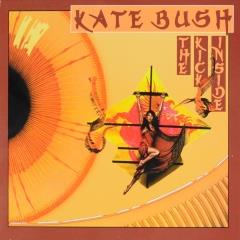
The Kick Inside - Kate Bush

Provenance: Ever since I was young I loved 'Wuthering Heights'. My parents had it on a CD compilation of 1970s hits, and along with cuts by ELO, CCS and the Tom Robinson Band, I would play 'Wuthering Heights' incessantly. Even at a tender age I could detect there was something a bit off-kilter about it.

Did I get The Kick Inside before I went to university? Odds are that I did, because our student bar had a video juke box containing about three songs (seemingly), one of which was 'Wuthering Heights'. It was on all the time, and began to drive me nuts. However, I did make a friend through a shared appreciation of Kate Bush, and I was able to introduce her work to a housemate who became an ardent fan.

Anyway, it was a bit of an anomalous purchase for me around that time, as I was busy having my brain smashed to cottage cheese by the likes of Judas Priest and Dio.

Review: A perfect album. I can't fault it. The worst thing you can do if you're not already familiar with The Kick Inside is to stop reading this bilge and give it a play. Nothing I can say can do this magical platter justice. Even when reviewing the most workmanlike collection I am nagged by the sense that writing about music is akin to dancing about architecture, a suspicion only heightened by playing through this album.

What could one possibly object to? I've been met with naysayers in the past who don't like the high register Bush sings in throughout much of The Kick Inside. I find this to be one of the most appealing aspects of Bush's execution here, however; the sheer ease with which she soars up to the most dizzying heights only serves to bolster an overall sense of ethereality. Here is a voice that celebrates the sensual, the weird and the uncanny elements of life with an almost explosive joy. It's the same breezy virtuosity one feels that they see in sporting performances like those of Simone Biles or Ronaldinho, when the seemingly impossible is delivered with all the thrust and playfulness of a person revelling in their own ability.

Oh, I also think the saxophone sounds a bit blatty and high in the mix on 'The Saxophone Song'. That's all.

How, though, can you gainsay the quality evident in the floaty, woozy opener 'Moving' (dedicated to Bush's dance teacher, the late Lindsay Kemp), and the herky-jerky carnival ride that is 'Kite'? How does one wrap their head around the fact that Bush wrote 'The Man with the Child In His Eyes', an achingly beautiful song pregnant with quiet mystery, at the age of thirteen? Without wishing to dwell on age too much, it's worth remembering that Bush hadn't even reached twenty when The Kick Inside was released. I barely knew how to put two chords together at that age; meanwhile, Bush was creating miniature masterpieces and name-checking freakin' Gurdjieff.

One aspect of The Kick Inside that might put off some listeners is that it's a very self-contained universe. Which doesn't mean that it leaves no room for interpretation; Bush's allusiveness and readiness with esoteric subjects compels the listener to fill in the gaps. However, everything feels like it exists within the world of this album, and has little relationship with a tangible world of things. In much the same way that HP Lovecraft's or Emily Dickinson's writing seemed a step or two away from regular human experience, so Bush sounds like she's singing into existence a Neverland realm. Personally, I find this aspect of Bush's work utterly addictive, but I can see how it may also seem obtuse.

Another thing; this is definitely music for the head, and not for the hips. In fact, the only people who can dance to the music on The Kick Inside are drunk goth girls and Kate Bush herself. Stylistically, it shares with Carole King's Tapestry (another triumph, incidentally) both earnestness and intimacy, and if you strip away some of the more maximalist flourishes of Bush's work, a solid piano-led pop sensibility; but where King's articulated experiences are somewhat more earthbound and recognisable, Bush zags towards cerebral and arcane subjects. What of this pop-sensibility? It's probably closer to the baroque pop of a band like the Zombies, and a dash proggier by my reckoning, but Bush's keen ear for a quirky - but catchy - melody results in an album laden with vocal hooks. A favourite of mine are Bush's interpolations in the chorus of 'Oh To Be In Love', which skims over the top of the music in a way reminiscent of Ry Cooder's sublime guitar work on Captain Beefheart's 'Abba Zabba'.

I don't have much else to say. Just buy this, or virtually any of Bush's other albums, because even when the quality is uneven, there's something interesting there. But first, do yourself a favour; dim the lights, light some candles, run a bath, bust out that family-size mint Aero you've been saving and soundtrack your self-care with The Kick Inside.

Sunday, 26 May 2019

Mingus Ah Um - Charles Mingus

Provenance: This is the first jazz album I ever bought and it's entirely thanks to a friend I met at university, Mike.

I was in his room during the first year and we were chatting away about music. Despite christening me 'Hair Metal', a nickname that would stick for a good three years, we found each other fairly simpatico in terms of likes and dislikes. That is, until the subject of jazz arose.

'I don't think I like jazz,' I said. 'It's too complex.' It speaks to Mike's good taste and geniality that, instead of berating my ignorance, he loaded Mingus Ah Um into his stereo and pressed play.

In only a few short moments I couldn't believe what I was hearing. And by Toutatis, it swung like nothing else I'd experienced before! After allowing me the time to listen to a few cuts, Mike turned to me and said 'so what is so difficult about this?'

Nothing. Like an idiot, I thought jazz was either some lame-ass big-band granddad music played by dorks in bow ties, or it was a cigarette paper away from the pretentious gubbins parodied on The Fast Show's 'Jazz Club' skits. (NB: jazz can also be both of these things, much like rock music can encapsulate something as wonderful as Terry Reid's River and Kiss' Hot in the Shade).

Review: The last time I reviewed a jazz album I spent an entire paragraph complaining about how difficult I find it to write about this particular genre. I'll spare you the plaint once more, but suffice to say, I feel lost at sea with anything that falls outside of the popular music paradigm. Feel free to go back and read about my utter lack of qualification to write about jazz right now; but if you're feeling particularly masochistic, my friend, read on!

I have a clutch of albums from bandleader (and double bass player) Charles Mingus but this was my first, and still my favourite. From the off, those very first few notes in 'Better Git It In Your Soul', one feels a sense of weight and pregnancy. It's as if the band are straining at their leashes, or waiting for the traps to open. Sure enough, after those first few establishing motifs on bass and piano, the band kicks in with a swagger that is unmatched in almost anything I've ever heard. It's post-bop but in a way that sounds directly plugged into gospel and the blues, riding a tricksy 6/8 time signature but shimmying and simmering along to something elemental and raw.

From that most ebullient number, Mingus Ah Um shifts down into something more mellow and elegiac, the beautiful 'Goodbye Pork Pie Hat', Mingus' tribute to saxophonist Lester Young. A composition that's been covered by a fair few artists, my exposure to 'Goodbye...' first came about thanks to Jeff Beck's Wired album. It was the standout cut on that LP, but here, with horns taking centre stage, it's a whole new universe. In a world where the tenor saxophone is (too) often deployed for its potential to bring a note of brashness to proceedings, it's a revelation to hear it moaning the melody with a rare solemnity.

I vividly recall what Mike said about the third track on Mingus Ah Um, 'Boogie Stop Shuffle'; every time he put it on, it brought to mind a car chase scene in some 1940s gangland caper. He's spot on. As with 'Better Git It In Your Soul', 'Boogie Stop Shuffle' really shifts, motoring along with the kind of propulsion I had hitherto believed didn't exist in jazz. It's pretty close to a headbanger. It's enough to make a guy want to invest in a zoot suit and Tommy gun combination.

Mingus also excels when stepping into the jazz tradition of paying respects to other composers. Both 'Open Letter to Duke' (Duke Ellington) and 'Jelly Roll' (Jelly Roll Morton) paraphrase elements of each musician's work. 'Open Letter to Duke' especially does a fine job, starting off at a clip before gearing down to an easeful stroll, nodding to Ellington's ability to introduce shades of nuance and mood to the swing palette. 'Jelly Roll' is a little stranger; it's like some kind of ragtime fever dream, both utterly familiar and non-traditional all at once. It's a hell of a lot of fun, I'll say that!

Perhaps the album's centrepiece, however, is the eight-minute 'Fables of Faubus'. I had initially believed that the title came from antiquity ('Faubus' looks plausibly Latin in origin) but curiosity led me to learning of a much more contemporary source of inspiration. It turns out Mingus was referencing an unpleasant little shit called Orval Faubus; no doubt familiar to Americans but a name that would elude the majority of Brits. What he is associated with, however, is relatively well-known; he was the Governor of Arkansas who called in the National Guard in 1957 to prevent African-American students from attending Little Rock Central High School after a federal order to desegregate schools.

Thus 'Fables of Faubus' introduces a comic-buffo theme from the start, which crops up every now and again almost as a refrain to Faubus himself. The changing moods and time signatures within 'Fables...', which nevertheless always return to its opening theme, means that it could be read as a tone poem of sorts. Despite the events that undoubtedly fired Mingus to write the piece (Mingus Ah Um was released in 1959), motifs that bespeak sadness or frustration never linger too long; instead, 'Fables...' is defiant and satirical. Even the mock-heroic title jabs at the pomposity of the objectionable Faubus.

In conclusion; an amazing album, that came hot on the heels of another landmark, Blues and Roots. Whilst that one was a celebration of blues and gospel music, Mingus Ah Um twists some of those influences into a thoroughly modern and adventurous sound. I'm no jazz expert (being the son-in-law of a professor of jazz music has proved humbling at times) but this was the gateway drug for me to go out and explore artists such as Miles Davis, Herbie Hancock, the Sun Ra Arkestra, Rahsaan Roland Kirk, Sonny Rollins, Horace Silver and more. With the live-action Aladdin just released into cinemas, I can't pass up the opportunity to suggest that this was a whole new world to me, and one that I don't intend to return from any time soon.

Sunday, 9 September 2018

Mothership Connection - Parliament

Provenance: Not entirely sure. Unless my memory is playing tricks on me, I seem to recall somebody telling me that this is the best funk album ever recorded. That's worth a punt, isn't it?

I know I definitely owned this before I went to university, because I once saw a dude on campus wearing a Mothership Connection t-shirt. I tried to engage him on the subject (viz: the best funk album ever recorded) but he nixed it, saying that he just liked the design and hadn't ever heard the album. Right there and then, my friends, I wanted to cuff some sense into that mooncalf.

Review: To the gauzy wraith of my memory who told me about Mothership Connection, I doff my cap to you. In the grand scheme of things I haven't listened to a great deal of funk (though I've enjoyed spasmodic funk flaps when a friend, colleague or acquaintance has hepped me to something, including the time where my father-in-law ran me through the Ohio Players discography) so I don't feel qualified to bestow any laurels upon on particular platter or another. That being said, I come back to Mothership Connection again and again and again, so it's doing something right.

Sitting squarely in the middle of an Afrofuturist musical pantheon that spans the Sun Ra Arkestra to Janelle Monae is George Clinton's outrageous Parliament-Funkadelic collective. The history is not altogether straightforward, but Clinton conceived Funkadelic to be the raw, psych-heavy outfit, bringing Eddie Hazel's swirling, hypnotic guitar work to the fore. Meanwhile, Parliament were the more R&B orientated group, a groove machine which pushed Bernie Worrell's keyboards and, on Mothership Connection, an elite horn section front and centre. In fact the personnel assembled here, pound-for-pound, possibly constitute the most dazzling array of funk musicians captured on magnetic tape.

Folks, it's a wild ride. Cold open to an imagined radio station (maybe being beamed in from outer space?) called WEFUNK, which is a device I've enjoyed in 1970s cinema (Vanishing Point, The Warriors). The putative DJs riff on the medicinal qualities of funk and jib off artists who aren't quite up to their standards (including, amusingly, David Bowie and the Doobie Brothers); this goes on for almost eight minutes, and aside from periodically busting out into a monstrous chorus it remains a nervy, tentative trip. Not at all what I had imagined - and yet it's infectious, weird, funny and absolutely addictive all at once.

However, one 'P Funk (Wants To Get Funked Up)' is done, we're into a world - no, a galaxy - of groove. It's difficult to tag a true MVP when everybody is absolutely cooking with gas, but Bootsy Collins certainly earned his fucking corn on this bad boy. It's hard to describe exactly what he's doing, but it's some of the most rubbery, audaciously groovy bass you're likely to hear. Even at low volumes it seems to punch you in the chest, and in my car's souped-up sound system it turns my humble Peugeot 207 into a veritable low-rider. And just as I once claimed that Judas Priest's Painkiller doesn't let up with the metal madness, by the same token it could be claimed that Mothership Connection couldn't stop being funky even if it tried. Even the start of 'Unfunky UFO', which is merely a finicky little syncopated guitar and bass drum, is sublime. People talk about John Bonham's right foot, but this is (perhaps quite literally) a kick from another galaxy.

None of this should suggest to you that Mothership Connection doesn't shift around in terms of mood or style at all. The coda to 'Mothership Connection (Star Child)' is built around 'Swing Low, Sweet Chariot', which is strangely poignant; a spiritual about liberation from earthly pains transmogrified into the context of an imagined African-American-extraterrestrial realm. Then there's the most old-school R&B track of the bunch, 'Handcuffs', an absurd and humorous meditation on male possessiveness. Parliament actually had its roots in doo-wop (as The Parliaments), and it's on 'Handcuffs' where this is most obvious, with all five(?) vocalists stepping up to deliver featured spots. For the finale, the general lightness of the album is nudged out in favour of a laser-focused intensity on the largely instrumental 'Night of the Thumpasorus Peoples'. This track rides atop the most outrageous groove on the whole album, and it is sticky - hell, Worrell's scuzzy synthesizers sound as if they're on the verge of collapsing in on themselves, and you the listener feel almost as if you're about to be sucked into this dark star of pure rhythm.

One thing about Mothership Connection that is abundantly clear to even the most casual enjoyer of hip-hop is how very alive the music is to the present day. To suggest it's an influence on the genre would be gross understatement; just have a look at how many times it is estimated that Parliament have been sampled. Stick 'em up there with James Brown, Kraftwerk and the 'Amen Break'. Parliament, and Mothership Connection in particular, pumps through the arteries of so much b(B)lack music, from Kool and the Gang to Charles Hamilton to Dr Dre and beyond. It's the single coolest, slickest, catchiest and unruliest goddamn funk album I've ever heard, and I'll probably spin it again once I'm done listening. Plus, who wouldn't want an album that contains a track called 'Supergroovalisticprosifunkstication'? It almost puts Isaac Hayes to shame!

My own personal coda: thanks to being turned on to Parliament at a young age, once ensconced at university I was one of a few students who knew the name Maceo Parker (saxophone; also played with James Brown and Prince, which isn't too shabby). So when his band rolled into town I was THERE and - goodness me - it was transformative. I dance like Theresa May but, just like the Prime Minister whenever she steps foot on African soil, the pull was irresistible. He's still out there touring - catch him if you can.

Thursday, 23 November 2017

Bridge Of Sighs - Robin Trower

Provenance: Ah, the rowdy old days of the internet at the turn of the millennium. I was (just) getting into guitar, and my dad had come home from work with a suggestion from one of his colleagues; give a guy called Robin Trower a go.

Naturally I booted up the PC, opened Napster (the repository of all music back then, kids) and found a file called something like 'xXx2_Rolling_Stoned_0105xXx'. I knew that, unless it had been mislabelled or was just a bunch of white noise, if I left the download going overnight in a mere eight or nine hours I'd be listening to my first Robin Trower track.

To breakfast next morning, and I was in luck! Not only did the song match the title, but I had the whole thing bar the last twenty seconds. I could rule this a success. What a tune, too. Funky, soulful and spacey all at once; I spent no time delaying my trip to the local HMV.

Review: This is another collection I don't need to listen to in order to write about it, but will do so for the sheer pleasure of it.

Over the years, I've come to regard Bridge Of Sighs as a top ten all time album. There's simply nothing bad or even mediocre about it, at all. I've heard a lot of idiots talk shit about Trower being too derivative or a poor Hendrix imitation, and whilst the latter's influence is undoubtedly the most obvious in his playing, Trower is a sublime craftsman in his own right. You can call his style bluesy but he never seems to fall back on the hackey cliches of the more prosaic blooz-rockers. You could say he was stoner rock before the genre had been properly pinned down, but Bridge Of Sighs is neither lumpen nor plodding. The moods conjured up sometimes hint at space rock, but where Hawkwind clatter into deep space on the whoosh of their thrusters, Trower glides along on the Sea of Serenity.

If I could play guitar like one individual on this planet, it would be Robin Trower.

The difficulty I have with Robin Trower, and Bridge Of Sighs specifically, is that after I listen to it much else seems so prosaic, shackled to the earth, never able nor destined to take flight. The sheer ability to impose his will so fully upon his chosen instrument and coax all those weeping, howling, swirling sounds out of it is mystifying. Little tops the excitement I still feel when the first staccato notes of 'Day Of The Eagle' explode out of the speaker; to have that followed up by the stately, mournful title track is so indulgent as to be the aural equivalent of a lemon cheesecake, topped by a Black Forest gateau, topped with ice cream.

One aspect of his sound is that, although the guitars can seem thick or even sludgy, in fact what they play is almost always fragmentary, or at most arpeggiated. It's as if each song is a mosaic that Trower assembles from shards of electric guitar. Couple this approach to his signature style, namely masterful sustain and fluid legato picking, feed it all through some trippy effects and you have a the fundaments of a very singular sound that, when wrapped around the songs, can be a thing of wonder. I should also add that Trower's vocalist (and bassist) at the time, the late James Dewar, was one of rock's most underrated white soul voices. His performance on 'About To Begin' prickles the hairs on your skin.

I'm not going to talk about individual tracks too much here. Bridge Of Sighs is sensational and should be listened to front to back, but as that's less fashionable these days, here's one of the many, many highlights:


I count myself lucky to have seen Trower a few times live. The first of these was in Exeter with my then-girlfriend at the time, Sarah - or rather, then ex-girlfriend, as we had broken up not long beforehand due to my terrible behaviour. Nevertheless, I had tickets and for reasons that still remain a mystery, Sarah consented to go with me. Not only was Trower magical but Sarah also took me back that evening (which I absolutely didn't deserve), and we would spend the rest of university and some time beyond together.

We've since gone separate ways but I still remember Sarah with great fondness. She's a brilliant person, with a cool yoga business, and not only gives classes in the Bath area but also organises retreats in some fabulous locations. As someone who has never tried yoga I can't comment on Sarah as an instructor, but the tolerance and forbearance required to put up with me for such a long time bespeaks someone with the patience of a saint. In any case, it's something Sarah has an enduring passion for, so I am adamantine in my certainty that she's ace.

We all graft our own stories and meanings to the things in life that affect us in a profound way - be it music, literature, places or people - and so it goes with this. The wistful, foreboding, luminous, beautiful Bridge Of Sighs has for me become inextricably bound to my time with Sarah. I wouldn't wish it any other way.