Showing posts with label duke ellington. Show all posts

Thursday, 5 April 2018

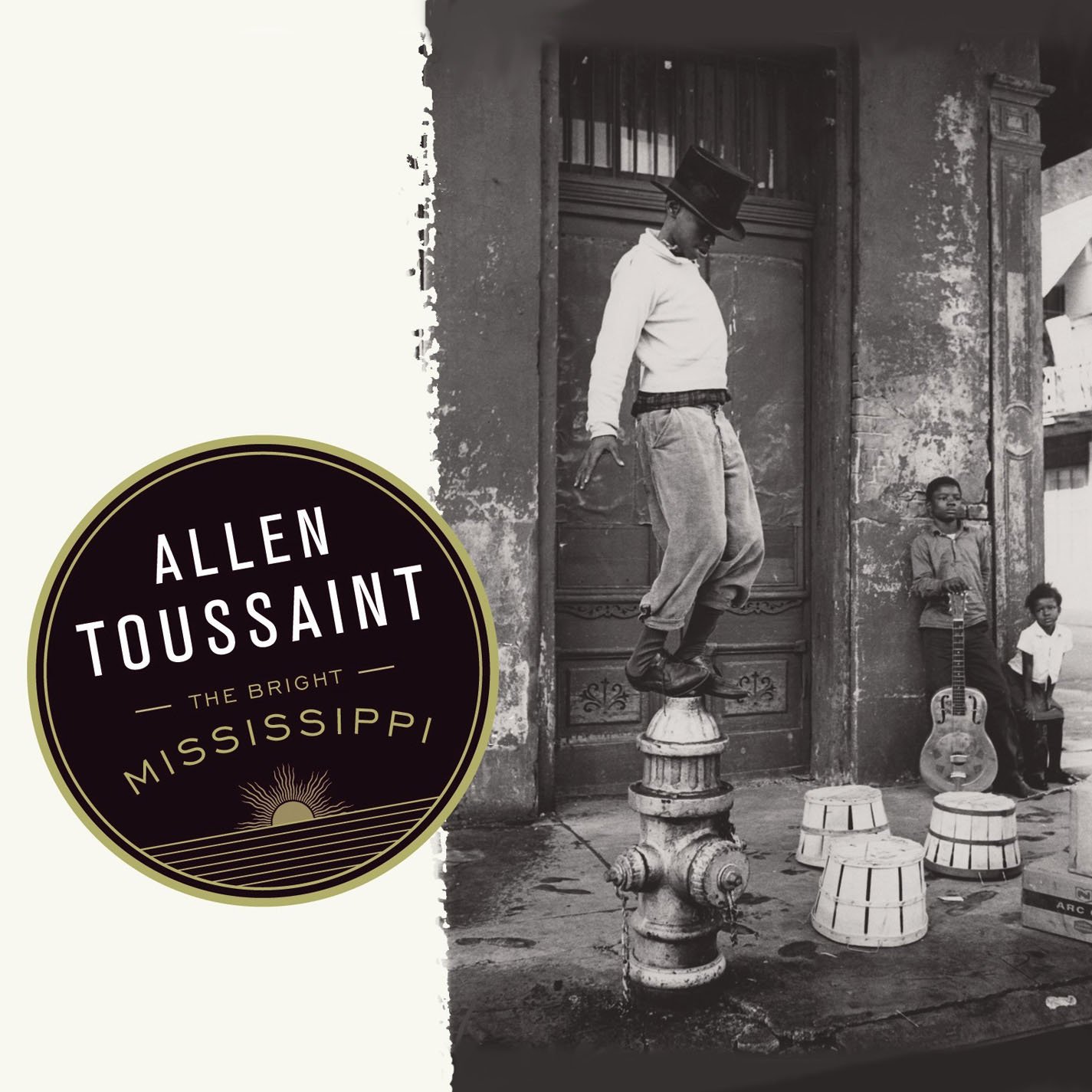
The Bright Mississippi - Allen Toussaint

Provenance: There's three things I am sure of in life; I want my coke to be diet, my football to be catenaccio, and my piano players to come from New Orleans. Just take a look at some of the luminaries to come from the Crescent City - Dr John, Professor Longhair, James Booker, Fats Domino and Allen Toussaint.

When I was in New Orleans (my favourite American city - and the least American city?) I was fortunate enough to catch the Preservation Hall Jazz Band, playing the trad stuff unamplified in a small room. It's rare, I think, to see musicians of that calibre performing without any kind of PA in such an intimate venue; and from the moment they kicked into 'Sheik of Araby' I was captivated.

When I heard that Allen Toussaint had decided to make a jazz album that honoured the legacy of New Orleans I didn't need any more encouragement to go out and buy it.

Review: Sheer, unadulterated joy.

It genuinely feels like a privilege to hear the ensemble of crack musicians Toussaint gathered for this album to perform with such casual virtuosity. What could have been a tired jog through a clutch of musty old standards instead feels like a vital, ebullient celebration of a city and the music to which it is umbilically linked. It's both remarkable that The Bright Mississippi took a mere four days to record, and yet totally believable, as the sound is so organic that one imagines the band all set up in the room together, running through two or three takes and picking the best of the bunch. If there are overdubs to the live sound, my guess is that they are minimal.

From the very first bar of Sidney Bechet's 'Egyptian Fantasy' one can sense magic swirling around, but for me the album really moves into the realms of the sublime during 'St James Infirmary', a song I've heard many different times in various iterations but rarely does it reach such a degree of majesty as it does here. From then on, everything is immaculate - whether it's a sleepy-eyed rendition of 'Winin' Boy Blues' from jazz's ur-pianist Jelly Roll Morton, an iridescent 'Day Dream' (Duke Ellington) or my personal highlight, a languid interpretation of Django Reinhardt's already wonderful 'Blue Drag'. It might even top any version I've ever heard played by the Belgian master.

Every performer on The Bright Mississippi acquits themselves superbly, though I feel special mention should go to both trumpeter Nicholas Payton and clarinettist Don Byron. The contributions they make to each song on which they feature elevate each piece, with Payton playing some especially imaginative solos. However, the name on the CD is Allen Toussaint, and so it's only fair to pay attention to what he's playing.

Fortunately, Toussaint rises to the occasion splendidly. His playing is light and supple, hands moving across the keyboard with the twinkling grace of Fred Astaire in motion. Toussaint rarely elects to bang out big meaty solos, instead accenting his stylish playing with clusters of dancing notes, little trilling figures that complement the more sinuous sounds of the trumpet and liquorice stick (check me out using that hepcat jazz lingo, daddy-o). However, for all his panache Toussaint is also a two-fisted New Orleans piano player, and that generous, wide-open easy-rolling blues sound is given voice on King Oliver's 'West End Blues' and the traditional number 'Just A Closer Walk With Thee'; and I wouldn't want it any other way.

In every sense The Bright Mississippi is a triumph. The sound is such that it almost feels tactile - can you taste that thick Gulf air on your tongue as you luxuriate in the music? Do your eyes prick at a hint of cayenne pepper and onion? It is, of course, illusory; the jumbled symptoms of an imagination stirred by aural stimuli. But goodness me, what stimuli! I find in such situations that it's best just to sit back, pour a measure of something expensive and laissez le bon temps rouler.

Sunday, 3 July 2016

Bluesin' With The B3 - Wayne Goins

Provenance: Wayne Goins is my father-in-law.

Review: Whilst listening to this album, a meditation on the limitations of popular music criticism by Simon Reynolds came to mind. In his excellent work on electronic dance music, Energy Flash, Reynolds writes of the completely different vocabulary needed to write about a form of music that defied the 'literary' readings that worked for the majority of rock music. He points out that it's pointless talking about melody, harmony and lyrical content when dance music is (largely) designed specifically to bypass these notions; how can one nod along at home next to the stereo to a music that demands is tailored for communal consumption, drug consumption and bodily expression?

Now, jazz and dance are not the same, but for me, someone who is used to thinking about music as something to be read, I do find a commonality inasmuch as I struggle to find the right language when talking about it. As someone who grew up mostly listening to rock, being confronted with an album of organ trio instrumental numbers is a daunting prospect. Oh, and the guitarist is my father-in-law, who I'll be staying with in November this year, so no pressure.

Some things I do know; I can recognise virtuosity when I hear it. Jazz has a rich tradition of improvisation and exploration, an approach which is mirrored in (some) rock music (think Duane Allman, Jeff Beck, Warren Haynes, Steve Vai, Paul Gilbert - for example). Similarly, I muck around on guitar, so I can confirm that daddy-o is a crack musician (as would befit the Director of Jazz Studies at Kansas State University). I even know just enough to suggest that his style is not a million miles away from Wes Montgomery. There we go - slightly more than would fit on the back of a postage stamp, but amply accommodated by a standard C5 envelope.

The Hammond B3, on the other hand, is a universe of mystery to me. In the liner notes, Wayne mentions a bunch of players, of whom I've only heard of two (Lonnie Liston Smith, Jimmy McGriff) and consciously heard the music of one (McGriff). So, with apologies, as far as I can tell Ken Lovern is a fine player. Bear in mind that for me, organs pretty much come in two flavours - Keith Emerson and Korla Pandit. Ken doesn't sound like either, incidentally.

Recorded live, credit must also go to producer David Brown for capturing an instrument - the B3 - that can be notoriously tricksy due to the ultra-deep bass notes that can be produced by its Leslie cabinet. It can result in a blowy, fuzzy low-end mess, especially in a live situation - emphatically not the case here.

The best thing on this album is the wonderful, lilting Kenny Dorham track 'Blue Bossa', with its seductive rhythmic undertow and faint ghosts of Sidney Bechet's 'Egyptian Fantasy'. Another highlight is 'A Gogo', a moody, funky, almost gutbucket Jon Scofield composition. The first half 'A Gogo' also features Wayne's smokiest playing (Wayne, feel free to disagree with me on this one, but I'm right here, just as I'm right about Bob Dylan's output in the Eighties (a giant waste of time, incidentally)) on the night. I'm also a bit of a sucker for Duke Ellington so I'm happy to hear 'In A Sentimental Mood' sounding so lovelorn and bittersweet.

The album ends on Jimmy Smith's 'Back At The Chicken Shack', an opportunity to hear organ and guitar making the pentatonic scale sweat a bit. There's a moment at 3.15 when Ken just jabs his finger at a single note repeatedly, likes what he hears, and carries on jabbing - it's downright nasty. To me, that's what makes this album such a treat - the two principals know exactly when to push and pull, when to dial back and when to cut loose. This understanding is what elevates the music from technically brilliant renditions to a space where genuine mood and atmosphere is created.

If you like what I've written, why not buy the album, or indeed anything else by Wayne Goins and keep me in the good graces of my in-laws? Many thanks in advance.