Showing posts with label torch song. Show all posts

Sunday, 1 November 2020

Townes Van Zandt - Townes Van Zandt


Provenance: This is slightly odd, insofar as a half-remembered post on a music message board percolated away for more than a decade before breaking through into my consciousness.

Back in 2018 my partner was away for a few days, and I was idly lounging around on my bed trying to think of something new to tickle the tympanic membrane with. For some reason, the name 'Townes Van Zandt' floated to the surface, and as we own a couple of those accursed Amazon Echoes, I asked it to play me some of his music.

The only reason I even knew of TVZ was due to a single poster on the forum, who during the mid-2000s would respond to every 'best songwriter', 'most underrated songwriter', 'most overlooked artist', etc., thread with the same answer: Townes Van Zandt. Going purely by a few detail-light posts sandwiched between threads on John Corabi and Bang Tango, I has assumed he was some sub-Neil Young Laurel Canyon folkster.

Ten minutes after commanding my personal surveillance device, I felt like punching myself. I'd heard what sounded like the strangest, most pungent, deep country music I'd ever encountered - the mighty, cinematic double-cross ballad 'Pancho and Lefty', the harrowing 'Waitin' Around To Die' and one of the most singular compositions ever, the ominous, apocalyptic two-chord blues 'Lungs'. I bought this album, which features the latter two, and The Late Great Townes Van Zandt, almost immediately.

Review: I like discussions about great songwriters - in fact, just last night my father-in-law and I were marvelling together at the prodigious output (and success) of the Brill Building stable of the 1960s and 1970s. A few nights previous, I was advancing to a group of friends that Ray Davies of the Kinks has to be considered in the same bracket as Lennon and McCartney, at least where British performers are concerned. There's no real answer, obviously, because what are you looking for in a song? Beautiful music? Storytelling? Mood creation? Nonetheless, if I were to put together a Mount Rushmore of American songwriters, Townes Van Zandt would be my first nomination.

Here, on his third album, is the most consistent and cohesive collection that TVZ put out in his career. For the most part it's three- or four-chord country music, with acoustic guitar to the fore, songs driven by Van Zandt's deceptively complex fingerpicking and swooning, keening Texan drawl. Although it's absolutely the kind of album to inspire me to dribble out inanities like 'timeless', there are signs of an era; hand drums on 'For the Sake of the Song' and a harpsichord to back that and subsequent track, the pure romance of 'Columbine', mark it as a product of the late 1960s.

These two are perfectly good compositions and would be standouts on any other singer-songwriter collection, but it's on 'Waitin' Around To Die' where things get interesting; an itchy, nervy drum tattoo and tubercular harmonica underscore a tale of almost grotesque woe, taking in abandonment, infidelity, criminality and drug dependence. Reflecting some of the bummer endings creeping into popular cinema at the time, this doozy ends on one of the grimmer twists in country. 

What's abundantly clear is that Townes Van Zandt is a testimony of an artist fully in command of his talent and his craft. In any other hands, 'Colorado Girl' would be pedestrian, perhaps even a little goofy. However, TVZ's ability to imbue his simple, homespun poetry with untold depths of feeling make this remarkable. When he steps outside his established metre to deliver the line "I got to kiss these lonesome Texas blues goodbye" it just about breaks your heart. If you're missing somebody in your life right now, perhaps save this one for later. A few tracks later, he's back to making you feel like utter dogshit again on the tender, consolatory 'I'll Be Here in the Morning'.

Betwixt and between moments where he's duffing your into an emotional wreck, something else remarkable happens - the ominous, hallucinatory 'Lungs', apparently written whilst in an illness induced delirium. Crossing the imagery of the Book of Revelations with the haunted Texas blues of Blind Lemon Jefferson, 'Lungs' feels like an entire dread universe has been called into being in the span of two and a half minutes. As mentioned previously, it's a whole two chords, with a needling guitar riff and some gunslinger slide playing added in to spice the recipe, but that doesn't tell half the story. Above it all is TVZ sounding both fearful and mighty, as if he knows the spell he is weaving possesses a rare and unpredictable power. Lightning in a bottle.

In just ten songs, and less than thirty-five minutes, Townes Van Zandt manages to do something peculiar. The palette of sounds Van Zandt works with is not particularly diverse, and nor does he ever demonstrate much vocal range (albeit, the singing is gorgeous). Nonetheless, this album takes in the ache of romance, existential horror, teary-eyed wistfulness and the depths of insanity. Both 'Lungs' and, say, the delicate country waltz of '(Quicksilver Dreams Of) Maria' are indelibly TVZ songs, yet in terms of sensibility couldn't be any further apart. This is one of the many reasons why I feel Townes Van Zandt ranks right up there: it's not just brilliant, it's also substantial, and maybe even important.

Saturday, 31 August 2019

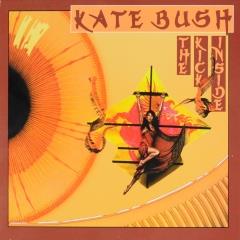
The Kick Inside - Kate Bush

Provenance: Ever since I was young I loved 'Wuthering Heights'. My parents had it on a CD compilation of 1970s hits, and along with cuts by ELO, CCS and the Tom Robinson Band, I would play 'Wuthering Heights' incessantly. Even at a tender age I could detect there was something a bit off-kilter about it.

Did I get The Kick Inside before I went to university? Odds are that I did, because our student bar had a video juke box containing about three songs (seemingly), one of which was 'Wuthering Heights'. It was on all the time, and began to drive me nuts. However, I did make a friend through a shared appreciation of Kate Bush, and I was able to introduce her work to a housemate who became an ardent fan.

Anyway, it was a bit of an anomalous purchase for me around that time, as I was busy having my brain smashed to cottage cheese by the likes of Judas Priest and Dio.

Review: A perfect album. I can't fault it. The worst thing you can do if you're not already familiar with The Kick Inside is to stop reading this bilge and give it a play. Nothing I can say can do this magical platter justice. Even when reviewing the most workmanlike collection I am nagged by the sense that writing about music is akin to dancing about architecture, a suspicion only heightened by playing through this album.

What could one possibly object to? I've been met with naysayers in the past who don't like the high register Bush sings in throughout much of The Kick Inside. I find this to be one of the most appealing aspects of Bush's execution here, however; the sheer ease with which she soars up to the most dizzying heights only serves to bolster an overall sense of ethereality. Here is a voice that celebrates the sensual, the weird and the uncanny elements of life with an almost explosive joy. It's the same breezy virtuosity one feels that they see in sporting performances like those of Simone Biles or Ronaldinho, when the seemingly impossible is delivered with all the thrust and playfulness of a person revelling in their own ability.

Oh, I also think the saxophone sounds a bit blatty and high in the mix on 'The Saxophone Song'. That's all.

How, though, can you gainsay the quality evident in the floaty, woozy opener 'Moving' (dedicated to Bush's dance teacher, the late Lindsay Kemp), and the herky-jerky carnival ride that is 'Kite'? How does one wrap their head around the fact that Bush wrote 'The Man with the Child In His Eyes', an achingly beautiful song pregnant with quiet mystery, at the age of thirteen? Without wishing to dwell on age too much, it's worth remembering that Bush hadn't even reached twenty when The Kick Inside was released. I barely knew how to put two chords together at that age; meanwhile, Bush was creating miniature masterpieces and name-checking freakin' Gurdjieff.

One aspect of The Kick Inside that might put off some listeners is that it's a very self-contained universe. Which doesn't mean that it leaves no room for interpretation; Bush's allusiveness and readiness with esoteric subjects compels the listener to fill in the gaps. However, everything feels like it exists within the world of this album, and has little relationship with a tangible world of things. In much the same way that HP Lovecraft's or Emily Dickinson's writing seemed a step or two away from regular human experience, so Bush sounds like she's singing into existence a Neverland realm. Personally, I find this aspect of Bush's work utterly addictive, but I can see how it may also seem obtuse.

Another thing; this is definitely music for the head, and not for the hips. In fact, the only people who can dance to the music on The Kick Inside are drunk goth girls and Kate Bush herself. Stylistically, it shares with Carole King's Tapestry (another triumph, incidentally) both earnestness and intimacy, and if you strip away some of the more maximalist flourishes of Bush's work, a solid piano-led pop sensibility; but where King's articulated experiences are somewhat more earthbound and recognisable, Bush zags towards cerebral and arcane subjects. What of this pop-sensibility? It's probably closer to the baroque pop of a band like the Zombies, and a dash proggier by my reckoning, but Bush's keen ear for a quirky - but catchy - melody results in an album laden with vocal hooks. A favourite of mine are Bush's interpolations in the chorus of 'Oh To Be In Love', which skims over the top of the music in a way reminiscent of Ry Cooder's sublime guitar work on Captain Beefheart's 'Abba Zabba'.

I don't have much else to say. Just buy this, or virtually any of Bush's other albums, because even when the quality is uneven, there's something interesting there. But first, do yourself a favour; dim the lights, light some candles, run a bath, bust out that family-size mint Aero you've been saving and soundtrack your self-care with The Kick Inside.

Sunday, 22 April 2018

Alice - Tom Waits

Provenance: This was one of the ten Tom Waits albums my wonderful partner Sea got me one Christmas. Thought it about time I reviewed another of these buggers.

Review: I don't have many albums comprised of music written specifically for plays - by my estimation, two, both of which are by Tom Waits. One is The Black Rider, and the other is this darkly shining shard of anthracite, Alice. God damn, this is good. But then again, so much of his 'latter period' stuff is. That he hasn't released an album since 2011 is a minor crime - to paraphrase Alan Partridge, "come back on, Tom Waits, and play some more."

For the record, I've never seen the play Alice, so I don't have any real sense of narrative on which to hang this song cycle on. There's a part of me that dearly wishes I do get to see a production one day and another part, the one that enjoys the play of the imagination when it's coupled with music, that does not. Waits' music on Alice conjures up vivid moods and atmospheres at every turn; and maybe I don't want the innerspace universe I've built around it to be disturbed.

On Alice, Waits visits many different styles and switches masks with ease, but there's always a unifying element that is hard to define. Whether he is bellowing out angular Beefheartian rollickers replete with junkyard percussion, or tentatively nosing his way through a torch song, it's indelibly Waits. Which is what? A kind of Pop High Gothic, a kind of Low Jazz and a relish for the macabre every bit as full-blooded as Edgar Allan Poe. He's a barroom versifier, sweeping profundities from the floor 'round 'bout closing time, but also able to fashion a song about fictional 19th century nobleman Edward Mordake that is wrapped in the faded, crumbling elegance of Grey Gardens. About the only time I was transported from my reverie during the first half of the album came during the early stages of 'Kommienezuspadt', purely because Waits sings in a voice that sounds uncannily like that of Herve Villechaize, he of Fantasy Island fame.

(NB: I would be the first in line if Tom Waits were to release a song that consisted of him screaming 'ze plane, ze plane' whilst, in the background, a honky-tonk piano fell down a flight of stairs.)

The other element that I think has percolated to the surface throughout Waits' career, and is in evidence here, is a clear love of acoustic instrumentation that is warm and wobbly. There are dashes of electric guitar here and there, and sometimes Waits does use a Mellotron (one of the most underrated - and underused - instruments in popular music?), but my goodness, one has to just stand back in admiration at his dedicated to the fucking pump organ. What a wonderfully asthmatic sound it has though! Any song it features on thus sounds like a tuberculosis-wracked cabaret has-been, desperate for one final turn in the limelight. Glorious.

Located somewhere between Nat King Cole, Captain Beefheart, Lou Reed, Kurt Weill, nursery rhyme, Cormac McCarthy, late era Scott Walker and Jimmy Webb; that's where you'll find the Tom Waits of Alice. Hell, there are even faint echoes of post-millenium Bob Dylan, with Alice acting as the drunken, perverted uncle to Love and Theft and Modern Times. It's a disconcerting, seductive, sad, wry (someone should write something in-depth about Waits' sense of humour - just not me), startling journey, but one of the most rewarding ways to spend fifty minutes of your life. Immense.

Sunday, 25 February 2018

Helen's favourite songs - part one

I imagine that we've all been asked for our top five - or ten - favourite songs at one point or another. It's a fun, twisty little question that allows you to reveal something about yourself by degrees. It's also one that I associate with my younger days, simply because I haven't been asked that question for years. That is, until my friend Helen put it to me this week.

Although we have convergent tastes in the realm of rock 'n' roll and 1960s pop, Helen and I seemingly differ on a whole lot. So, in order to really dig into what tickles each other's vental tegmental areas we swapped our favourite five (soon expanded to ten) songs and agreed to listen to them critically. Now, we all know that ten 'favourite' songs is an impossibility, as environment, mindset and memory all come to bear on making one's choices. Nevertheless, a selection of ten or so well-regarded songs is, in my estimation, more than a glimpse through the window to a person's soul - so without further ado, here are the first five tracks Helen chose, and my commentary.


Smile - Nat King Cole


I was more familiar with this song's backstory - that the music was written by Charlie Chaplin, and it was one of Michael Jackson's favourites - than the tune itself. The first thing to say is that it is the perfect match for Nat King Cole's effortless crooning, his warm, sad voice perfectly matching the bittersweet lyrics. In that sense, 'Smile' is a triumph - the concept being matched exquisitely by its execution.

To modern ears the instrumentation might sound a bit slushy, but to me it evokes a golden age where it was commonplace for three-minute pop to be treated with the utmost care and respect. So strings swell, woodwinds trill and swoon and a drummer brushes away unobtrusively in the back, providing Cole with a lush backdrop for his inimitable baritone. Sumptuous.

You Don't Know Me - Ray Charles


On to the second song of Helen's selection, and there are similarities with 'Smile' inasmuch as it features yet more baroque orchestration, this time with the addition of a mixed-voice choir. An unhurried torch song, 'You Don't Know Me' is distinguished from Cole's song by the vocal delivery. Where Cole's voice, untutored as it was, nevertheless came from the jazz clubs, Charles' vocals went to church (NB: it's never that simple though, is it? Cole's father was a Baptist minister).

As with much of Charles' oeuvre, that standout element of 'You Don't Know Me' is the barely restrained passion in the delivery of the lyrics. Despite being written by outside writers, the way Charles is able to get inside the viscera of the song is a minor marvel in itself.

George On My Mind - Ray Charles


Wow - even better than the other Ray Charles song in this list. It's one of those tracks, like those cut by Brooke Benton, Glenn Campbell and latterly Tony Joe White, that feel so big and widescreen that you're surprised to find it's only three or four minutes long.

That easy roll of the piano, the way he switches moves between major and relative minor keys, the vocals cracking with emotion - let's just say this is how the big boys do it. The string arrangement in 'George On My Mind' is something else too, intricate without being fussy, blossoming in peaks of high emotion one moment, dying down to allow the piano to breathe in the next. Pop music has rarely sounded this sophisticated since.

Runaround Sue - Dion


If your hearing faculuties are fine and you don't like this crackerjack my suspicions are that you don't possess a pulse. It's got all the stuff I like - five fucking chords, saxophone squalling away in the background, backing vocals that take a cue from doo-wop and a guy that knows how to belt it out. Helen called this a 'slut-shaming classic' half-jokingly, and I imagine if it were released today there'd be an article on medium.com within five minutes decrying it as 'problematic'.

I don't care. Songs like 'Runaround Sue' form one of the main arterial routes away from the beating heart of rock 'n' roll; the smoother, citified version hustled away from its southron birthplace by a bunch of inner-city punk Italian kids. It's an absolute gas. The opening lines speak of a story "sad but true", but nothing sounds further from the truth, given the sheer, giddy ecstasy of its delivery. 'Runaround Sue' is scintillating. 

Breaking Up Is Hard To Do - Neil Sedaka


Oh, I know this one! Yeah, this is cool. 'Breaking Up Is Hard To Do' adheres to a template for a certain kind of song produced during this era - speed it up and there's 'The Night Has a Thousand Eyes' by Bobby Vee, slow it down and beef up the strings and there's Gene Pitney's 'Something's Gotten Hold Of My Heart'. Like 'Runaround Sue', 'Breaking Up...' glories in a doo-wop schooled backing vocal that's every bit as irresistible as it is moronic. The handclaps that accentuate the rhythm are delicious, and herald the latter-day self-conscious bubblegum of a song like 'Sugar, Sugar' by the Archies.

For all the crushing heaviness of Electric Wizard or Sleep, I'm never not going to be a sucker for the unadulterated head-rush of 1960s pop music. I can see why 'Breaking Up...' would be on a list of favourites - it does nothing particularly brilliantly, and does it brilliantly. There's a strange kind of virtuosity in turning out a song so simple and yet so addictive. If this is the musical equivalent of junk food, I want to gorge until I get a coronary.

Well, that's the first five! I'll probably do another album review or two before I tackle the second half of Helen's selections. I've enjoyed this so far, and I look forward to - let me just get my phone out - New Found Glory and, er, McFly, amongst others!