Showing posts with label baroque pop. Show all posts

Sunday, 6 December 2020

The Turning Tide - PP Arnold


Provenance: An interview in the Guardian set me on the path to buying a copy of The Turning Tide. This was meant to be Arnold's third album, but having been recorded in the late 60s and early 70s it languished in the vaults until issued by Kundalini Music in 2017.

It's not just that PP Arnold was - and no doubt remains - a fantastic vocalist who could do powerhouse bombast and quiet intimacy with equal success; this album is stacked with talent. Alongside Barry Gibb, who produced and wrote a number of the tracks, there are performances by Caleb Quaye, Eric Clapton, Bobby Whitlock and Rita Coolidge, Bobby Keys plus a squadron of crack session players.

There's a good chance I'd have bought this album anyway, given all the hands involved, but The Turning Tide's status as a 'lost' album lends it that extra gloss of curiosity that makes it impossible to resist. Sometimes, the mere idea behind an album amplifies it as more than just a collection of songs; the trauma behind AC/DC's Back In Black (excellent album), the teeth-pulling pursuit of technical ecstasy that went into Steely Dan's Aja (excellent album) or the sad documentation of a mind coming apart at the seams as on Skip Spence's Oar (one of the most uncomfortable listens out there).

Review: Apparently, we have former Bee Gees manager, the late Robert Stigwood, to thank, at least in part, for stalling the release of The Turning Tide. I would submit that anyone who heard Arnold's pulsing interpretation of of Traffic's 'Medicated Goo' and decided it was not up to snuff needs their ears syringed. Support for this assertion comes courtesy of the fact that Stigwood was the producer responsible for the execrable Saturday Night Fever and Grease films.

It is as a conduit for the writing efforts of others that Arnold primarily appears on the album, although two of her co-write efforts with Quaye, the soaring ballad 'If This Were My World' and the dewily idealistic 'Children of the Last War' are real highlights. The full range of Arnold's talents are made apparent on the Gibb number 'High and Windy Mountain', which begins as a fairly nondescript soul-inflected soft rocker and mutates into gigantic beast propelled entirely by Arnold's astonishing - and frankly, scary - vocal power. For good measure, the trick is repeated on 'Bury Me Down by the River'.

Maybe - maybe - what counted against the The Turning Tide was that it undoubtedly looks backwards, towards a time of lush arrangements and voices spilling over with melodrama. Comparisons with Ivor Raymonde's arrangements for artists like Dusty Springfield, the Walker Brothers and Kathy Kirby are apt. And perhaps it was this polish and care that meant it fell between the gaps, awkwardly out of synch with the glam-stomp, prog meanderings and bedsit folk that was starting to poke through the crazy paving at the time. Arnold's cover of 'Spinning Wheel' is a sizzler, but was there any call for it come the early 1970s? And whilst the version of the Rolling Stones' hardy perennial 'You Can't Always Get What You Want' is certainly in the top division of attempts, it must have sounded old hat, even then.

Am I allowed one last little dig? When every song is a towering blancmange of emotion, one wishes for a track to come along to give proceedings a kick in the pants. 'Medicated Goo' is the most lively in that sense, but it's the first track; a couple more uptempo numbers sprinkled hither and thither would've been welcome.

Look at me, though, what an utterly ungrateful little piglet I am! I'm writing this in 2020, so what business do I have making lazy assumptions at was in or out in a period I know mostly through Hollywood and my album collection. I wouldn't even make my debut on Spaceship Earth for another decade-and-a-half, so I should just shut my trap and enjoy the fact that The Turning Tide is even available, and sounds this good. An assessment, which, by the way, takes in every aspect of this album; I understand it was cleaned up somewhat from the original masters, yet every track possesses the soft glow of care and craft that went in to so much recording of 'throwaway' music of the time. Pretty much everything recorded in the last twenty-five years sounds dog awful in comparison.

Nobody with my haircut can lay a plaint about anything with a hint of the retrograde about it, so I will leave you with this - Gibb's knack for tugging on the heartstrings is almost unparalleled, the music is cool and classy, and above all other consideration, Arnold is a singer of preternatural talents. Is there anything else gathering dust in the vaults, one wonders? 

Sunday, 11 October 2020

Odyssey: The Sound Of Ivor Raymonde Vol. II - Various Artists


Provenance: I bought this at Resident Music in Brighton (no trip to the city is complete without a visit) as a little birthday gift to myself this year.

Review: Stupendous.

I could leave it at that, if I'm honest, but that would be cheating. However, if you don't track a copy of this curate's egg down (it's even on Spotify) before reading on I'd seriously urge you to consider your life choices.

There are, really, three types of albums I end up reviewing on this blog. The easiest of the lot are those that are utterly rancid, because the job is to simply give 'em a shoeing. Then there's those that possess a hard carapace of inadmissibility, either because they are baffling or I'm delving into a genre that I'm not hugely conversant with. The challenge here is to try to get into a headspace to make some form of semi-comprehensible assessment, and to relax about my lack of omniscience (but I'm getting there, folks).

By far the most difficult are albums I like. I find I fall into a kind of set rhythm for these pieces, lavishing praise whilst desperately searching for some hook or wrinkle so that I may introduce some grit into the oyster. Worst of all are albums such as today's offering, Odyssey, which in my estimation is almost faultless. I feel a hesitancy to waste words, when a simple exhortation to listen to the bloody thing should suffice.

So: this is the second volume of songs arranged or produced by Ivor Raymonde (father of Simon Raymonde of the Cocteau Twins, who demands credit as the album's compiler), mostly culled from the 1960s. On the basis of these twenty-five tracks alone, one must conclude that Raymonde pere was one of those semi-mythical beasts within the music industry: the man with the golden ear. From cowlick rock 'n' roll through to Philly-style soul and all pop points inbetween, Odyssey is a kaleidoscope of sound and a sumptuous testament to Raymonde's genius as an arranger.

The one commonality that exists betwixt and between the selections on Odyssey is the absence of rough edges. Probably the closest we get to anything vaguely edgy is the strange, wonderful acid rock-lite of Twinkle's previously unreleased 'Michael Hannah'. However, if you feel that denotes a kind of staidness or politeness, think again; for bubbling under the surface of many of these cuts is a simmering, smouldering passion that every now and again threatens to boil over. Por ejemplo: the throb of the bass propelling Los Bravos' 'Brand New Baby', or the brass punching and pummelling its way to the front of the mix in the Alan Price Set's enjoyably gusty, knockabout take on Randy Newman's 'Simon Smith and the Amazing Dancing Bear'.

What does come through loud and clear, to me at least, was Raymonde's love of the human voice. It didn't hurt that he worked with some of the best - Roy Orbison, the Walker Brothers, Dusty Springfield - one feels you just had to give them a nudge and sit well back. Springfield's track, 'Little By Little', is a juggernaut, her ice-cool delivery rubbing up against incandescent horn charts to stunning effect. There's a sense that the impeccable framing that Raymonde helped to provide could be a space where an artist was allowed to subsequently cut loose, if they so desired; Susan Maughan conjuring up the mettle of a young Helen Shapiro on 'That Other Place'; the lisping sensuality that ignites The Cryin' Shames' 'Please Stay'; and the brawling, grunting run at 'Loo-Be-Loo' that makes the version by The Chucks so damn fun. 

The true highlight of the vocalists, however (and this isn't to dismiss Kathy Kirby's mountain-sized crescendo on 'The Way of Love') is the truly demented 'Tower of Strength' by Frankie 'Mr Moonlight' Vaughan, which I've mentioned before now (or rather, left the heavy lifting to the scribes of Freaky Trigger). It bears repeating, though, that this absolutely fucks anything Tom Jones did out of the water. One can picture Vaughan writhing around on the studio floor as he forces every iota of his being into powering this most electrifying slice of soul, albeit in an almost unrecognisable format. Recorded in 1961, it feels like a moment where a quirky British offshoot could have developed, before the genre was fully submerged, as per one commentator on Freaky Trigger, into the musical vocabulary of its American originators.

Friends, there are treats everywhere! Check out Marty Wilde hiccoughing his way through the rockabilly drama of 'Endless Sleep', the warm, buzzy psychedelia of Christopher Colt's 'Girl In The Mirror' or the Martell's 'Time To Say Goodnight', and get blown away by the barmstorming rhumba-on-steroids of Paul Slade's 'Odyssey', after which this album is named. The last cut is hot, hot, HOT! 

How to sum it up? Well, once I've finished tapping away at my keyboard, I shall go back to the beginning and listen again without the burden of trying to add words. The world of Odyssey is a fully realised dreamscape, a place where two-minute pop is elevated beyond its inherent strictures into a realm of sheer emotion. It's rich, too. Imagine getting smashed at a wedding on dessert wine and propping up the chocolate fountain all night, and you might be halfway towards experiencing the pure glut of confection Odyssey provides. 

Resident Music didn't have volume one, titled Paradise, in store when I visited. Guess what's on my Christmas list? Let's hope I've been a good boy!

Saturday, 31 August 2019

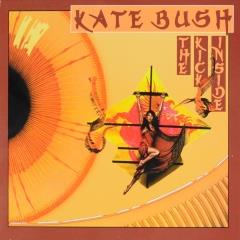
The Kick Inside - Kate Bush

Provenance: Ever since I was young I loved 'Wuthering Heights'. My parents had it on a CD compilation of 1970s hits, and along with cuts by ELO, CCS and the Tom Robinson Band, I would play 'Wuthering Heights' incessantly. Even at a tender age I could detect there was something a bit off-kilter about it.

Did I get The Kick Inside before I went to university? Odds are that I did, because our student bar had a video juke box containing about three songs (seemingly), one of which was 'Wuthering Heights'. It was on all the time, and began to drive me nuts. However, I did make a friend through a shared appreciation of Kate Bush, and I was able to introduce her work to a housemate who became an ardent fan.

Anyway, it was a bit of an anomalous purchase for me around that time, as I was busy having my brain smashed to cottage cheese by the likes of Judas Priest and Dio.

Review: A perfect album. I can't fault it. The worst thing you can do if you're not already familiar with The Kick Inside is to stop reading this bilge and give it a play. Nothing I can say can do this magical platter justice. Even when reviewing the most workmanlike collection I am nagged by the sense that writing about music is akin to dancing about architecture, a suspicion only heightened by playing through this album.

What could one possibly object to? I've been met with naysayers in the past who don't like the high register Bush sings in throughout much of The Kick Inside. I find this to be one of the most appealing aspects of Bush's execution here, however; the sheer ease with which she soars up to the most dizzying heights only serves to bolster an overall sense of ethereality. Here is a voice that celebrates the sensual, the weird and the uncanny elements of life with an almost explosive joy. It's the same breezy virtuosity one feels that they see in sporting performances like those of Simone Biles or Ronaldinho, when the seemingly impossible is delivered with all the thrust and playfulness of a person revelling in their own ability.

Oh, I also think the saxophone sounds a bit blatty and high in the mix on 'The Saxophone Song'. That's all.

How, though, can you gainsay the quality evident in the floaty, woozy opener 'Moving' (dedicated to Bush's dance teacher, the late Lindsay Kemp), and the herky-jerky carnival ride that is 'Kite'? How does one wrap their head around the fact that Bush wrote 'The Man with the Child In His Eyes', an achingly beautiful song pregnant with quiet mystery, at the age of thirteen? Without wishing to dwell on age too much, it's worth remembering that Bush hadn't even reached twenty when The Kick Inside was released. I barely knew how to put two chords together at that age; meanwhile, Bush was creating miniature masterpieces and name-checking freakin' Gurdjieff.

One aspect of The Kick Inside that might put off some listeners is that it's a very self-contained universe. Which doesn't mean that it leaves no room for interpretation; Bush's allusiveness and readiness with esoteric subjects compels the listener to fill in the gaps. However, everything feels like it exists within the world of this album, and has little relationship with a tangible world of things. In much the same way that HP Lovecraft's or Emily Dickinson's writing seemed a step or two away from regular human experience, so Bush sounds like she's singing into existence a Neverland realm. Personally, I find this aspect of Bush's work utterly addictive, but I can see how it may also seem obtuse.

Another thing; this is definitely music for the head, and not for the hips. In fact, the only people who can dance to the music on The Kick Inside are drunk goth girls and Kate Bush herself. Stylistically, it shares with Carole King's Tapestry (another triumph, incidentally) both earnestness and intimacy, and if you strip away some of the more maximalist flourishes of Bush's work, a solid piano-led pop sensibility; but where King's articulated experiences are somewhat more earthbound and recognisable, Bush zags towards cerebral and arcane subjects. What of this pop-sensibility? It's probably closer to the baroque pop of a band like the Zombies, and a dash proggier by my reckoning, but Bush's keen ear for a quirky - but catchy - melody results in an album laden with vocal hooks. A favourite of mine are Bush's interpolations in the chorus of 'Oh To Be In Love', which skims over the top of the music in a way reminiscent of Ry Cooder's sublime guitar work on Captain Beefheart's 'Abba Zabba'.

I don't have much else to say. Just buy this, or virtually any of Bush's other albums, because even when the quality is uneven, there's something interesting there. But first, do yourself a favour; dim the lights, light some candles, run a bath, bust out that family-size mint Aero you've been saving and soundtrack your self-care with The Kick Inside.