Sunday, 3 February 2019

Straight Shooter - Bad Company

Provenance: This dates back to the time when I was first seriously getting into rock music. I am fairly certain my knowledge of Bad Company extended to two songs - 'Can't Get Enough' and 'Feel Like Makin' Love', the latter of which appears on Straight Shooter. As with approximately one third of Bad Company's recorded output, these songs are about makin' it with your old lady (NB: my decision to replace the 'g' in 'making' with an apostrophe is apt as this practice is rife in the Bad Company discography. It demonstrates that they place fast and loose with the rules, see).

Review: I have now reached the age where every contemporary young pop star looks the same. Every single one. And they all have names that, although ostensibly signifying plural nouns, only serve to make them sound like posh butlers from Edwardian farces. It's too much for me. I made a half-hearted attempt to keep up with the grime scene but really, I'm much more comfortable with Ghost because they wear funny masks and sound like Blue Oyster Cult.

However, you shouldn't ascribe any value judgement to what I've just said, as gazing back to the early 1970s I'm amazed anybody could tell Bad Company apart from Deep Purple, Nazareth, Foghat, Uriah Heep, Argent and the rest. It's a blur of denim, hair and yellowed teeth. Rhythm sections appeared to be about forty despite being twenty-five, sometimes people wore kaftans and overall everyone looked immensely shit. A torrid time for fashion, then, but also for music. How anybody endured the live drum / guitar / organ / theremin solos of the era is absolutely beyond me. The tolerance for interminable jamming was a gift to the myriad mediocrities of the time, their every blooz-flavoured squeak or parp given to be evidence of their musical genius.

Bad Company had the awful dress sense, the blues rock stylings and the voguish predilection for cliched guitar solos but on Straight Shooter things are kept relatively tight. The music itself is pretty unimaginative but elevated by the presence of Paul Rodgers, who is one of the great rock voices these islands have ever produced. The ease with which he shifts between gravelly aggression and blue-eyed soul cooing is demonstrated by the rollicking opener 'Good Lovin' Gone Bad' (note the apostrophe) and its neighbour 'Feel Like Makin' Love'. The latter is a rather effective country-tinged power ballad that has, (un)fortunately been irreparably damaged for me thanks to the rendition by Ned Gerblansky that appears on Chef Aid: the South Park Album.

The best song on the album is 'Weep No More', which sounds like a hangover from one of the later Free albums. Tasty string arrangements bump up against a verse driven by a jaunty piano and heartfelt singing. It's a fine rock song, which more than can be said for much of what follows. 'Shooting Star' tries to replicate the rootsy verse / power-chord chorus combination of 'Feel Like Makin' Love' but its married to a lyric that is the most maudlin crap I've come across in quite some time and carries on the fine tradition of 70s navel-gazing that witnessed a slew of bands writing about the perils and pitfalls of becoming very famous and rich. Poor babies!

About the only listenable track on side two is 'Deal With the Preacher', which, although it's about makin' it with your old lady, has enough lead in its pencil to pass muster. The guitar riff in the verse is the strongest on the whole album, pugnacious and dirty. Rodgers yelps and emotes in all the right places, making the finished article a very satisfying hard rocker indeed. Had Bad Company decided to cruise to the finish line with a few more like that I'd be inclined to review Straight Shooter more favourably.

Therefore it's a genuine disappointment that Bad Company fill the home stretch with anaemic bilge like 'Wild Fire Woman', 'Anna' and 'Call On Me'. Despite superficially sounding very different, all are infected with the same strain of 'will-this-do?'-itis. 'Wild Fire Woman' (about makin' it with your old lady) plods along without much heft or purpose. 'Anna' is insultingly poor, a torch song that contrives to sound more like a nursery rhyme than a tender paean to the track's titular subject ("I found me a simple woman..." - fucking embarrassing). 'Call On Me' commits to nothing other than being both boring and lethargic, and has no business stretching out to six minutes. Not even Rodgers can salvage these stinkers, and on 'Anna' he even sounds a bit pitchy.

As an epilogue to this I will say that I caught Paul Rodgers live at a Dutch rock festival in 2004 and he was outstanding. He both looked and sounded incredible, which is definitely not a given for many artists of his vintage. Even though the 2019 version of me can't quite discern the charms of Straight Shooter that were apparent to me in 2001, nevertheless I retain an affection both for the album and Bad Company. If you're a classic rock aficionado give it a spin, especially if you're tryin' to make it with your old lady.

Saturday, 15 December 2018

Leftoverture - Kansas

Provenance: I know more about the state of Kansas than I do about the band (who hail from Topeka, KS, a fine city folks), due not in no small part because it's where my partner comes from. We got married in Kansas and, by God, I shall die in Kansas (note: I live in the south-east of England so I haven't quite thought through the logistics of this latter claim).

However, long before I had any kind of association with Kansas the place, I was into Kansas the band. More precisely, I was into Leftoverture, and even then I would say no more than two-thirds of the album. I could never really bring myself to sit through all six 'movements' of 'Magnum Opus'. I bought a Russian import of Leftoverture from a secondhand shop in Bournemouth for about a fiver.

Before I go on, I really want to point out that despite my frequent digs at the place I really do hold a lot of affection for Kansas. From the First Nations peoples of the region and Coronado's 16th century expedition to find the Seven Cities of Gold, to Bleeding Kansas through to the great cattle drives of Wild West mythology, it really is a fascinating place - and that's before you even get to its natural history. You've still got mass graves from the Oregon Trail and innumerable ghost towns, plus some cool places like Lawrence, Manhattan, Abilene and Dodge City. Rather than the usual sun-sodden vacation spots or overhyped cities, why not give Kansas (or the Midwest in general) a go?

Review: Yes! If Kansas got nothing else correct, they damn well knew that frontloading Leftoverture with 'Carry On Wayward Son' was an absolute pro move. A song like 'Carry On Wayward Son' swings for the fences on all kinds of fronts. Even the a capella intro, something I tend to dislike, sounds great. From there it's a real Nantucket Sleighride of a track, pulling you through riff-rock, gentle piano balladry and a warped kind of Midwestern boogie-prog. It should be a hot mess, but it isn't.

One of the textures that distinguished Kansas' brand of pomp-rock from their competitors was the prominent use of violin in the mix. Nowhere is this better exemplified in 'The Wall', soaring and bombastic, underpinned by a lyric describing one man's search for inner tranquility. This becomes more interesting when you replace 'one man' with 'Kerry Livgren', Kansas' guitarist and main songwriter. Listening to many of the other songs - 'Carry On Wayward Son', the hard-driving 'What's On My Mind', the epic 'Miracles Out of Nowhere' (all of which was side one, basically) - and you're left with the impression of a man at a crossroads. Someone who's had his fill of what the world has to offer and is turning inward for succour.

For enlightenment.

For peace.

Yes, my friends, I think we've found yet another hidden Christian rock album.

Three years after Leftoverture was released, Kerry Livgren became an evangelical Christian. It was a move that would eventually lead him to quit Kansas and release actual Christian rock. Betwixt and between, he also flirted with a rather bizarre niche of Judeo-Christianity codified in a gargantuan work called The Urantia Book, all of which mirrors the unsettled mind wrestling with notions of truth and uncertainty during the first half of Leftoverture. The subtlety employed here has to be commended, as each song taken individually doesn't give a clear picture; but taken as a whole, side one is a fairly obvious delineation of introspection and the struggle of a dawning spirituality, one that would lead him to leave Kansas and secular rock music behind (spoiler: he came back).

Unfortunately, past about 'Questions of My Childhood', two-thirds of the way through, Leftoverture runs out of steam a bit. Although Kansas have a keen ear for melody and some chewy, inventive musical ideas they're simply not an out-and-out progressive rock band. They simply lack the nimbleness and light-touch of a band like Yes. As such, 'Magnum Opus', a six part - count 'em! - suite of rockaria tries its best to gather speed but never quite leaves terra firma. There's a couple of cute ideas hidden amongst the weeds that surely could've been developed into fuller compositions. What possibly seemed like a questing and adventurous format actually ends up strangling all the clever bits in the crib.

Nevertheless, Leftoverture can be considered one of the good'uns, and side one is up there as a high-point in the pomp rock annals. Plus, in the fingerpicked guitar in 'Miracles Out of Nowhere', you can hear the blueprint of what would become 'Dust In the Wind', Kansas' most famous composition. As Coronado once concluded, four hundred and fifty years ago, Kansas are well worth exploring.

Sunday, 9 December 2018

Motley Crue - Motley Crue

Provenance: Honestly, no idea.

Review: Where does one start with this curio? Perhaps a little context would be helpful.

Until about 1993, US MTV viewers had to put up with a lot of hairspray and decadence. Motley Crue (I'm not bothering with the umlaut, guys), bolstered by albums such as Shout at the Devil, Theatre of Pain and Dr Feelgood, were one of the earliest and most successful acts from the glam era. They were rich, famous and cool - and then grunge happened.

Unlike the fabled Punk Year Zero that supposedly reset the clock in the UK (lol, no, Genesis still sold bucketloads in the wake of Lydon, Strummer et al), the rise of alt-rock in the US genuinely swept away the spandex brigade almost wholesale. A few of the big boys endured - Guns N Roses were dangerous and credible, Bon Jovi erred close enough to blue-collar likeability - but some, like Motley Crue, didn't. That's not to say that sales entirely dried up, but suddenly they and their peers were chasing a zeitgeist rather than creating one. Bands scrambled to appear hip to the new scene, with Warrant, KISS and Def Leppard all coming out with albums that strove to appear edgier. What it did was make them look desperate. And thus we have Motley Crue, erstwhile-hair farmers reinvented as 1994 alt-metal tyros.

The most immediate difference to that which came before are the vocals - and it's an improvement. I have never been the biggest Motley Crue fan due in large part to Vince Neil's unappealing hooting and yelping. Given the direction the band took here, had he not left in 1992 Neil would've been frankly floundering. John Corabi's grittier, more soulful delivery is a good fit for a collection of tracks that is more mid-paced and downbeat than anything Crue had hitherto deigned to release.

However - the big problem here is that the whole album feels like an exercise in pastiche, as if someone had tasked a competent band to produce an ersatz version of what was lighting up the charts at the time. 'Power to the Music', the opener, is the sound of a group that grasps what's happening at surface level without any deeper level of understanding, and it's frankly laughable to hear good-time hedonists Motley Crue suddenly develop an urge to tackle paedophilia ('Uncle Jack'). That's some dark fucking shit bro!

The missteps continue. In the space of three songs they've used that modish compressed voice effect you hear on Soundgarden's 'Spoonman" (also 1994) twice, although in the second instance it feels less egregious because 'Hooligan's Holiday' is a legitimately fun track, sounding like something that could've adorned Skid Row's Slave to the Grind (which is a compliment, trust me). It mixes tempos and dynamics nicely, a punchy head-nodder that overcomes its ridiculous lyrical content with ease. Meanwhile, 'Misunderstood' threatens to actually lift proceedings through a change of pace and a welcome injection of subtlety. It starts off like the kind of woozy, dreamy ballad that Aerosmith could do and Corabi even sounds like Steve Tyler for the first half of the song. Sadly, as with everything else on Motley Crue any hint of a good idea is bludgeoned to oblivion, in this instance by kicking it up into generic heavy 'rawk'. About the only time Crue break outside of the cage is 'Loveshine', which sounds appealingly like a Tesla ballad. It's light and breezy, and over in two and a half minutes on an album that clocks in at over an hour in run time.

There's one more highlight to come - 'Poison Apples', which sounds like a bouncy, slick Quireboys boogie, albeit with the chorus to the Manic Street Preachers' 'You Love Us' (yes, really) grafted on top. But I like that song, and I like the Quireboys, so it's a winner for me. It's the last time Crue keep things relatively carefree; from then on, signores Mars, Lee and Sixx furrow their brows and do theur best to appear pissed off with the world. And it's boring! It's fucking boring! And that's the biggest sin of all. Motley Crue can be many things - frothy, boneheaded, insubstantial, idiotic, annoying - but not dull. Yet here I am, anxiously awaiting the little zip noise that signals that the CD is over. 'Til Death Do Us Part', 'Welcome to the Numb' (really?), 'Smoke the Sky', 'Droppin' Like Flies', 'Driftaway' - all the different shades of shit are represented here. Call it what you will - a crawl, a plod, a drag - but the last twenty-five minutes of this already flawed attempt at relevance are awful, a purgatory that not even hair metal fans should be subjected to.

It's got its defenders. It's got those who think that it should've been released under a name other than Motley Crue (one I'm sympathetic with). Largely, though, it's got those who saw it on the shelves or caught 'Hooligan's Holiday' on MTV and responded with a collective shrug. I have now listened to Motley Crue twice over the course of two days, hoping that spending a little quality time with the album would reveal its hidden charms to me. That didn't happen. Ultimately I ended up not giving a pig's eye one way or the other. Welcome to the numb, I guess.

Sunday, 11 November 2018

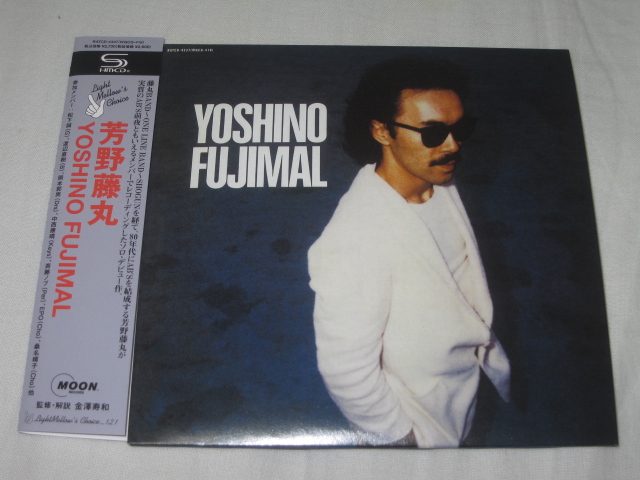
Yoshino Fujimal - Yoshino Fujimal

Provenance: I bought this from Tower Records in Tokyo last month. I didn't have to listen to a single note of it to know it was going to be a triumph. Just look at the cover and tell me that's not the smoothest man in Japan?

Review: This album sounds exactly how you hope and expect it to sound. I didn't know it at the time, but Yoshino Fujimal is emblematic of a genre called 'city pop' that thrived in Japan during the 1980s. Sleek and cool, it trended towards the more sophisticated end of the yacht rock spectrum. From what I can gather, Fujimal was a member of the AB's (essentially Japan's equivalent of Toto), a skilled studio musician with a fine ear and chops to burn. I've struggled to find out more about Fujimal and can't see much solo work beyond the late 80s; perhaps it's indicative of nothing more than my ineptitude with Google, because one sad alternative is that he simply didn't receive the wider recognition his talent deserves.

Funk guitars, popping bass and a starlit saxophone all herald the start of 'Who Are You?'; friends, a masterpiece. It's like all the best bits of the Cate Brothers and Christopher Cross if they sang in Japanese. If anyone, next track 'Mid-night Plus 1' is even better; it sounds like Earth, Wind and Fire's 'September', if the latter put on a pastel suit, rolled up the sleeves and came up with a better chorus. It's so good that once I'm done with this review I'm going to skip back and listen to 'Mid-night Plus 1' all over again.

The album is divided into 'day' and 'night' sides, not that I can really tell much of a difference (if its manifested in the lyrics, I'm screwed, as my Japanese pretty much extends to 'yes', 'no', 'please', 'thank you', 'beer', 'hospital'). Though the instrumentation and production belies the age of this collection, it's not to be supposed that Yoshino Fujimal is dated. Instead, guitars either cluck or soar as appropriate, saxophones scrape the firmament and synths twinkle with a neon pearlescence. I can't tell whether this version has been remastered but everything sounds absolutely present and fantastic. In terms of technical accomplishment, it's every bit as finely-wrought as ABC's Lexicon of Love or Donald Fagen's The Nightfly (both, incidentally, released in the same year (1982) as Yoshino Fujimal - if only Sade's Diamond Life had not been two years later I think we'd seriously be treating it as the high watermark in popular music recording).

The first song fully rendered in English - 'Girl's In Love With Me' - could've been a hit. It should have been a hit. It's a skilfully delivered slice of AOR with a nagging hook in its chorus, sweet and addictive. Furthermore, Fujimal is an excellent, soulful singer, seemingly at home with English as he is in Japanese. I can only think that it's the provinciality of the music business that prevented this album or any of its singles from making a mark. Depressing, eh? How many other Fujimals were - are - out there? Still, we got Bros, so who am I to make such a plaint?

Japan was an incredible experience and, unusually for a traveller who enjoys novelty as much as I do, I want to return before long. And when I go back, I'll be devoting some serious time, research and money on snuffling out more gems like Yoshino Fujimal. If you're exposure to Japanese music has thus far been J-Pop and Babymetal (says a guy who, two months ago, only had a Flied Egg (yes, really) album to show on that score) you're missing out. But where else do I turn? Brazilian psychedelia? Italian prog? Heavy metal in Iraq?

I'm going to become one of those twats that goes to WOMAD every year, aren't I?

Sunday, 4 November 2018

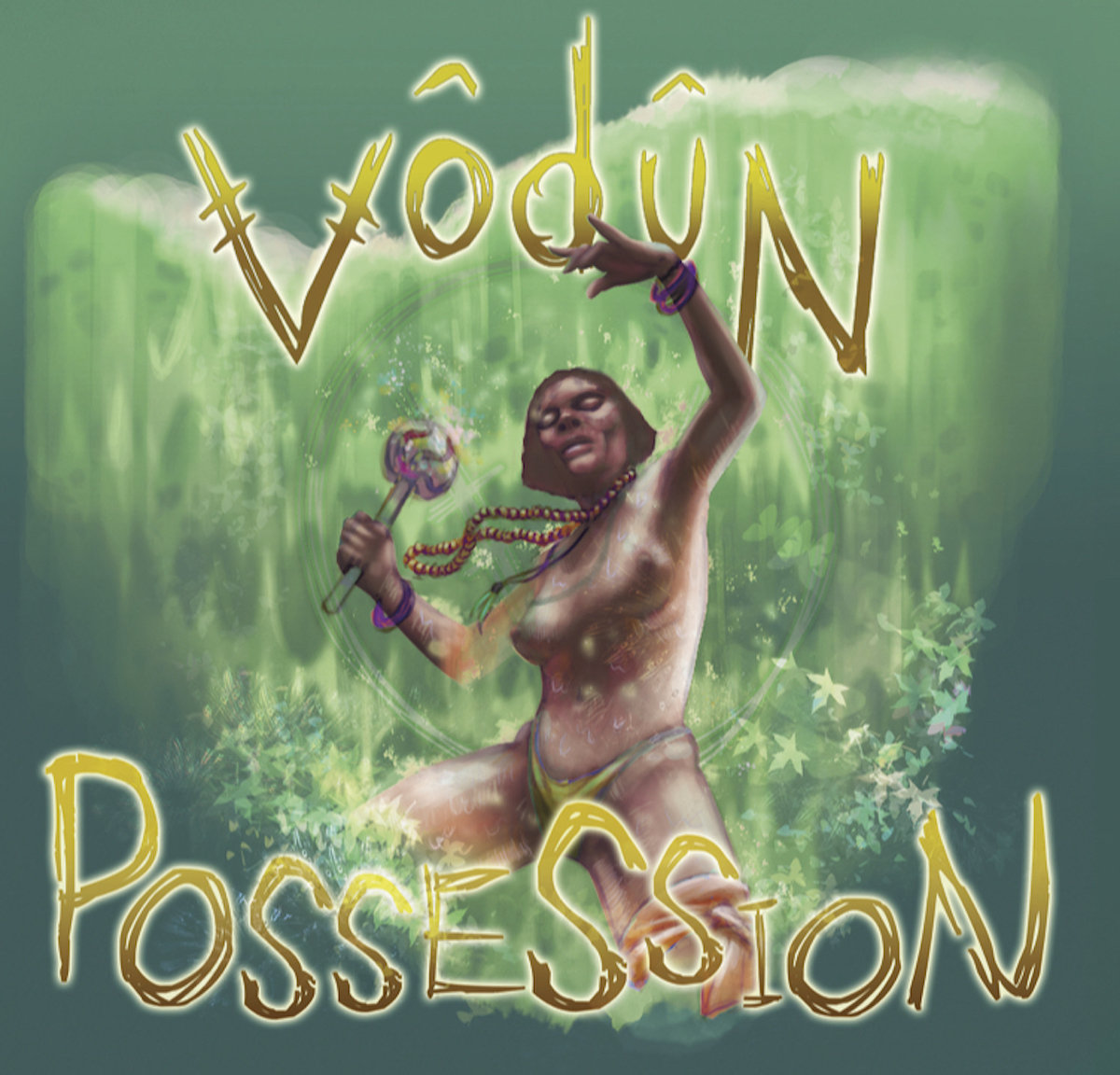
Possession - Vodun

Provenance: As is too often the case I place my trust in the hacks at Classic Rock magazine to inform my new music purchases. Not only did they give Possession a glowing review, they also made it out to be the antithesis of the meat 'n' potatoes rock that I've rather fallen out of love with.

So I bought the album, gave it one listen and was airily dismissive about it on Twitter. The sole response was a chastening reminder to me that I was actually talking about the creative endeavours of real human beings, as Vodun's drummer replied and, with more grace than I could ever muster, encouraged me to listen again.

I did. And a year later apologised, because I was wrong. Now, my memory isn't so spectacular that I was able to dredge a snotty tweet out of cold storage; the prompt came because I caught Vodun supporting Uncle Acid & the Deadbeats and they were mind-bending in the best way imaginable. I felt like I'd been assaulted by the time they left the stage. Vodun's second album Ascend is now out, so it feels like a good time to go back and appraise their first effort properly.

Review: The first time I listened to Can't Buy a Thrill by Steely Dan I was nonplussed. A couple of promising tracks here and there. Gerry Rafferty's City To City was, 'Baker Street' aside, not much to write home about either. I played ZZ Top's La Futura maybe twice before consigning it to the collection for eighteen months because it didn't have the immediacy of Tres Hombres or Eliminator.

Of course, Steely Dan are now part of my Holy Trinity, City To City is probably a top ten of all time album, and I think La Futura is ZZ Top's best since the aforementioned Tres Hombres. Which begs the question as to why I felt so confident proclaiming Vodun's debut to be neither here nor there? (Answer: because I am a wretch and a fool).

Still, how did I fuck up so spectacularly in the instance of Possession? The only excuse I can muster is that perhaps I wasn't in the right frame of mind, because this ain't your uncle's Afro-doom stoner metal album. Like all the best records, Possession demands concentration and rewards the listener when it is given.

Firstly, and least interestingly, the musicianship is top notch. It seems churlish in a three-piece to highlight two standout performers but I'm going to do it anyway; Ogoun lays down some of the most interesting drumming I've heard on a rock release in many years, and Oya is a terrifying vocalist. Live, these two are so overwhelming as to be destructive but it's on record where you can fully appreciate their nimbleness and dexterity. Ogoun is a powerhouse drummer, but much of the juice in Possession comes from the shuffling time-signatures and intricacy of her work. Integrating West African percussion within a metal framework is a potentially dicey affair, and could've sounded awkward or contrived. Instead, at its best, the fusion is hypnotic.

Certainly, what's more interesting is the mood this album conjures up. It's an unapologetic celebration of vodun cosmology, and why not? There are plenty of Christrian rock albums out there and a not insignificant number devoted to our Shining Lord Satan. I recall being very impressed when a school friend showed me a Hare Krishna album he'd been given on the street by a devotee (it sounded like a cross between Hawkwind and the Ozric Tentacles, i.e. per expectations). I have no more than a glib understanding of Haitian vodou or West African vodun so I fully expect not to grasp every resonance or nuance of this work. Nonetheless, this devotional centre gives Possession a concentration and unity that I feel all the best collections have.

It's hard to define what I mean; an album doesn't have to be overtly conceptional in execution, nor do the individual tracks need to be formally uniform. I used 'mood' in the first sentence of the preceding paragraph, and that's a close approximation. 'Character' or 'personality' might also be applicable, but neither strictly nor in their entireties. Whatever it is, Possession has it, like John Martyn's Solid Air or Nick Drake's Pink Moon, or even Acid Bath's When the Kite String Pops. It has a core, a power, a sense of purpose and a hint of mystery to it, all wrapped up in a heady blend of styles and spirituality.

I can't wait to hear Ascend - I can only hope I'm able to be a tad more mindful when I first give it a spin. Oh yeah, and go see Vodun if they play nearby, they are outrageously good live. 

Sunday, 30 September 2018

When The Kite String Pops - Acid Bath

Provenance: A recommendation from the music message board I used to contribute to. I was subsequently bought this as a Christmas present by my parents.

Review: My default position on 'long' albums is to bitch about them for either unspooling the same goddamn idea for an hour or jumping about the place stylistically so as to justify the run time. The former tend to be boring and the latter can be an exercise in frustration as a band or artist, in an attempt to demonstrate versatility, fail to land a knockout punch.

At one hour and nine minutes, When The Kite String Pops is a long album. It is also a rara avis in the sense that it is diverse - even sprawling - but never dull. A bubbling stew of Sabbath-inspired doom, hardcore, groove metal and skeletal balladry, its disparate textures are shot through with a grim, unrelenting focus on the darker side of the human condition. Curiously, the length of WTKSP might actually be one of its most powerful tools.

It's perfectly normal for musicians to use dynamics, tempo, rhythm, melody and harmony to all convey certain moods - so why not time? Taking a considered approach to the actual amount of time allotted to a work is common in ambient and avant-garde composition, and probably in some of the more oblique ends of the extreme metal spectrum. Of course, concept albums and live compositions frequently stretch out, often to provide space for narrative to unfold or to provide a degree of verisimilitude to a performance, but here it's something a bit more nuanced. On WTKSP the sensation is like that of a journey through the bleaker reaches and shades of a netherworld.

Of course, all this could've been disastrous if Acid Bath couldn't whistle a tune, but even at their thrashiest there's still a powerful subtlety at work in their songwriting. Inevitably this comes to the fore when they turn down the amps a bit - 'Scream of the Butterfly' is astonishing, even if Dax Riggs' clean vocals sound ever so slightly like a cross between Chris Cornell and the actor Tony Curtis. Riggs' abilities to deliver convincing performances with both clean and screamed vocals - an ability he shares with Opeth's Mikael Akerfeldt - means that songs like 'Dope Fiend', where he switches between the two, are suffused with a deliriously split personality.

It's a queasy, push-pull ride to the bottom - and it never lets up. I know I said exactly the same about Judas Priest's Painkiller but whilst Halford and co. exist in a shiny, technicolour comic book universe, WTKSP is a Hieronymus Bosch hellscape rendered in monochrome. I'm also well aware that straining hard on the pathos can lead to bathos, but on this cut Acid Bath never come close to lapsing into unintentional comedy. There is a deadly seriousness - emphasis on the deadly - to tracks like 'Tranquilized' and 'God Machine' that allows for no chink of hope.

Finally, a word on the musicianship. It's as tasteful as you're going to experience in the genre. These guys know when to step on the gas, and when to ease up. Too often in metal I think that bands confuse busy drumming - especially the flavour of skinsmanship that relies on the double bass pedal - with aggression. It is to Acid Bath's credit that they know exactly how to create a sense of controlled tension, and then how to release it in a furious gale of punches to the ears and gut. Head-snapping guitar is paired with big, washy swathes of feedback much in the same way as, per my earlier mention, clean and distorted vocals combine, all to stunning effect. You can't really call it 'light and dark' though, just different shades of black (not to get too Spinal Tap about things).

For those who would seek to mock metal, WTKSP is a serious rejoinder. It is both a showcase for fine musicianship and as a primal howl of despair, but furthermore it makes demands on the listener to step wholly into an uncomfortable and disconcerting place. It's strong medicine, and repeat listening is an exercise in masochism, but all the better for it. One for the ages. 

Sunday, 16 September 2018

Dance Of Death - Iron Maiden

Provenance: Along with a few others I could mention, Iron Maiden belongs in that category of bands that any self-respecting metalhead should like. All my friends at school that I played rock and metal with were avid Maiden fans, and I even wound up performing an entire set of Irons covers at a school band bash.

However, I have a confession; if my compatriots in denim 'n' leather hadn't guessed it at the time, I will openly state for the record that I don't love Iron Maiden.

I don't revere Iron Maiden.

I just kinda-sorta-sometimes like Iron Maiden. And that's fine, right?

Anyway, this album dropped when I was working weekends at a well-known high-street purveyor of trinkets and tchotchkes, including compact discs. For many a moon I, along with my still-friend Emily, would be first in the store to sort out all that day's magazines and newspapers. I often used this hour or so before opening to crank the CD player and submit the long-suffering (as I said, still my friend!) Emily to the depredations of whatever metal album I could rustle up. One of them was Dance of Death.

Review: Just look at that shitty album art. It's horrific. It's the kind of thing created by a callow thirteen year-old to accompany their darksided Harry Potter slash-fic. It's like if Eyes Wide Shut were made entirely on MS Paint. It's Hieronymus Bosch filtered through the aesthetics of ReBoot. After glancing at it for two seconds I punched myself in the face; not, as per Tristan Tzara's injunction, as an artistic gesture, but as an anaesthetic for my poor, abused cerebral cortex.

Don't misunderstand me, heavy metal is the natural realm for eye-breakingly bad album art but much of that was due to having no money and getting their stoner D&D-playing mate to draw "a badass space monster" or whatever. But Maiden weren't broke then, and certainly aren't broke now. It makes my hair stand on hand when I consider the size of the organisation and management infrastructure surrounding Iron Maiden and thus the number of individuals who looked at the draft artwork and thought "yes, that's just the ticket." I think it's best I we talk about the music now!

Ah yes, the music! It's...fine? Pretty good in places? It sounds like some Iron Maiden, for the most part. Bruce Dickinson's slightly hammy wail is present and correct, and Nicko McBrain's drumming is muscular and creative; the swirling concussive vortex he conjures up on 'Montsegur' is absolutely monstrous. Here and there, the things I like about Iron Maiden are present, correct and at the forefront. Opener 'Wildest Dreams' blasts out of the traps, and it shares with 'Rainmaker' the kind of tasty fretwork curlicue that has elevated so many Maiden tracks.

But I have some misgivings - and I'm not exaggerating when I say you can cut and paste the following verbiage from this paragraph into any review of Iron Maiden from the Dickinson era onwards. Firstly, for their huge and largely-earned success, which rests upon consistently excellent live performances and a firkin-full of top-tier tracks, the ratio of filler-to-banger is pretty high. There are lesser bands without the same stature who operate(d) in the same genre such as Saxon and Diamond Head who couldn't sustain the quality but did put out individual albums that are better, front to back, than anything Maiden have managed. The second is a petty hill to die upon, but I dislike the fact that I run the risk of learning something from listening to a Maiden album. It's nerd metal. I am sure that one can pass GCSE History purely by listening to every post-Brave New World release in order.

Now, to hone in on a specific issue with Dance of Death; just like a Swinetunes review, it's far too long and often takes its sweet time getting where it's going. Almost 70 minutes, seriously? With a title track that clocks in at 8 mins 36 seconds so it can include room for passages that sound a bit like a beefier version of Spinal Tap's 'Stonehenge'? And just in case that wasn't enough, skip forward a few tracks and you've got one called 'Paschendale' (sic) only nine seconds shy? Come on. I've always felt that Maiden's 'epics' are a by and large ponderous and enervating affairs, a sensibility evidently not shared by bassist / songwriter / multimillionaire Steve Harris. I'm definitely right, though.

I was, however, pleasantly surprised by the mellow and ruminative 'Journeyman', which closes out this album, which was also rather wonderful when I caught the Dance of Death Tour at Earl's Court with my brother. To produce such a song is, I would submit, a truer test of the band's ability to flex their creative muscles than an interminable war gallop that contains the lines 'Battlefield nothing but a bloody tomb / Be reunited with my dead friends soon." But what the fuck do I actually know? Dance of Death is a good album, give it a listen, but maybe schedule in a comfort break if you do so.

PS - The album artwork for Dance of Death is a true aberration. Through the years Iron Maiden have decked their releases out in some truly iconic and very metal designs, even if the music itself sucked substantial ass.

Sunday, 9 September 2018

Mothership Connection - Parliament

Provenance: Not entirely sure. Unless my memory is playing tricks on me, I seem to recall somebody telling me that this is the best funk album ever recorded. That's worth a punt, isn't it?

I know I definitely owned this before I went to university, because I once saw a dude on campus wearing a Mothership Connection t-shirt. I tried to engage him on the subject (viz: the best funk album ever recorded) but he nixed it, saying that he just liked the design and hadn't ever heard the album. Right there and then, my friends, I wanted to cuff some sense into that mooncalf.

Review: To the gauzy wraith of my memory who told me about Mothership Connection, I doff my cap to you. In the grand scheme of things I haven't listened to a great deal of funk (though I've enjoyed spasmodic funk flaps when a friend, colleague or acquaintance has hepped me to something, including the time where my father-in-law ran me through the Ohio Players discography) so I don't feel qualified to bestow any laurels upon on particular platter or another. That being said, I come back to Mothership Connection again and again and again, so it's doing something right.

Sitting squarely in the middle of an Afrofuturist musical pantheon that spans the Sun Ra Arkestra to Janelle Monae is George Clinton's outrageous Parliament-Funkadelic collective. The history is not altogether straightforward, but Clinton conceived Funkadelic to be the raw, psych-heavy outfit, bringing Eddie Hazel's swirling, hypnotic guitar work to the fore. Meanwhile, Parliament were the more R&B orientated group, a groove machine which pushed Bernie Worrell's keyboards and, on Mothership Connection, an elite horn section front and centre. In fact the personnel assembled here, pound-for-pound, possibly constitute the most dazzling array of funk musicians captured on magnetic tape.

Folks, it's a wild ride. Cold open to an imagined radio station (maybe being beamed in from outer space?) called WEFUNK, which is a device I've enjoyed in 1970s cinema (Vanishing Point, The Warriors). The putative DJs riff on the medicinal qualities of funk and jib off artists who aren't quite up to their standards (including, amusingly, David Bowie and the Doobie Brothers); this goes on for almost eight minutes, and aside from periodically busting out into a monstrous chorus it remains a nervy, tentative trip. Not at all what I had imagined - and yet it's infectious, weird, funny and absolutely addictive all at once.

However, one 'P Funk (Wants To Get Funked Up)' is done, we're into a world - no, a galaxy - of groove. It's difficult to tag a true MVP when everybody is absolutely cooking with gas, but Bootsy Collins certainly earned his fucking corn on this bad boy. It's hard to describe exactly what he's doing, but it's some of the most rubbery, audaciously groovy bass you're likely to hear. Even at low volumes it seems to punch you in the chest, and in my car's souped-up sound system it turns my humble Peugeot 207 into a veritable low-rider. And just as I once claimed that Judas Priest's Painkiller doesn't let up with the metal madness, by the same token it could be claimed that Mothership Connection couldn't stop being funky even if it tried. Even the start of 'Unfunky UFO', which is merely a finicky little syncopated guitar and bass drum, is sublime. People talk about John Bonham's right foot, but this is (perhaps quite literally) a kick from another galaxy.

None of this should suggest to you that Mothership Connection doesn't shift around in terms of mood or style at all. The coda to 'Mothership Connection (Star Child)' is built around 'Swing Low, Sweet Chariot', which is strangely poignant; a spiritual about liberation from earthly pains transmogrified into the context of an imagined African-American-extraterrestrial realm. Then there's the most old-school R&B track of the bunch, 'Handcuffs', an absurd and humorous meditation on male possessiveness. Parliament actually had its roots in doo-wop (as The Parliaments), and it's on 'Handcuffs' where this is most obvious, with all five(?) vocalists stepping up to deliver featured spots. For the finale, the general lightness of the album is nudged out in favour of a laser-focused intensity on the largely instrumental 'Night of the Thumpasorus Peoples'. This track rides atop the most outrageous groove on the whole album, and it is sticky - hell, Worrell's scuzzy synthesizers sound as if they're on the verge of collapsing in on themselves, and you the listener feel almost as if you're about to be sucked into this dark star of pure rhythm.

One thing about Mothership Connection that is abundantly clear to even the most casual enjoyer of hip-hop is how very alive the music is to the present day. To suggest it's an influence on the genre would be gross understatement; just have a look at how many times it is estimated that Parliament have been sampled. Stick 'em up there with James Brown, Kraftwerk and the 'Amen Break'. Parliament, and Mothership Connection in particular, pumps through the arteries of so much b(B)lack music, from Kool and the Gang to Charles Hamilton to Dr Dre and beyond. It's the single coolest, slickest, catchiest and unruliest goddamn funk album I've ever heard, and I'll probably spin it again once I'm done listening. Plus, who wouldn't want an album that contains a track called 'Supergroovalisticprosifunkstication'? It almost puts Isaac Hayes to shame!

My own personal coda: thanks to being turned on to Parliament at a young age, once ensconced at university I was one of a few students who knew the name Maceo Parker (saxophone; also played with James Brown and Prince, which isn't too shabby). So when his band rolled into town I was THERE and - goodness me - it was transformative. I dance like Theresa May but, just like the Prime Minister whenever she steps foot on African soil, the pull was irresistible. He's still out there touring - catch him if you can.

Saturday, 18 August 2018

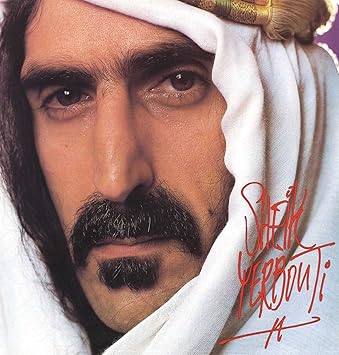
Sheik Yerbouti - Frank Zappa

Provenance: In a not insignificant number of ways I am my father's son, and nowhere is this more evident than my tastes when they edge towards the weirder end of the popular music spectrum. White Noise, Gryphon and today's subject - Frank Zappa - all came into my orbit as a consequence of my dad's listening habits.

In the instance of Sheik Yerbouti, I bought this to signal a small amount of independence. How so? Because dad didn't own this album. I distinctly recall as a youngster being impressed by cover art of both Overnite Sensation and Hot Rats, I thought the guy's name was cool (it sounds like a freakin' laser) and some of the songs made me laugh. Thus when I was older and casting around for my own bit of Zappanalia, I went for an album that was considered one of his more 'hard rock' efforts, as per my own inclinations at the time. Hence Sheik Yerbouti.

May I drift a little here? When it comes to worst fanbases of all time, you have to consider those of the Grateful Dead, Britney Spears and Pantera. They all have their demerits, but for me nothing comes close to being stuck with a Zappa fan when the topic of conversation is Zappa. I've had my head forcibly banged for me watching Iron Maiden, met some Megadeth fans who were happy to show me their Neo-Nazi tattoo collections and saw not one but three fights break out within spitting distance during a Madness gig. I'd happily endure all that again, and then some, if I didn't have to spend another moment in the presence of a Frank Zappa fan (my dad excluded, who is the epitome of the exception that proves the rule).

Review: Well, this is a bit of a disappointment.

I can imagine that, aged sixteen, I found some of this stuff funny. However, I've never found scatalogical humour particularly engaging, and any youthful proclivity I may have had towards it has certainly dimmed with age. In terms of my Zappa listening these days, it tends towards the more instrumental side, Mothers of Invention era cuts or Hot Rats (because 'Willie the Pimp  features the greatest violin riff in rock music). Sheik Yerbouti has slipped to the bottom of the pile, and giving it a listen for this review has done little to rehabilitate it.

You know, 'I Have Been In You' might have elicited the odd yuk back when Peter Frampton was a ubiquitous presence in the homes of Middle America, but pastiche is a dodgy thing to pull off at the best of times. It's saying something that the parodical Bob Dylan harmonica stylings on 'Flakes' is the highlight of 'Flakes'. And revisiting the notion of jokes ageing poorly - whew - 'Jewish Princess' (yep) and 'Bobby Brown (Goes Down)' (a discotheque staple on continental Europe, which is enough to make me a full on Brexiter) would've surely been offensive forty or so years ago. In 2018 they come across as positively Neanderthal with their depictions of Jewish women and homosexuality, respectively. A former English Literature teacher of mine once felt moved to describe Zappa as a 'poet'.

I'm happy to say that, amongst the more overtly comedic songs, one still holds up - 'Dancin' Fool' is a stabby little lampoon of the disco scene that works through a combination of splenetic observational humour and metrical tricksiness, the latter effectively turning it into a disco track that can't be danced to. 'Tryin' To Grow a Chin' is also a lot of fun, drummer Terry Bozzio providing a demented vocal. Plus I like false endings, and this song's got one (sorry to spoil it for you, folks - but are you really going to listen to Sheik Yerbouti any time soon?).

Here's the frustrating part; the first track that appears to privilege musicianship above cheap thrills, the instrumental 'Rat Tomago', hits the mark. The push-pull percussion, jazzy keys and wild guitar improvisations afford a glimpse into realms beyond this album's - consciously applied - limitations. Oh, enjoyed that music, did ya? Never mind, here's some wisecracks about fisting. With Sheik Yerbouti we've reached a point in Zappa's career where he needed to do the stoopid stuff (and take it out on tour) to fund his more serious compositions, which had become prohibitively expensive, especially where recording orchestral works were concerned. At least, that was the line trotted out at the time. Who knows? Maybe that was the case, but then again maybe he just got a kick out of stigmatising homosexuality via the medium of comedy song.

As I have intimated, there are hints of a better (and shorter) album here; all the instrumental cuts are great, with 'The Sheik Yerbouti Tango' coming out on top because it sounds just that little bit out of control. Zappa fans might scream that their formalist hero knew exactly what he was doing, but I think it's sometimes pretty neat to hear the seams of the music. (Isn't this where improvisation becomes truly interesting? When instead of falling back on the rock / jazz / blues playbook of licks, they take their instrument on a journey that teeters between inspiration and failure?). Of the 'straighter' rock stuff, 'Broken Hearts Are For Assholes' has a certain appealing mania to it, even if it does descend into a coda about 'poop chutes'. 'Baby Snakes' is here and gone far too quickly, which is a shame because it's a little gem of hard-edged surrealism. 'City of Tiny Lites' really kicks out the jams - a spacey and strangely soulful number that skips along on busy percussion and a rubbery bass line. The guitar solo is fucking badass too.

I will say this - aside from the more objectionable extremes of Zappa's lyric writing, I enjoyed the experience of revisiting Sheik Yerbouti more than I had expected. It's also told me something about myself, and the ageing process. When I was in my teens, I would often skip the 'boring' instrumental tracks so I could get to the next chucklefest. Now, it would be the other way around. Once upon a time, this would've been my favourite Zappa album because it had some rawk 'n' roll on it, but now I gravitate towards his jazzier output (which coincides with a general awakening to jazz as a genre, I guess). Anyway, Sheik Yerbouti certainly treats the ol' lugholes to some interesting snippets of music, but you have to ask yourself whether it's worth wading through all the snark and calculated dumbassery to reach.

Sunday, 12 August 2018

Firepower - Judas Priest

Provenance: I have every goddamn Judas Priest album so I was always going to get this bad boy the day it came out.

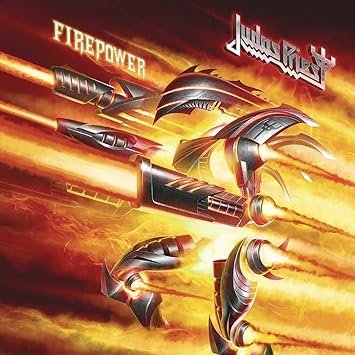
Review: There's no two ways about this, Firepower is fucking sick. Although it sports the worst album cover since Painkiller I would happily frame this and stick it in the Louvre. Why? Because it's a piece of Judas Priest ephemera and therefore in my desiccated pea brain is automatically elevated to the status of high art.

However, at the very least it gives you a flavour of what Firepower is all about, i.e., indomitable mecha-monster war machines kicking the entire world's ass. This odd strain particular to Priest - like that of Saxon's obsession with public transport, or Iron Maiden's godforsaken attempts to ram imperial history down one's throat - began by my estimation on 1978's Stained Class (coincidentally, the album that debuted their current logo) with 'Exciter' and has continued via 'Grinder' and 'The Sentinel' before reaching its apogee on the incredible Painkiller, which positively swarmed with these hellbeasts. You know where else you'll find another menagerie of the infernos? Right here on Firepower, muthas.

Whilst I'm a big fan of predecessor Redeemer of Souls, with the growing influence of newest band member Richie Faulkner (who replaced founder KK Downing) this is a far more focused collection. It starts off as every Priest album should - a dirty great riff and a Rob Halford scream - and barely lets up for a moment over the ensuing 58 minutes (another trait it shares with Painkiller).  The one-two punch of the title track and the gloriously bonkers 'Lightning Strike' ranks up their as my favourite Priest opening salvos.

Of course, this is still a Judas Priest album and so the lyric sheet is the usual casserole of bogglesome ineptitude, but it doesn't really matter. Even though little makes sense from one line to the next, it's all suitably pumped-up and aggressive. A good Priest album does not invite the listener to embark upon close textual analysis; instead, it invites the listener to punch things. If your fist doesn't reflexively clench during the choruses of 'Children of the Sun' (which may or may not be about conflict in the Middle East) or 'Flame Thrower', then I can't help you, son.

Speaking of 'Flame Thrower' - "You're on the run / From the stun / Of the flamethrower!" - that's the chorus, genuinely. Looks stupid upon the page? Cool, because it also sounds stupid coming out of my stereo, but it's also perfect. I wouldn't replace a single word because it sounds totally bad-ass in Rob Halford's hands (or mouth, to be more accurate), peculiar inflections and all. Honestly, although he's mostly sacked off the screaming these days, Halford's still an absolute force. He brings an entirely unearned authority and gravitas to songs about robots having a pagga with mankind.

And look - although I'm clowning on some aspects of the Priest experience, it's done from a place of affection. It's taking longer than usual to type out this review as I've frequently paused to air-guitar or headbang to my favourite passages, which are legion. There's true craft on display here; 'Lightning Strike', 'Necromancer' and 'Children of the Sun' are magnificent stompers from the first half of the album; on the home straight you've got 'Flame Thrower' and 'Lone Wolf', which would be highlights on any album, along with the mighty 'Spectre'. Although Richie Faulkner has made a point of calling Firepower a forward-thinking album, some of the best bits here are redolent of past triumphs - 'Spectre' being a case in point. A nasty prowler with chewy guitar, thematically it's a direct descendent of 'The Ripper' from second album Sad Wings of Destiny and is all the more enjoyable for it.

I don't really know what more there is to say. If you love heavy metal, Firepower is a distillation of all that was fun and magnetic from its classic era, wrapped up in crisp modern production. If metal is a genre you don't care for, it'll come across as exactly the kind of leather 'n' rhinestone clad nonsense you're no doubt striven to avoid. More fool you, in my not so humble opinion - go listen to Father John Misty or just fuck off, whatever.