Given that the number of albums I own is comfortably into four figures by now it's becoming increasingly tough to pinpoint each eureka moment. Here, though, the likeliest culprit is Dotun Adebayo's 'Virtual Jukebox' show held deep into the night on Radio Five Live. It's not the first time I've been stirred from a semi-somnolent state by an arresting piece of music - I vividly recall the instance I first heard Stravinsky's 'The Rite of Spring', which, even with my radio turned down low, sounded like the monstrous awakening of some pagan god.
Incidentally, I don't know if I'll have another chance to state this, but a couple of years ago I met Dotun Adebayo backstage at a Taj Mahal & Keb Mo' show, and had the opportunity to thank him for keeping me accompany through countless late nights. We wound up having a fairly lengthy chat, and I can attest to the fact that he's one of the finest fellows around. Of course, the 'World Football Phone-In' is a wonderfully idiosyncratic and colourful take on the beautiful game as played around the globe.
Weren't we supposed to be talking about Nick Drake?
Review: Coming from the same Britfolk scene as other luminaries such as John Martyn, Sandy Denny, John Renbourn and the rest, Nick Drake now looms as a big beast but during his own lifetime sold a paltry number of records and, by all accounts, was a useless live performer. As a keen reader of books and articles about the British folk revival movement (for anyone interested, Rob Young's Electric Eden is a great primer; and JP Bean's Singing From the Floor is as entertaining an oral history of any moment that you're likely to encounter), there is a definite sense that Drake was of the scene but not exactly part of it. His diffident nature and standoffish attitude to people he didn't trust (i.e. almost everyone) created a kind of static with Britfolk's other performers, who seemed a gregarious bunch and were very promiscuous in terms of performing on each other's projects. In a world where openness, community and collaboration were the watchwords, one can almost picture Drake huddled in a corner.
And perhaps it is this very quality that means Drake endures as a folk icon where others have faded from consciousness; for Five Leaves Left burns with an intense introspection. If you've ever experienced the discomfiting intimacy of someone leaning in too close to talk, you have some idea of the effect that Drake's music can have. The spell is broken somewhat on tracks with a degree of orchestration to them - the swelling strings of 'Way To Blue' and 'Day Is Done' allow the listener to step back a pace or two - but those songs where it's just Drake and his guitar (and perhaps a smattering of bongos - it was 1969 after all) can feel harrowingly personal.
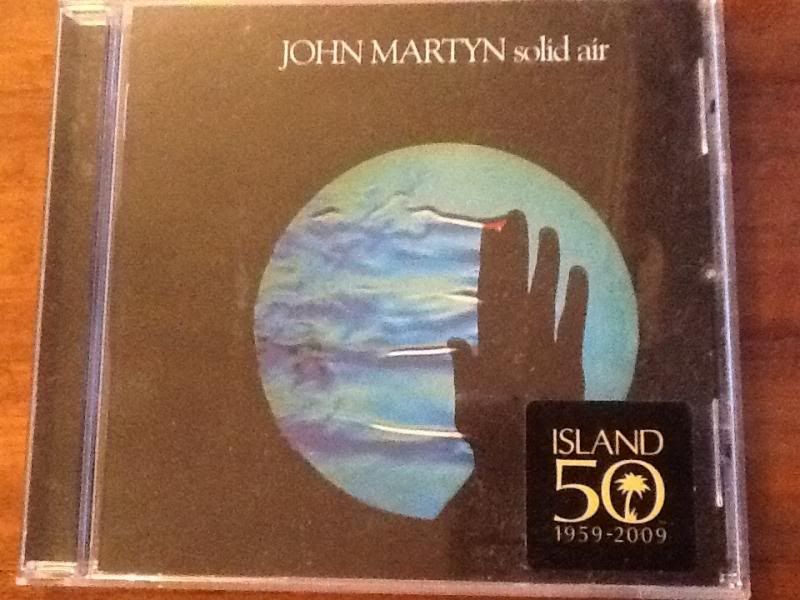
Isn't this what we want, though? Don't we hope that the very best music jolts us away from the workaday and prosaic reality that most of us inhabit most of the time? Just yesterday I was listening to Jorge Ben Jor and, at his best, the soft pulse of his tropicalia rhythms enable me to dream myself away from the flinty rain of East Sussex. And so it is with Five Leaves Left, but in this instance I feel like I'm not in any geographical location that exists in reality, but in the dark meadows of a strange and sad land of the imagination. When John Martyn recorded 'Solid Air', a song about Nick Drake, he created a thick and woozy sound, a soup of indistinct fuzz that moves beyond words to capture the essence of Drake's music. Martyn sang that song in an exaggerated slurring manner, which again feels nothing more than a magnification of Drake's hushed and humble delivery, the opposite of the kind of declamatory holler that many folkies of the period preferred.
This, then, wasn't the voice of the rowdy ale-sodden basement club, but of solitary twilights and lonely bedsits. However, I wouldn't call this confessional music; yes, it sounds like Drake is trying to impart some inward melancholy to you (and only you), but what emerges lyrically is so opaque and elliptical that one is left with impressions rather than exactitudes. I believe that this is a source of Drake's endurance as an artist; no matter how many times you listen to Five Leaves Left, there's a sense that, once final track 'Saturday Sun' has slipped away from view, you still haven't quite grasped the whole picture. The vague sense of dread, the amorphous thought-pictures, the indistinct edges to Drake's music sum up to a cloud of unknowing, a feeling that there are further layers and mysteries to be uncovered. And who am I to state otherwise?
It seems churlish to mention album highlights - 'River Man' and 'Fruit Tree' are oft cited in this regard - because this is truly a collection of music to sit with, to absorb and to contemplate in its totality. Five Leaves Left is not an album I would ever listen to whilst performing tasks or chores, nor would I ever consider it wallpaper music. Such quietly powerful music, with the potential to transport you temporarily from the humdrum clatter of life, deserves the attention it quietly - but insistently - demands.