Showing posts with label deep purple. Show all posts

Sunday, 21 August 2022

Back In Black - AC/DC


Provenance: No big story behind this one, I'm afraid. The story is that this is the sixth-biggest selling album ever, and it's by AC/DC. 

Review: This one should be easy, no? It's baby's first hard rock record. It's part of the headbanger's canon. No self-respecting air-guitarist would go without.

However, I have been a bit of a contrarian in the past, making sport of sacred cows such as Deep Purple and Kiss. At least I haven't doled out any shoeings as a pose; my opinions may seem wrongheaded to you, fair reader, but they're forged in white heat of honesty. So with that being said, what do I find amiss with Back In Black?

Er, nothing much. It's pretty fantastic.

As a fan, I hold the uncontroversial opinion that Bon Scott was the greater frontman whilst maintaining that Back In Black is the best overall AC/DC album. This, despite the fact that, with the advent of Brian Johnson, its shorn of many of the aspects Scott brought to the band that made them so indelibly AC/DCish - the boozy bonhomie, leery (albeit often self-deprecating) innuendo and a bucketload of sleaze. Johnson is a different beast altogether, a man who sounds on the brink of imploding every time he opens his mouth, as strained and intense as Scott was relaxed and cheery. Upon listening today, it struck me as it never has before that Johnson actually sounds a fair bit like Dan McCafferty of Nazareth, another fella who sounded like he was dying every time he sang.

So what makes Back In Black so good? Some obvious points - catchy, precision-tooled riffs in every song; a big, roomy production coupled with unfussy music; the eye-popping weirdness of Brian Johnson; and the fact that, amidst the heavy blooz 'n' bluster, there can be detected the occasional stab at grandeur. There's a quality approaching stateliness in 'Hell's Bells' and 'Rock 'N' Roll Ain't Noise Pollution', a quality that even the tautology of the latter's chorus line cannot diminish. Back In Black was the first AC/DC album after Scott's passing, and the tolling of the bell that signifies the start of the album pulses with a rare power, no matter how many times you care to listen.

I should also observe that some of the plus points I've briefly sketched out would prove the seeds of AC/DC's downfall as a creative force, even as they became the stadium behemoth they are today. As with Def Leppard's Hysteria, also produced by Mutt Lange, Back In Black is shorn of any twisty intricacy - not that AC/DC would ever be confused with Bach, but this is definitely them at their most stripped-back. It works here, bold riffs against a stark canvas, but on later albums where the ideas weren't quite up to snuff, it began to sound boring.

Likewise, where Brian Johnson sounds quite demented here, there's little variation from album to album. Again, the effect wore off, and whilst a better singer in technical terms than Bon Scott, he doesn't possess Scott's ability with mood, colour and shading. Feel free to disagree with me on this, but I've listened to a whole lotta DC, and these are the conclusions I've reached. Also, whilst commendably keeping the spirit of sleaziness alive, 'Let Me Put My Love Into You' and 'Givin' the Dog a Bone' barely reach the qualifying bar for single-entendre. Still, very good rock songs both!

Listen to me, harping on about all the things AC/DC did subsequent to Back In Black. Suffice it to say, I can't add much to the fund of knowledge about the album - it's there, it's brilliant, and right now around the world fumbled attempts at 'Back In Black' emanate from one thousand guitar shops. I suppose it's remarkable in the sense that it's both an elegy and a celebration, yet never comes across as either mawkish or, at the other end of the spectrum, inconsiderate. How do you mourn the death of your revered frontman? By making one of the greatest rock and roll records of the era. 

Thursday, 13 January 2022

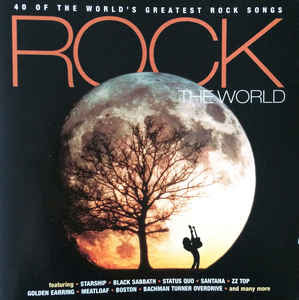
Rock The World - Various Artists


Provenance: Back when I were a lad and finding my feet musically, compilation albums proved a great gateway drug. I look down on them a little these days, and perhaps I should rethink; it is through a compilation album that I got hepped to my favourite band, Blue Oyster Cult. 

Now, Rock The World and I have a history going back many years. My mum used to work in a library, and as such would often bring home tapes and CDs that she thought my brother and I would be into. That way led me to becoming a fan, fairly idiosyncratically, of both ZZ Top's Recycler and Aerosmith's Nine Lives, neither of which would ever be hailed as tree toppers by those bands' fans.

Rock The World was one of these albums mum brought home to us, and we played the shit out of it. I think my brother even obtained a copy. However, like some kind of weird divorce, as we drifted off to university, first me and then my brother, our music collections had a parting of the ways. All of a sudden I was bereft of Van Halen, Ozzy Osbourne and Megadeth; he was left pining for Steve Vai and Motorhead, amongst others. Nonetheless, Rock The World went one way, I went another.

Fast forward to April 2020 and I was idly dicking about on Discogs looking for some eldritch NWOBHM release or another when from nowhere the thought popped into my head: Rock The World! And lo, there it was, with a British seller and a total price (including p&p) of £6.44. Automatic purchase. The transaction was conducted swiftly, buyer 'n' seller gave each other pleasant reviews, and then I waited.

And waited.

And waited.

Until, finally, I contacted the seller to suggest the CD was lost in the Bermuda Triangle of a Royal Mail sorting office. £6.44 duly refunded and I got on with life.

Then, last week, a padded envelope arrived. Not entirely unexpected as this coincided with my birthday, and friends often send me music as a gift. But - you've guessed it - inside was Rock The World a full eight months after I had ordered it. The address was one house number awry, and this was apparently enough to send it into limbo for two-thirds of a year. Still, I have it now, a little piece of my youth. Nice, eh?

Review: What is there to say? It's the kind of rock comp that contains 'Layla' by Derek and the Dominoes (sans Duane Allman outro), '(Don't Fear) The Reaper' by Blue Oyster Cult (retaining Buck Dharma's masterful solo) and other big beasts like 'Bat Out Of Hell', 'Smoke On The Water', 'Born To Be Wild', 'Boys Are Back In Town', 'Hold The Line'...you get the picture. Little you hadn't heard before, one would suspect.

Indeed, the listening experience is like a pleasant stroll through one of the calmer zones in Jurassic Park - imagine each of these songs as peaceful sauropods lumbering around, any threat that their sheer size presents countermanded by their docility. Fuck, there's even a mimetic quality to 'Smoke On The Water', possessing as it does the exact rhythm, one suspects, of a charismatically large dinosaur ambling to a watering hole. 

In fact, this harmlessness is the common characteristic to all the cuts on Rock The World. There's no New Wave spikiness, nor thrashy bite to proceedings, and precious little mystery. Black Sabbath's hoary old workhorse 'Paranoid' is about as occult as things get (though that didn't stop us playing it at Band Bash - our version contained an ill-starred slide guitar solo, performed by yours truly). Saying that, there are a couple of curveballs herein - relatively speaking, of course.

For example, when I first encountered Python Lee Jackson's downbeat beauty 'In A Broken Dream' I was very impressed with how their lead singer could ape Rod Stewart so well (until I discovered it actually was Rod Stewart). Starship's 'Jane' is the only track with a cod reggae section, and Atomic Rooster's brassy 'Devil's Answer' would be partly responsible for my later purchase of their excellent Death Walks Behind You album. Amusingly, as there was about a zero percent chance of licencing a Led Zeppelin track, some jabronis called Black Velvet deliver an admittedly very credible 'Since I've Been Loving You' (were Kingdom Come not available?).

Ultimately, though, the value of Rock The World doesn't stem from the music it contains, though it's a bit of quaint knockabout fun in the age of streaming and shuffle. It doesn't even matter that it's dad rock incarnate, so much so that you can picture it in bootcuts, feigning expertise in single malts and hitting on your girlfriend. No, this album represents something greater - sitting on the battered sofa in my bedroom with my brother and our friends, going nuts at each other over a multiplayer cage match of WWF War Zone on the PS1. Memories of laughing uproariously, dropping the Stone Cold Stunner whilst 'Black Betty' blares away in the background - now, isn't that worth £6.44?

Wednesday, 6 January 2021

Demons And Wizards - Uriah Heep


Provenance: Way back when I was at school a friend bought me a triple CD called Metal, the meat of which was split between semi-obscure NWOBHM acts (Vardis, anyone?) and stuff that simply wasn't, er, metal (how Robin George's 'Heartline' made the cut is anyone's guess).

Nonetheless, despite it's rather wonky take on the genre, the compilation featured a smattering of Heep tracks, including 'Easy Livin''. That was enough to get me to shell out a whole nine quid, if I recall rightly, at my local HMV, for the "expanded de-luxe edition" of Demons and Wizards.

And yeah, in case you've twigged, Uriah Heep are next to Uncle Acid & the Deadbeats in my album collection. I'm being lazy.

Review: Last time out I rhapsodised about Uncle Acid's monstrous 'I'll Cut You Down'; and frankly, I could be every bit as emotionally incontinent here about 'Easy Livin'', a song I've also spent more of my life with. It's pure, distilled Heep in the span of around three minutes; Mick Box's buzzy guitar, the late Ken Hensley's strident Hammond organ filling up the sound, and above all else David Byron's ridiculous, brilliant lead vocal. To call it the most heads-down, rocking track on Demons And Wizards feels inadequate. Rather, 'Easy Livin'' bounds out of the speakers with the earnestness and vim of an over-stimulated Labrador.

Back to David Byron for a moment - I've made sport of Deep Purple's Ian Gillan before now for being somewhat hammy in his delivery, but Byron is the whole darned charcuterie board. Whilst an undoubtedly powerful singer, it's so fruity and declamatory that one is minded to think of histrionic old stagers like of Brian Blessed or Christopher Biggins. Given that this is also early-1970s dungeons 'n' dragons rock fayre, the threat that the whole towering souffle will collapse in on itself is very real.

And, hey, it happens - 'Circle of Hands' and 'Paradise' are silly indulgences by anybody's standards, the kind of frothy pretentiousness that infects the minds of guys who want to kick out the jams having read a few pages of The Hobbit. Can you really blame 'em, though? Missteps are inevitable, considering Demons And Wizards was Heep's fourth album in the span of two years. But when it hits, the combination of genuinely top-notch musicianship and fantastical subject matter can be exhilarating.

Por ejemplo, 'Poet's Justice' is a rather underplayed number with a couple of unexpected jazzy chord changes, and 'All My Life', with its slide guitar and honky-tonk piano, could conceivably sit at the admittedly heavier end of the southern rock spectrum; that is, until the utterly bizarre coda. Let's say that some of the vocal contributions from Byron at this point are a little, ah, injudicious. In fact, the song finishes up in a big swell of organ, falsetto backing vocals and Byronic emissions, Heep reverting to type just as you think they've pitched a curveball.

However, 'Rainbow Demon' is absolutely right up there with 'Easy Livin'' as one of the primo cuts from the Heep back catalogue. A prowling, low-key intro mutates into a stomping, insistent muvva of a track which builds towards one of the most volcanic choruses of the era. Here, Heep are toeing a very fine line, as This Is Spinal Tap would have it, between stupid and clever. I'm sure to those plagued by a surfeit of irony, hearing a grown man bellow the words "Rainbow - demon! Pick up your heart and run!" is funny (NB: it is), but if you can tune yourself into the peculiarities of the era a rich experience awaits.

Now, normally I don't delve into the bonus tracks, but one called 'Why' merits special mention. One thing that Demons And Wizards emphatically isn't is groovy; even the boogie passages of 'The Spell' are quite clunky. However, on 'Why', Heep go from a band that can't locate a pocket on Batman's utility keks to playing some truly sinuous funk rock. I don't really know the history of this track (I believe it's a b-side) but it truly warrants more exposure, even if it does feature a mid-section containing the usual melange of freneticism that Heep conflate with rocking out.

In spite - or maybe, because - of its obvious flaws, Demons And Wizards remains an album with high replay value. It's a cracking time capsule of a time where abundant hair, nicotine-yellowed teeth, high voices and cranked organs lit the path to a heavy rock Shambhala. For sure, there's a bit of ring rust and a slight knock in the engine, but this gnarled old warhorse gives the show-ponies a run for their money.

Sunday, 6 September 2020

Good Bye - Flied Egg


Provenance: The ol' noggin ain't what it used to be, so no amount of staring into the black depths of this slightly forbidding album cover will lead to an eureka moment, I fear. However, it's certainly a pre-Spotify purchase, which leads me to two hypotheses:

1. Some random shit I heard on YouTube

2. (The most likely) I read about a band called Flied Egg and thought "I'd better get a piece of this".

It's a strange name for a band, right? Flied Egg. It turns out they were a Japanese outfit from the early 1970s, so it's either with a degree of irony or defiance that they took their language's difficulty with distinguishing between 'l' and 'r' and flipped it into a quirky handle. One feels that in our more enlightened (I say, the day after hordes of people marched in London against a make-believe Satanic cannibal paedophile (or should that be paedophile cannibal?) cabal) age such a name might be consigned to the 'bad idea' pile fairly swiftly, but who knows? If anybody has the right to lampoon Japanese speech patterns it's Japanese people themselves, and to me it feels like a nice mixture of absurdity, self-deprecation and spikiness. Is that reflected in the music, eh?

Review: Here's one of those curios that seem to have gone extinct, alongside 'hidden tracks' and CDs that you could turn over to the watch a music video - the half live, half studio effort. Good Bye starts with a bit of a bummer, as an MC announces that 'this show is going to be recorded, and will appear on the final LP this band will be released'. Yeah mate, not quite 'you wanted the best?! You got the best!' or 'on your feet - or on your knees!', but I should mark it up for being factually correct (this was Flied Egg's second - and final - album) and creating a sense of occasion.

Unfortunately, the first couple of tracks aren't anything special - aside from some peculiar wailing in the backing vocals department, it's fairly pedestrian 'eavy blooz rock in the same vein as Bachman-Turner Overdrive or Grand Funk Railroad. A fairly pointless cover of B.B. King's 'Rock Me Baby' follows - I already have superior versions by King, Robin Trower and myself playing into a dictaphone to fall back on. The soloing is energetic enough but quite generic; it has none of the identifiable quirkiness of King's restrained, vibrato-rich style or the artistry of Trower's mind-bending, feedback-soaked real-time deconstruction of the blues.

Another fairly muddy track closes out side A, but this time we're treated to a boring drum solo and some meandering nonsense on guitar. It's all very 1972 - an era where bands seemed to confuse lengthy jamming with fun, interesting music. Nothing to me sounds more brain-achingly langweilig than watching Jimmy Page stumble over his fretboard for half an hour in some godforsaken concert arena in the Midwest, but apparently people went nuts for this kind of bullshit. At least on studio albums, bands like Zep and the Allmans were largely constrained by the format, but you check out something like Deep Purple's Made In Japan and see twelve and a half minutes of 'Child In Time' or, heaven forbid, twenty minutes of 'Space Truckin'' and your fucking spider senses are tingling so hard that the structural integrity of your body is compromised and you become a puddle of goo. Which, I should add, is preferable to listening to Made In Japan.

Side B is the studio stuff! On Alive II, possibly the best album KISS ever put out, you've got a very solid studio side - 'All American Man' (despite being unintentionally funny, it's a corker), 'Rockin' in the USA' and the splendid Space Ace fronted number 'Rocket Ride'. Good Bye doesn't quite scrape the firmament in the same way, alas. More production line hard rock with 'Before You Descend', which then gives way to a genuinely nice moment called 'Out To The Sea', sporting a fairly grand arrangement underscored by swelling Hammond organ surges.

The next track is the one that set me off, though - Flied Egg totally bin off all the rawk for a bizarre interlude called 'Goodbye My Friends', which feels like nothing more than a prank. Played on what might be a clavinet or electric harpsichord, it's like someone decided that what Good Bye really needed was a tribute to Engelbert Humperdinck or Tony Orlando and Dawn. Chintzy, schmaltzy, out of tune, it comes across like a Sacha Baron Cohen bit being played out for some hicktown unsuspecting rubes, but I think it's entirely done in earnest. It's altogether quite charming as a consequence.

Of course, Good Bye doesn't actually sign off with the 'so long, adieu!' ditty, because this ain't the summer of love, pal, so instead we're left with the '521 Seconds Schizophrenic Symphony' to remember Flied Egg by. It's divided into four movements, just like the most tedious Kansas tracks (or entire Gryphon albums), which each have their own flavour, I suppose. There's a quiet bit (nice acoustic guitar work, I concede), the bit with some cod-Bach organ work and a predictably pompous, bathetic conclusion, fizzy with the crash of cymbals and, called the 'Finale'. If you've ever seen the likes of Mountain work themselves up into a froth, you know exactly what this sounds like.

What else can I say? Flied Egg sound like they're going to be fun, but they're not. There's one good track on Good Bye ('Out To The Sea') and one very, very bad track influenced equally by Eurovision and your local supermarket's cheese aisle ('Goodbye My Friends'), and that's it. Don't buy this album, I won't enrich your life in any way. There's nothing more that needs saying, really. Good bye.

Sunday, 14 June 2020

Dopethrone - Electric Wizard

Provenance: Local heroes, innit? I've seen Jus Oborn at a few gigs in the Bournemouth area. One of my best friends was the one to really turn me onto 'the Wizard' though. Incidentally, he's had Jus in his garden (at a barbecue) and I haven't, so that's 1-0 to him.

Review: When listening to music of this kind, I often think of Rob Halford's claim that Judas Priest were the first metallers: "We were the first heavy metal band. Black Sabbath were before us, but there was always something of a dilemma about whether or not Sabbath were a heavy metal band" - a sentiment that Sabs bassist Geezer Butler agrees with.

In my estimation, Black Sabbath were the first heavy metal band - or at least, were responsible for the first fully realised heavy metal album. But that's not to dismiss Halford's assertion entirely; there is an intelligent case to be made for Sabbath as a continuation of a ponderous, doomy sub-psychedelic rock that first slithered into public view via the likes of Iron Butterfly or Blue Cheer's Vincebus Eruptum album. Meanwhile, Priest took the snap and aggression of Led Zeppelin's 'Immigrant Song' and Deep Purple's 'Fireball' and toughened them up with steelier guitars and banshee screaming. Inevitably over time these approaches would interact and cross-pollinate; probably the most perfect synthesis of both approaches, oddly, is a Black Sabbath album - Heaven and Hell - which saw Ronnie Dio fronting the band, his baleful roar energising the music much in the same way as he did on some of Rainbow's proto-power metal cuts.

All of which brings us on to Electric Wizard. If you're looking for synthesis on Dopethrone, buddy, you're out of luck. These fools are unreconstructed Sabbathists, taking the template of that august band's first three albums as the basis for their entire approach. Of course, there's a few tweaks made here and there - most notably the excising of the jazz 'n' folk interludes that Sabbath would indulge in - plus the addition of the occasional interstitial from some ghastly Amicus horror flick, much like fellow Sabbathists Uncle Acid & the Deadbeats. It's all of a piece, all the same aesthetic.

Where Electric Wizard distinguish themselves, however, is sheer enormity. Dopethrone doesn't so much emanate from your speakers as it does crawls from them, moving with the same pace and indomitability as a lava flow edging slowly towards the village in its path. I listen to every one of my albums I review for this blog at the same (reasonable) volume, but the sound conjured up here by Oborn and company is so overpowering that my stereo struggles to cope. Dopethrone is an album of extremes, and all the better for it.

Some bands, when they slow it down, plod. It's a demerit - I often think of the likes of Uriah Heep or Cream lapsing every now and again into a ponderousness masquerading as heaviness. Electric Wizard never fall into that trap, simply because what they're selling is true heaviness; it's the real deal. Every riff is the size of a house, every vocal distorted to remove any sense of sweetness, every bass note flanges off into a seismic white noise. Another great quality that Dopethrone exhibits is that noise is wielded as a weapon. This is truly music one submits to, whether it's the pounding opening of 'Vinum Sabbath' or the agonising, endless feedback drone that acts as a coda to the fourteen minute-plus 'Weird Tales'.

This is doom par excellence. There are bands that are slower (the dull Sunn O))) for one) and countless acts in the margins of the umbrella genre of metal who claim to go blacker, bleaker, perhaps even louder. Yet none have quite met the quaalude-shuffle weight of Dopethrone, at least not yet. Plus, any album with a track listing containing ditties such as 'Funeralopolis', 'I, Witchfinder', 'We Hate You' and 'Mind Transferral'. If this is the soundtrack to the end of the world, I want to be there.

Sunday, 15 September 2019

Death Walks Behind You - Atomic Rooster

Provenance: I heard a version of 'The Devil's Answer' on some completely random rock compilation that also featured INXS and Hootie & the Blowfish. I liked it, so when I came across a CD version of this album that included two versions of 'The Devil's Answer' as bonus tracks (as far as I'm aware, it was only ever released as a single in the UK), I thought to myself, what the heck, let's have a bash at some of their other stuff. Also, you can't fault using a William Blake monotype as cover art.

Review: After the gossamer-light ululations of Kate Bush, we're back down on terra-very much-firma with the clunking fist of Atomic Rooster. The band look every bit as typical and anonymous as you expect them too - like three replacement members of Steppenwolf, or indeed, absolutely anyone from Cactus - and don't make any surprise moves on the musical front either. Another early 1970s 'eavy and 'umble outfit with a few proggy pretensions. File next to virtually every other band of the era aside from Black Sabbath, who at least had the good grace not to lard their nascent doom-metal with lashings of organ. Every fucking band of this time thought a big ol' Hammond was the key to sounding portentous, when really the answer was feed your bassist too much cheese before bedtime and then let him write lyrics about the resultant experience.

This is all a bit unfair with regards to Atomic Rooster - or, at the very least, Death Walks Behind You - because I think it's a top quality album. Just because I've heard a gajillion bands crawling their way through the doped-up sludge rock ooze of the early 1970s doesn't mean that there aren't a few good'uns amongst them. It's true that I spent years trying to convince myself that Deep Purple were decent when they actually weren't, but some, like the Groundhogs, or Mountain, or the Edgar Broughton Band, or even Uriah Heep did something neat enough or funny enough to distinguish them from the patchouli-powered peloton. So, what distinguishes Atomic Rooster's sophomore effort from the likes of Leaf Hound, Elias Hulk, et al.?

The answer - songs, dear boys, songs! Whilst many of their peers seemed content so merely pen frameworks for their semi-improvised jamming (yawn), the Atomic Rooster lads had the good grace to actually write some tunes. I'm sure a goddamn Night Sun album sounds great when your whacked off your gourd, but in the mundane environs my front room in 2019, I'm unlikely to take too many journeys to the centre of the mind assisted by sparkling water and Glacier Fruits. And thus, the music has to stand or fall by its own terms.

Death Walks Behind You starts almost like something from King Crimson's Red, albeit not quite so wilfully oblique, a minor-key piano theme jutting against some dissonant ambient noise, but then it crashes into an unexpectedly funky chorus riff, one that manages to be both catchy and heavy at the same time. The verses are good as well; a descending chord sequence that sounds like a demonic inversion of Chicago's '25 or 6 to 4'. It builds tension admirably, with the release coming in a reprise of the chorus. This is cool! The next track isn't so great, seeing as it sounds a bit like a lumpen version of Yes' 'Roundabout', or perhaps a Focus outtake where Thijs van Leer forgot to bring his flute along, but it's okay as far as rock instrumentals of this vintage are concerned, plus it's called 'Vug' so I sense the band didn't think too much of it either. It is certainly 'eavy though!

However, here's a decent joint on the docket - 'Tomorrow Night', which actually gave Atomic Rooster a UK top twenty hit. Thematically it's a slight departure from the rather chesty boasts about sexual conquests made by many of these spectacularly hairy groups, as it introduces notes of doubt and insecurity into the mix. It's still delivered with stridency by guitarist / vocalist John Du Cann (whose rich low tenor delivery is very appealing), but it fits in with an undertow of existential confusion that runs throughout Death Walks Behind You. At this juncture, I feel I should also mention that Du Cann's rhythm work on the album is really fine, abhorring anything too finicky in favour of a sledgehammer attack, often barrelling huge power chords at the listener in ack-ack bursts. If anything, drummer Paul Hammond is the busiest, his combination of heft and jazzy nous a welcome contribution. Somewhere in the middle is the talented, tragic Vincent Crane (organ / piano), who often complements Du Cann but allows himself the odd Keith Emerson-flavoured wallop on the keyzzz.

I guess it's the forward motion, the propulsion behind many of these tracks, that makes Death Walks Behind You such a listenable confection. 'Sleeping For Years' is a proper standout; in other hands this could have devolved into some interminable head number, but here it whacks you around the chops a bit and then lets you go to enjoy the next offering. That offering is 'Can't Take No More', which sounds a helluva lot like the Electric Light Orchestra's 'Don't Bring Me Down'. Songs sound like other songs, I get that, but Jeff Lynne of ELO fame was added as a writer to The Hives' 'Go Right Ahead' after it was recorded, because the band thought it sounded so similar.

'Go Right Ahead' was released in 2012. 'Don't Bring Me Down' was released in 1979. 'Can't Take No More' was released in 1971.

Death Walks Behind You doesn't really falter in quality as an album until right at the end - 'Nobody Else', the penultimate track, is built around a lovely, plaintive piano theme from Crane - and it's only with closing instrumental 'Gershatzer' that it's a bit ragged and disjointed. It's the kind of thing I guess The Nice did fairly well, and I don't like The Nice. Still, if you can stomach the odd indulgent instrumental for the sake of a collection of high quality, slightly foreboding and melodically strong hard rock, Death Walks Behind You should be on the Crimbo list.

Oh, and 'The Devil's Answer' still rocks!

Sunday, 23 June 2019

Long Live Rock 'N' Roll - Rainbow

Provenance: I had a 'best of...' compilation, purchased due to my enjoyment of 'Since You've Been Gone' and 'I Surrender'. However, I gravitated more towards the tracks sung by Ronnie Dio, and so in short order I picked Long Live Rock 'n' Roll up from my local HMV. Boring story, right?

Review: Ah, Rainbow. The band Deep Purple could have been. Seriously though, at least until Dio left / was sacked / just stopped turning up to the studio, by my reckoning Rainbow were one of the best hard rock acts of the mid-70s. Albums such as Ritchie Blackmore's Rainbow and the majestic Rising stood out for their fantastical lyrical themes, blazing virtuosity and a willingness to incorporate classical and Eastern scales into rock music. These releases were to prove hugely influential on heavy metal in general, pointing a direction away from the bluesy trudge of much that had come before.

Long Live Rock 'n' Roll was the third and final instalment in the Dio trilogy. Prior to recording the band had gone through one of its frequent convulsions, with David Stone replacing Tony Carey on keys and future Ozzy Osbourne / Gary Moore bassist Bob Daisley stepping into Jimmy Bain's shoes. (NB: the late Jimmy Bain must be one of the few rockers to have died aboard a ship, doing so on Def Leppard's 'Hyseria on the High Seas' cruise in 2016.) Nonetheless, the core songwriters of Dio and Blackmore remained in situ.

Another key ingredient to Rainbow's sound, in this listener's humble opinion, was the powerhouse drumming of Cozy Powell. There's few better ways to get the party started than hearing Powell slamming a tattoo out on his snare. He's one of a select few drummers whose might was captured in the studio. You can hear the muscle behind his thwacks and thwomps! Powell's skinsmanship is one of my favourite elements of LLR&R, especially his deceptively tricksy fills and the way he uses his crash cymbals almost as exclamation marks. He's all over the title track opener, providing the heft and swagger for a rumbustious celebration of rocking out. It's fucking spectacular.

It's also a real joy to hear Dio in his pomp. Even though he remained an imperious singer up until the end, back here in 1978 that plummy, operatic timbre was fused with a rare litheness. Any old jabroni can sing loud or quiet, but the trick is to imbue it all with character and emotion (as required) whatever the dynamic. So we have Dio going full-tilt on the title track and the prowling 'L.A. Connection', and practically roaring his way through 'Kill The King', but he virtually coos his way through closer 'Rainbow Eyes', demonstrating a hitherto undisclosed tenderness. Dio's overall performance on LLR&R was the best he ever sounded in his long and storied career.

Congratulations if you've come to the realisation that I really, really like LLR&R. In fact, I think I can go so far as to declare it my favourite of all the Rainbow releases. It's not perfect, but that's never stopped me falling in love with albums before. Nevertheless, I'm going to nitpick over a couple of aspects. 'Gates of Babylon' is set up as the big epic in LLR&R and it almost comes off. Despite its grand string arrangements and Middle Eastern flourishes, it collapses under the weight of its own pomposity and Orientalism, ultimately veering closer to 'Arabian Nights' from Disney's Aladdin than, say, Maurice Jarre's overture from Lawrence of Arabia. 

The one other moment that, without fail, comes across as faintly risible occurs in the otherwise invincible 'Kill The King'. It's brief - in fact, the singing of a single word - but it used to crack me and my friends up every time. There's a line that goes 'Power - power!' and the second 'power' is delivered in a way that makes it sound like Dio is both spitting and swallowing at the same time. It's over in a flash, but it's fucking hilarious.

Nonetheless, it can't be understated as to how important LLR&R was to the development of metal. Despite being a little less adventurous and colourful than its predecessors, it stands as a hard rock monolith. Every one of those shitty bands from Germany or Sweden that play power metal should bend the goddamn knee when they hear 'Kill The King', because it more or less invented the accursed sub-genre. I imagine Yngwie Malmsteen genuflects in front of a triptych containing the artwork for the first three Rainbow albums every day he draws breath, as without Blackmore it simply wouldn't be acceptable to wear crushed velvet and buzz away at the harmonic minor on a Strat. For all that he could be combustible or even downright ridiculous (unsurprising, given he was once a member of Man-Baby Group of the Decade - 1970s), when feeling inspired Blackmore was one of the greats.

The power chord feels like a fundament in the world of rock and heavy metal, but it's used sparingly on LLR&R. Instead, Blackmore uses his command of harmonic minor and phrygian dominant scales to coil his guitar lines into unusual and exciting soundforms that writhe and bend in and out of the bass and drums. His soloing is no less expressive, and one can only admire how he twins dexterity with tunefulness. Blackmore's nimble fingers and agile mind are such that the work on LLR&R made many of his contemporaries seem in comparison to be tethered to terra firma. A shame, then, that for subsequent releases, Blackmore's decision to pursue a more commercial approach (one that was successful, I should add) brought him back down to earth.

Sunday, 17 March 2019

The Best Air Guitar Album In The World...Ever! - Various Artists

Provenance: This was a Christmas present from back in 2001. One might say it personifies the very essence of the phrase 'stocking filler'. Like the football blooper VHS / DVD, though it has no overt relationship to the festive season there is virtually zero chance you'd buy this at any time other than the three weeks leading up to Christmas.

Review: Whilst I'm admittedly a bit snobbish about 'best of' collections, I'm quite partial to a compilation, especially if there's precious little discernible link between any of the tracks. Having said that, the blue ribband examples - I'm talking the original Nuggets compilation, or the wonderful Close to the Noise Floor, chronicling the early days of the British electronica scene - are propped up by some kind of conceptual scaffolding.

Such is the case of the hubristically titled Best Air Guitar Album in the World...Ever!, created under the aegis of Queen axe-mangler Dr Brian May. The gag here, I guess, is that every cut on this double dose of rawk is going to get you Tom Cruising it on the sofa with your imaginary gitbox. Observe:


(Incidentally, the second instalment of the franchise, which, given the title of the first album is implicitly inferior, featured beloved amateur astronomer / full-time bigot Sir Patrick Moore in its TV advertising campaign.)

You know what? It's pretty damn good! But it's probably in spite of, rather than due to, its stated remit.

I like the way it starts, because disc one does something a bit weird; it launches you into the coda of Queen's 'We Will Rock You', the only bit with a guitar part worth talking about. Essentially, the first slice of action is one-fifth of a track from 1977, which then segues into 'Tie Your Mother Down', one of the few genuine headbangers from the Queen oeuvre, albeit from a completely different album. Eh? Is this going to be some kind of strange high-concept mishmash like Frank Zappa's Shut Up 'N' Play Yer Guitar, which consisted entirely of his guitar solos? Sadly not.

Instead, we are treated to some of the hoary old classic rock dinosaurs one expects on such a project. Except that...w-w-what's this? I'm enjoying them?! To quote marble-mouthed former US Vice Presidential candidate Sarah Palin, "you betcha!" For example, I could quite happily never listen to Deep Purple's Machine Head ever again, nor indeed endure yet enough saloon bar bore recount how 'Smoke On The Water' was inspired by a fire at a Frank Zappa show, but shorn of its leaden context it sounds pretty cool. I don't have to slog through seven-odd minutes of 'Lazy', because on this doozy I get the short, sharp gut-punch of Blur's 'Song 2'. It's fun, a musical pick 'n' mix that cocks a snook at the rules. Follow up Def Leppard with the Troggs? Sure! Amputate Duane Allman's gorgeous slide guitar solo from the end of 'Layla'? Why not!

Like a pick 'n' mix, there's also the odd crumb of shit in there (Black Jacks, in case you're interested; foul little rectangles of liqourice hatred that look like a chainsmoker's lung). Whoever thought that Paul McCartney's version of 'All Shook Up' merited inclusion needs a few words in the mirror, and the suspicion of log-rolling creeps in when Robbie Williams' 'Let Me Entertain You' makes an appearance (NB: did Williams ever make good on that offer?). Amidst the Planet Rock staples there's a smattering of left-field choices that do work, though; both Weezer's 'Hash Pipe' and Wheatus' 'Teenage Dirtbag' fit the vibe but give the proceedings a sheen of modernity. There's even space for the true shred believer to have their moment in the sun, with Joe Satriani's 'Surfing With the Alien' bringing about a startling change of pace. That no room could be found for Vinnie Moore, Rusty Cooley or Michael Angelo Batio was noted by this listener.

That the platters from Rainbow, Dire Straits, Free and Thin Lizzy are exactly what you expect them to be (need I even list them?) comes as little surprise, but there is one very bizarre inclusion; the Jeff Beck / Terry Bozzio / Tony Hymas instrumental 'Where Were You'. There is simply no place on this riff factory of an album for this celestial, floating dream of a soundscape. It sounds ephemeral and ghostly at the best of times, but here it righteously gets the stuffing knocked out of it by Joe Walsh's sturdy 'Rocky Mountain Way'. 'Where Were You' is the beautiful, frail goth child forced to play in nets during games lesson, flapping in futility as 'Monkey Wrench', 'Paranoid' and 'Free Bird' blooter volleys past it from six yards out.

One last thing: as much as I find the space-race twang of the Shadows appealing I would be hard-pressed to say they were air-guitar worthy. Has anyone ever been driven into a frenzy by Hank Marvin? I very much doubt it.

How wrong am I? This wrong, apparently:


In conclusion, The Best Air Guitar Album in the World...Ever! is not - and does not aspire to be - high art, and nor does it do much to distinguish itself from the slew of rawk compilations that infested the shelves of music stores throughout the early days of this millenium. It does scratch an itch, though. Put simply, listening to lots of loud, dumb rock can be a hell of a lot of fun. Think of this as the lamb doner with extra chili sauce one enjoys as a guilty pleasure after a gargle down the local, just before you top off the night by kicking the shit out of 'Where Were You' in a supermarket car park.

Tuesday, 12 June 2018

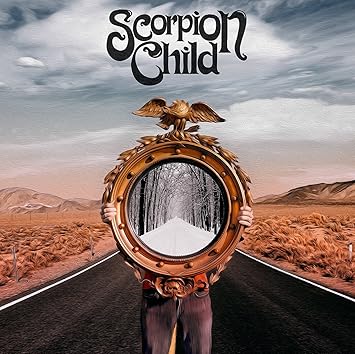
Scorpion Child - Scorpion Child

Provenance: Another overheated review by Classic Rock magazine led me to making this purchase.

Review: There's a reason why, when my Classic Rock subscription lapsed last month, I haven't exactly jumped to renew. Whilst the featured articles are pretty good (when they're not 'listicles' - do I really give a fig about the '50 greatest guitar solos in rock history'? The answer is no I don't) the reviews section is full of shit. True, if it weren't for glowing write-ups of early Ultravox or Robin Trower's Go My Way I probably wouldn't have rolled the bones, but for every Ha! Ha! Ha! there's been a We're Here Because We're Here (NB: this corpulent monstrosity of an album garnered a '9/10' review from the pie-dribbler on prog duty that month).

Yet here I am again, failing to learn my lesson. I'm worse than those Sonic the Hedgehog man-children whose entire lives are spent whining about bad computer games on YouTube. At least those fellows possess some kind of fealty, albeit to anthropomorphic road-kill. I have no excuse, my ambivalence towards Classic Rock's reviews section was crystallised many moons ago and yet I still return to drink from the well. And thus, Scorpion Child.

Let's start with their name, as it sets the tone for everything else. Like everything else associated with this band it feels derivative, like a muffled echo of something infinitely better. You can imagine a band called Scorpion Child playing gigs at the local rugby club, and they'll even throw in a Bon Jovi cover just to keep everyone happy. And the songs? They've got names like 'Salvation Slave', 'Liquor', 'In the Arms of Ecstasy', 'Paradigm' and, er, 'Polygon of Eyes'. Aside from that last one (what the hell?) they must've taken all of two freaking minutes to come up with. 'Salvation Slave'?? Puhhh-leazzze. Utterly cringeworthy.

Still, you'll be relieved to know that Scorpion Child, at least on the basis of this self-titled nugget (of what, you may ask) do indeed sound like a competent bar band who have struck upon the idea of "playing badass hard rock, like Led Zep or Deep Purple, but with a modern twist", the latter meaning that the production is loud and clippy. Scorpion Child is a bunch of riffs bolted together underneath the interminable wailing of a guy who, one suspects, imagines himself to be a latter day Glenn Hughes, albeit if the Voice of Rock possessed an irritating Roger Chapman bleat to his vibrato and also sucked a bit.

Don't misunderstand me, these guys can play. They're perfectly adept at playing riffy heavy rock, and I'm sure they'd be fine as the backdrop to a few cold ones. A bit sluggish, a tad pedestrian in places, rather too familiar overall, but it's fine. It's fine. And that's the problem. Nothing grates on me more, musically speaking, than bang average. I've got time for virtuosity, I love a glorious failure, god knows I love a trier; and by all means, do something creepy and weird in your basement, I'll lap it up. But if there's no craft, no spark, no inspiration (in whatever form that might take) then I struggle to maintain interest. The guys in Scorpion Child are no doubt committed and passionate about what they do, yet I can't help but feel that instead of a fire-breathing demon of an album, they've created a facsimile of one.

Stale, predictable and one-pace - all words you can use to describe my blog, but applicable to this album too. And yet whilst I struggle to delineate any real plus points (I guess the Geddy Lee impression on 'Antioch' is pretty good), there are others who really dig what Scorpion Child are serving up. Like, really dig it. Good for them, but not really my cup o' char, I'm afraid.

Sunday, 29 April 2018

Brown Acid: The First Trip - Various Artists

Provenance: I can't quite remember where I read about this collection, but the concept behind it intrigued me: once the Summer of Love had petered out into paranoia and ennui, darker, bleaker sounds started to permeate the counter-culture. The rise of bands like Blue Cheer, Steppenwolf and Iron Butterfly in the USA (and Deep Purple, Black Sabbath in the UK) heralded a turn inwards; pain, confusion and angst bubbled away under thick slabs of Hammond organ and fuzzed-up bass. As you can imagine, most of this was very cool.

However, not every band was destined to enjoy the success of the aforementioned artists. Hell, many didn't even get to release a full-length album (though Night Sun did, and that's some shit you need to check out). It doesn't necessarily mean they sucked, however.

As somebody who is well, well into the original Nuggets compilation (the greatest ever compilation album?) I am the perfect rube for a collection of obscurities from the hard rock / heavy psych scene. Fortunately, the good folk at RidingEasy Records have got me covered with their lovingly curated Brown Acid series. Not only do I get to listen to bands with hip names like Raw Meat, Bacchus, Snow and Josefus, but the label ensure that all the artists featured get paid for their efforts. I'm all for fair-trade downer rock 'n' roll. I got the first four instalments for Christmas last year, so without further ado let's take the first trip together...

Review: I think the highest compliment that can be paid to Brown Acid: the First Trip is that each and every track has made me want to crank my amp, plug in my wah and wail away with pentatonic abandon. As the liner notes state, some of the cuts here are not much more than demo recording quality, but Steely Dan aside, since when has perfection begat true genius?

That's why I'd rather listen to the slightly out-of-tune stun guitar on Snow's 'Sunflower' pummelling my ears into submission than the pabulum served up on top forty radio. I can't be sure as I wasn't there, but songs of this ilk sound like they were played by people who gave two damns about rocking out, or perhaps just wanted to impress the local girls; either way, two noble ambitions.

There's no little ability here either, though if I was going to try making comparisons with better-known artists, I'd be hard-pressed to veer from Uriah Heep. In a good way, most every band on Brown Acid I sounds like Uriah fucking Heep. If David Byron sang on Zebra's 'Wasted' and you told me it was Uriah Heep, I would've believed you. I guess some songs sound like early Edgar Broughton Band, and Bob Goodsite's quirky instrumental 'Faze 1' could be a funky Groundhogs album cut, but listen; if you like bell-bottoms, Les Pauls, the Open Mind's 'Magic Potion', patchouli and lava lamps, absolutely nothing on this collection is going to disappoint you. Absolutely nothing.

Still, me being the contrarian I am, the cut that really stands out for me is the most atypical of the bunch. Fizzing with the kind of upbeat groove that powered Edgar Winter's 'Free Ride', Texan band Josefus' 'Hard Luck' is perfect road trip fodder. A significant element of the pure enjoyment this song engenders comes from the hyperactive, elastic vocal performance by Pete Bailey. It's difficult to describe, but if you can imagine if Arthur Brown (he of 'Fire' fame) was born west of the Mississippi you'd be in the right ballpark. Approximately.

If any of what I've written has sparked an interest I'd urge you to head on over to RidingEasy and drop some notes on Brown Acid: the First Trip. For that matter, just in case I don't get around to reviewing the subsequent albums in this series, I can recommend trips one through four. Whether it's the bludgeon of Zekes' 'Box', the witchiness of Lenny Drake's lo-fi swamp-psych 'Love Eyes (Cast Your Spell On Me') or the Todd's (great name) lysergic tub-thumper 'Mystifying Me', there's something for all the family!

Monday, 17 July 2017

Fireball - Deep Purple

Provenance: Deep Purple feel like a rite of passage for anyone who professes to be a fan of heavy rock. There are certain bands - Led Zeppelin, Black Sabbath and Deep Purple off the top of my head - which one is expected to be able to speak about somewhat intelligently, at the least. Being utterly conformist in almost every regard, I have unquestioningly accepted this orthodoxy and have subsequently amassed a small collection of Deep Purple albums.

The problem is, I don't really like Deep Purple.

Their music, I admit, can be sensational. In discussions I've always advanced Ian Paice as one of rock's great drummers, and I love the way Ritchie Blackmore borrowed as much from the classical music palette (most obviously the harmonic minor scale) in his soloing as he did from more traditional blues-rock sources. That said, I don't think the individual elements of Deep Purple's sound always meshed together successfully.

However, away from the strictly musical side, in a business where arrested development is positively encouraged, Deep Purple have always seemed uniquely petty. Stupid squabbles, questionable decisions and unpalatable personalities litter their history. And although it shouldn't, I've allowed this side of Deep Purple to colour my thoughts on the music, making their pomposity and pretentiousness even more risible than it already is.

But here at Swinetunes we're (NB: I, there's only one person typing this dreck) all about giving bands a fair shake. Let's see if Fireball stands or falls on its own merits.

Review: The good news: Fireball kicks out the jams with a stone cold classic in its title track. A strange, whooshing intro (apparently an air conditioning unit), some badass drumming and then we're galloping away. It feels taut, muscular and focused - qualities that rarely, alas, resurface on the rest of the album.

If 'Fireball' exemplifies everything that works, track two, 'No No No', is paradigmatic as to what I find dissatisfying about the album. The latter is ponderous, meandering and downright boring - aiming for a kind of heavy funk-rock sound, it has about as much soul as me dancing to a Trojan box-set after sinking a few Tyskies. Everything all sounds a little phoned in - not just the lyrics, which have been uniformly awful throughout Purple's lifespan - especially the late Jon Lord's Hammond organ noodling. It goes nowhere and takes a long time getting there.

Okay, I like 'Demon's Eye'. It has a dark pulse to it and a swaggering guitar riff that repeats throughout. I'd probably like it even more if Uriah Heep did it. (Deep Purple are, of course, a poor man's Uriah Heep.) So maybe I'm being a bit too harsh, yeah? You're allowed one or two clunkers on an album. The problem is that after 'Demon's Eye' wraps, things get worse. Much, much worse.

I know I gave Europe a bit of a shoeing when I reviewed them but I would take anything off that album - even 'Cherokee' - over the abortive mess that is 'Anyone's Daughter'. It almost feels like a bespoke attempt to provide me with reasons to absolutely fucking hate everybody involved in creating it. Nothing says 'mid 70s rock excess' than a bunch of guys indulging themselves with the most half-arsed attempt at country music "hilarity" than 'Anyone's Daughter'. The intro is literally the band playing like shit. Once it gets into gear, little improves - horribly unfunny lyrics, hammily delivered (even by his standards) by Ian Gillan, terrible sub-Chet Atkins guitar from Blackmore and embarrassingly plinky-plunky cod-barrelhouse ivory-tickling from Lord. A sense of 'this'll do' pervades - it's flabby, half-baked and seemingly tossed-off as an afterthought.

From this point onwards, this is, for me, the overriding sensation I take away from Fireball. Once upon a time rock music was young, vital, dangerous and exciting. I'm not atavistic with rock music; I accept and embrace the flavours it took on as it grew up and grew outwards, but at some point one of its offshoots morphed into this lumpen, portentous, grim-faced, self-important masturbation. It's not as if the musicianship is even particularly breathtaking. Is anyone really impressed with that interminable volume-swell guitar solo in 'Fools'? It neither serves to demonstrate Blackmore's virtuosity nor does it create a mood. It's just an irritant.

So that's Fireball - two good songs and a heaping spoonful of pompous crap. Honestly, go and listen to Europe instead; at least those boys sound like they were having a modicum of fun.