A blog about one man and his stupid music collection. Mainly about the music, though the man intrudes now and again.
Sunday, 26 June 2016
Painkiller - Judas Priest
Provenance: My friend the musician Ollie Hannifan recommended this back when he was the schoolboy Ollie Hannifan. I clearly recall Ollie tempting me in to the purchase by suggesting that, on this album, "they just don't stop."
Review: The first thing that needs to be said is that Ollie was wrong, as Painkiller stops at around the 46 minute mark. I get what Ollie meant though. Before its even cued up on the stereo your eyes are bleeding because the cover art work is so elite. A muscle-bound silver Corinthian warrior is riding a half-motorbike half-dragon contraption (in the sky), whilst below tower blocks are being engulfed in lava. You're sweating before you've even hit the play button.
It gets better. New drummer Scott Travis is immediately showcased with a pummelling intro to the title track, which duly explodes into some of the most full-on metal madness ever captured on tape. Nothing is left on the table. Lead-wailer Rob Halford (probably my favourite vocalist of all time) often uses his piercing falsetto as embellishment, but here he kicks off somewhere just inside the hearing range of canines and never lets up. He relents only in the pre-solo(s) mid-section but that's only so us mere mortals can hear him intoning 'Faster than a laser bullet / Louder than an atom bomb / Chromium plated boiling metal / Brighter than a thousand suns.' Bob Dylan this ain't (though Judas Priest take their name from a Dylan lyric), but I can't recall His Bobness ever dealing with mankind's destruction by alien cyborg monsters.
First track down and you're crying out for relief. No mate, because up next is 'Hell Patrol', then 'All Guns Blazing', then 'Leather Rebel'. Every single one of these rattles your skull, snaps your neck and boils your blood until you're left a limp bag of bones and, uh, anhydrous plasma (I'd guess). Hearing this power-metal-on-steroids sound is even more remarkable given that when Priest began at the dawning of the 1970s they happily sat alongside bands like Spooky Tooth and Atomic Rooster. Guitarist Glenn Tipton, who began playing guitar when the Beatles were a going concern, pulls off swept arpeggios like a player twenty years his junior - the sheer amount of practice required to operate at this level, put in by guys who could've rested on their laurels by the time this was released, is astounding. So, time for a respite and, perhaps a blood transfusion?
No chance - next up is 'Metal Meltdown', Halford screaming like a stuck pig before the song crashes into a grinding, fist-clenching chorus (which I can assure you does feature the phrase 'metal meltdown'). Another absolute juggernaut up next with 'Nightcrawler', one of those songs about indomitable hellbeasts that litter the Judas Priest back catalogue. Here, a bunch of people hide in the cellar from some bloodsucking anthracite menace, but...ah, I won't spoil the ending (but it doesn't end well! Everyone dies!). Then it's 'Between the Hammer and the Anvil', which is a gently whispered acoustic number with a strong Joni Mitchell influence. Not really! It fucking slays too.
You're pretty much on the home stretch before the pace abates somewhat with 'A Touch of Evil', which would sound heavy on any other album, but serves as Painkiller's ballad. For some peculiar reason I always get this confused with Defender of the Faith song 'Love Bites' when it's played live. I first saw Priest in 2004 when they headlined Arrow Rock Festival in Lichtenvoorde in the Netherlands. This was their first tour reunited with Halford and I had shaved my head and grown a beard so I could look just like him. They were amazing, but when the first bass note of 'A Touch of Evil' rang out, I was a lone voice in the crowd yelling "Yeaaaahh! LOVE BITES!", a mistake I doubled down on three years later. Can't see me ever getting this right to be truthful.
After a short instrumental called 'Battle Hymn' we're onto the final track, the valedictory 'One Shot At Glory', a track that wouldn't be out of place on a top quality Hammerfall or Helloween release. By the way, you're dead at this point, or comatose, or your blood has just turned into mercury. Different from anything else in the Priest catalogue, Painkiller is gloriously over-the-top, fun, intense, stupid and brilliant. It marked a fine conclusion to the first Rob Halford era.
Labels:
glenn tipton,
heavy metal,
judas priest,
metal,
painkiller,
power metal,
rob halford
Sunday, 19 June 2016
We Are KING - KING
Provenance: You wouldn't guess it to look at me, but when my body isn't being held together by gaffer tape I sometimes go to the gym. Anyway, I heard 'The Greatest' whilst getting ripped and felt compelled to explore further.
Review: Were I to indulge in a conversation with the sixteen-year-old version of myself he'd be incredulous to hear that I consider We Are KING to be the album of the year (so far). Here are a few problems:
1. No guitars
2. No fast songs
3. Not heavy
4. It's R&B
5. No songs about Satan, Wotan, etc
6. No guitars (edited to add: there are some guitars, but we're not talking some sweet-as Steve Vai soloing here).
I was, of course, a rock obsessed idiot back then, but fifteen years later We Are KING is an anomaly in my music collection. It's fair to say that the music I own is overwhelmingly white, male and guitar oriented. My saving grace is that I've become a smidgen more catholic in my tastes and a bit less ideological, inasmuch as I used to write off entire genres due to a lack of 'authenticity' (a concept that mostly stemmed from a perceived ability to play traditional rock band instrumentation).
Thank fuck I grew up and opened my ears a little, as We Are KING is a dreamy joy from beginning to end. Let's start with the single from the album that sucked me in, 'The Greatest', which sounds like a glorious throwback, like TLC's best slow-jam with an 8-bit filigree. It's woozy, weird, affirming and, with its nods to the late Muhammad Ali, poignant.
It also sets the tone for the rest of the album. Very rarely does We Are KING stretch its legs beyond a languid amble; 'Supernatural' is the only track that threatens to break into a sweat but settles into a gentle shuffle. The production matches the pace; liquid, warm and ambient. Regarding the vocals, comparisons with 1990s R&B are inescapable, diva virtuosity largely eschewed in favour of hushed, sensual intimacy. When all the voices are combined and recombined, the effect is not unlike the multi-layered and heavily treated vocals on an Enya album.
Throughout the mood is kept sweet and dreamy - 'Red Eye' exists in the same zone of peculiar half-somnolence one might experience on an transatlantic flight; the outro to 'Hey' dims the instrumentation down to a kind of background radiation, allowing the listener to lie back on a cushion of noise created by the group's whispered singing.
KING are Paris Strother, sister Amber Strother and friend Anita Bias. Paris must be considered the leader here; as well as singing, she plays and produces almost every sound on the disc, collaborated on designing the artwork and also owns a share of the publishing through her own company. We Are KING is totally the baby of a distinctive genius; many of the keyboard and synthesizer sounds Strother employs would sound at home on a 702 or Jade release but the end result comes across more like a knowing wink to that era rather than straight imitation.
It's nice to be blindsided by something that I wouldn't normally give a second thought to. My semi-frequent visits to the gym have yet to yield another doozy (and I might do something I'll later regret if I have Fleur East one more time) but it has reminded me that I shouldn't cocoon myself away in my headphones listening to hoary old favourites like Led Zeppelin and Judas Priest. Next review on Swinetunes: Judas Priest.
Labels:
amber strother,
anita bias,
king,
paris strother,
R&B,
soul,
the greatest,
we are king
Wednesday, 8 June 2016
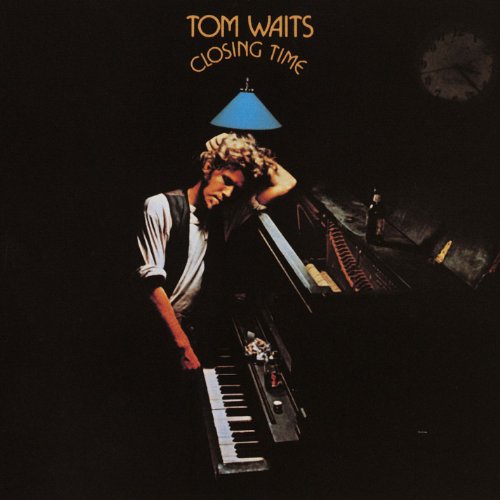
Closing Time - Tom Waits
Provenance: For my 29th birthday my partner bought me ten Tom Waits albums because I'm a cool guy with a great taste in music. Incidentally, my partner is reasonably hip too - certainly a better writer than I could ever hope to be.
Review: I'm actually starting at the start for once - this is Tom Waits' first album. Believe me, this'll be one of the few times where I don't play compact disc Jenga with my structurally unsound stacks of plastic.
Ten albums by an artist I had rarely, if ever, mentioned was quite a gamble. Hitherto, my partner's engagement with my music collection consisted of parodying the singing styles of Neil Young, Bon Scott and Brian Johnson. Getting married to me, it could be argued, was also a rash and poorly-evidenced decision so perhaps it's congenital.
What I did know of Tom Waits was that he was responsible some fairly experimental music (and one or two notable press conferences) so I was fully prepared for a journey to these weird hinterlands occupied by Captain Beefheart and Scott Walker. What I didn't expect was a slice of shaggy-dog Americana that evoked shades of Jimmy Webb, Nils Lofgren, the Eagles, Randy Newman and the aforementioned Neil Young. Formally, there's little to hint that this artist will one day produce Mule Variations or Swordfishtrombones; and at times, the music ploughs a very comfortable furrow down the middle of the road. I am, however, only telling half the story.
As it so happens, the lead-off track 'Ol' 55' would go on to be covered by the Eagles. It sounds like a goddamn Eagles song, aside from Waits' heavy-lidded drawl. The hiccup-bellow of later releases fails to make an appearance, even in embryonic form. What buoys this album is the twin brilliance of songwriting and sequencing. In just twelve short tracks Waits creates an entire universe of melancholy and longing. Even when Waits puts the wistfulness aside for a (brief) moment his music never quite escapes being anything more than bittersweet. In a psalter of hymns for the losers optimism is something that can only be fleetingly glimpsed.
In that sense Waits occupies the same territory as Newman, most obviously on 'Lonely'. However, where Newman often creates moments of wry levity to make his sometimes desperately sad songs a little more digestible, the best that Waits manages is the tired half-smile of a man down to his last nickel. This is not to his detriment; a chuckle on this album would be as incongruous and unwelcome as a fish head sticking out of a birthday cake.
The best thing on here by a country mile is 'Virginia Avenue', the album's jazziest number, a slow-rolling piano sharing space with lugubrious string bass and muted trumpet. You're out of the coffee house and into the dive bar, your nostrils filled with stale cigar smoke, your stomach burning with gut-rot whiskey. Personally, the primo stuff that Closing Time has to offer occurs when Waits packs his acoustic guitar away and gets behind the piano - 'Midnight Lullaby', 'Grapefruit Moon' and the title track standing out in particular.
As I type these words the final chords of Closing Time are melting away. From my window I see a cuticle of moon hanging above a silent town and a sea dark as pitch. It is one of those moments where senses combine to create an atmosphere that is positively filmic, like it's spilled off the reel of a classic noir. A touch of fog and a glass of bourbon (as opposed to Diet Pepsi) and it'd be somewhere close to perfect.
Labels:
closing time,
eagles,
randy newman,
tom waits,
waits
Thursday, 2 June 2016
Dream Police - Cheap Trick
Provenance: Already a big Cheap Trick fan when I got this for Christmas recently.
Review: So how was it that rock n' roll that was particularly catchy gain a whole new genre called 'power-pop'? And why, until recently, was it so maligned? Its recent rehabilitation runs counter to another baffling trend that has seen some hip young gunslingers namedrop Steely Dan as an influence. Steely Dan have never been shit (check out who's hosting that performance, by the way), and it's not like power-pop all of a sudden became listenable again. Ho hum.
There were, of course, some very catchy, very good artists who preceded Cheap Trick in wrapping their pop confections around a rock formula. They were overtly influenced by bands such as The Beatles, Badfinger, The Move and Electric Light Orchestra, all of which can be heard on Dream Police. Likewise, echoes of this album would go on to appear on releases by luminaries such as The Cars, Jellyfish and Material Issue. To me it all feels like a continuum of style, but what do I know? Besides, we all rely on shorthand to condense our field of reference to some degree.
Time to quit griping about the arbitrariness of the assignation of genre. Let's talk about Dream Police. I'm sure that one of these days I'll come across an album in my collection I don't care for but today is not that day. Dream Police is every bit as colourful, punchy and entertaining as a fat man in a Hawaiian shirt connecting with every haymaker he throws.
If we are to accept the existence of a power-pop template, then some of the tracks of this album fit like a pair of crushed-silk loon pants. Both the title track and 'Voices' are awash with keyboards and strings, thrusting towards widescreen climaxes in the choruses; the former a bouncy trip through insomnia-induced paranoia, the latter a gorgeous slow-burn ballad about insomnia-induced paranoia. Cheap Trick never play with a straight bat.
Elsewhere, things get a little more raucous - 'Way Of The World' is essentially a series of hooks that rush by one after the other, whilst 'The House Is Rockin'' is a bubblegum dust-up, one of Cheap Trick's most underrated tunes that seems to be over in a fraction of its billed five minutes. In typical CT fashion, infectious pop masks lyrics about domestic strife (and this is by no means the darkest subject they've sprinkled a bit of sugar over).
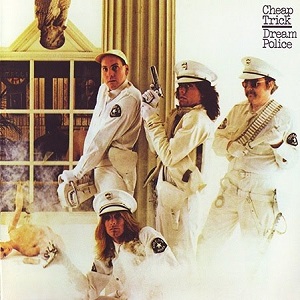
But that's Cheap Trick all over - crashing the seemingly irreconcilable together and making it feel entirely natural. Like the best bands, that concept extended further than just the music, and so you have a band with two pretty boys in vocalist Robin Zander and bassist Tom Petersson and a couple of unconventional looking fellows in drummer Bun E. Carlos and guitarist Rick Nielsen. The cadaverous Nielsen fully embraced his unusual appearance, doubling down by dressing in baseball cap, cardigan and bow tie whilst wielding comedy multi-necked guitars.
Cheap Trick would also break the unwritten rule "don't bore us, get to the chorus" with the inclusion of both 'Need Your Love' which extends beyond seven minutes and 'Gonna Raise Hell', which tops out at over nine. Neither features the lush orchestration or major-key thrum of most power-pop - 'Need Your Love' stands out as a nervy, ominous crawl, Zander's voice floating above the music that produces an effect that is more eery than angelic. It's an extraordinary performance on an album where Zander swoops, soars, caresses and stings - one he replicated flawlessly when I caught them in November 2010.
Gimmickry aside, Nielsen's a fine musician. His guitar solos are less a careful construct than a technicolour explosion of energy, stacking twisty half-bends and ticcy double-stops on top of each other. On the faster tracks Nielsen's guitar does nothing quite so dull as chugging away on power chords, choosing to dart in and out of Zander's vocals and Petersson's bright, melodic bass lines. Part of the fun is that Nielsen often sounds on the brink of spiralling out of control. Of course, he never does.
Dream Police ("police...police...") is a masterful album, bursting with spark and creativity. It's a consummate articulation of the power-pop genre without ever truly fitting the mould. Contrary? Sure, but so's a baseball cap matched with a bow tie.
Sunday, 29 May 2016
Spectres - Blue Oyster Cult
Provenance: I'd heard '(Don't Fear) The Reaper' on a rock compilation my dad bought and instantly declared it to be the best song ever written. So when I came across this in a secondhand shop for a fiver I had to buy it.
Review: Between the ages of about 15 to somewhere in my mid-twenties, Blue Oyster Cult were my life. I've seen them more than any other act. I have all their albums. I even interviewed bassist Joe Bouchard for my school newspaper. Between BOC, Championship Manager and active membership of an eFed, that I even so much as kissed a member of the opposite sex during this period is incredible.
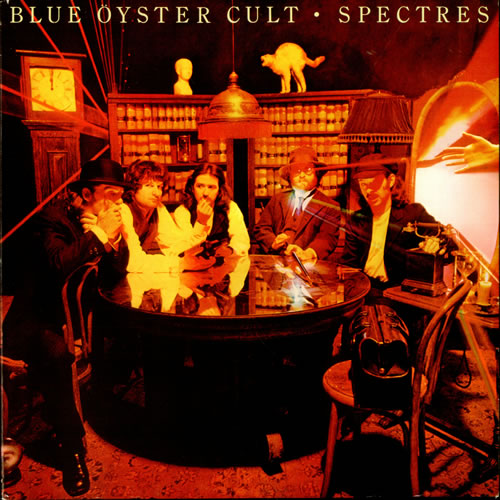
The catalyst of '...Reaper' aside, this is where it all began for me. I am a callow youth with ten whole pounds to spend when I spy this in the racks. By this point it is already established that these hombres are responsible for the greatest song of all time. The album cover confirms my initial suspicion that BOC are the baddest band on the planet. There they are, hanging out in some weird badly-lit occult library, dressed to the nines and looking nonchalant because they're always holding cool seances and pissing off the cat with manifestations of ectoplasm and the like. The sleeve artwork alone should've guaranteed platinum status.
Now, some critics think Spectres is where BOC started the nosedive into generic pop-rock pabulum, one that would only be arrested momentarily by Fire of Unknown Origin. Some locate the tipping point as side two of Agents of Fortune. As a fan I completely understand, and objectively I might consider the first four studio discs to be the band's best output. But Spectres was special - like a first beer, or the first time you win promotion to Division One with AFC Bournemouth on Championship Manager 2. How do you go about explaining that magic?
Fortunately, the album kicks off with a true Cult classic - 'Godzilla', a song so potent that I was once assaulted on stage for playing the solo like a complete badass. If you're looking for the skittery, twisted mysticism of earlier BOC then look elsewhere - this had a big, dumb riff, lyrics about the scaly rogue terrorising downtown Tokyo and a Japanese spoken word section that I always had to do because nobody else in my band could remember how it went. Racer X do a splendid cover. It's difficult to resist a chorus hook that goes 'Oh no! There goes Tokyo!'
Other highlights, in order(ish): BOC were never much of a 'ballad' kind of band (and often not great when they gave them a shot) but 'Death Valley Nights' is up there as one of my favourite tracks they ever did. 'Golden Age of Leather' features buzzsaw guitars and a male voice choir to kick off proceedings. Meanwhile, the lilting arpeggios of 'Fireworks' propel the song towards one of Buck Dharma's best solos; I believe Jason Newsted said Dharma's playing was "like hot needles in your ears", which is brilliant but doesn't quite capture the agility and fluency that made his playing so distinctive.
Side two contains 'Celestial The Queen', which sounds like a Blue Oyster Cult / Electric Light Orchestra mash-up, and yet another decent ballad(!!) in 'I Love The Night', a stately attempt at ethereality which mostly comes off. My favourite moment comes in the form of the schlocky vampire yarn 'Nosferatu'; I find it hard to dislike any song that begins with the line 'Deep in the heart of Germany, Lucy clutched her breast in fear'. Canny stuff.
If I allow myself some critical distance, this is the album where the filler creeps in. The cod funk of 'Searchin' For Celine' never gripped me despite its clever lyrical allusions whilst 'Goin' Through The Motions' is a good example of nominative determinism. I've heard other fans slating the Capek-inspired 'R U Ready 2 Rock' as a bit one-note and generic but it's really grown on me over the years. Plus the title is indisputable proof that Prince, like all good people, was a huge fan of 'the Cult'.
Compared to other analyses, I'm only landing glancing blows. There are fans out there who truly count Spectres as a disappointment, or even a betrayal to BOC's roots. I could never be so hard on an album I've listened to countless times, one that set me off on a journey to fandom (and beyond) and most importantly, one that unfailingly evokes the most pleasurable of memories.
Labels:
blue oyster cult,
boc,
buck dharma,
godzilla,
joe bouchard,
nosferatu,
racer x,
spectres
Sunday, 22 May 2016
Balls To The Wall - Accept
Provenance: Bought this in preparation for an Udo Dirkschneider gig in May 2016, which was billed as his last time ever singing Accept material (beard on).
Review: I have a lingering affection for Germany, having spent some considerable time there in the early years of this century. Most of it was spent in Berlin. Waking up each morning I would turn on the radio, tuned to Spree FM, and waited for my morning dose of Depeche Mode. I was rarely disappointed. If the Basildon gloomsters failed to make an appearance I could always look forward to Phil Collins, such was the predictability of Spree FM.
I spun the dial this way and that in search of something with a bit more welly. No cigar. Germany has a strong rock and metal heritage but it seemed, at least in those days, that nobody was willing to give it an airing on the airwaves. Speaking to people, you got the impression that German rock was a bit of an embarrassment. Rammstein had a certain amount of cultural capital, but any mention of the Scorpions was likely to elicit a wry chuckle and a flippant remark about 'Winds of Change'. Fair enough, it's a shit song alright, but the Scorps had some great material and remain to this day a solid live act. Nobody knew who Accept were.
What a shame. During the 1980s Accept released a trilogy of brilliant albums, of which Balls To The Wall ranks at the forefront. I'll go one further as to say it was one of the best metal albums of the entire decade, by any band. Accept took the hard-driving metal template and twisted it around eminently hummable choruses. The production is crisp. It doesn't hurt that the title track is a true metal classic.
In addition, Accept had a secret weapon - vocalist Udo Dirkschneider. Along with Halford, Dio and Dickinson he was one of the decade's most distinctive singers, which is just as well as he w.as a strange looking character. Here he is wearing his Action Man pyjamas, demonstrating just why he was so important to the overall Accept sound. That razored larynx, permanently pitched between a snarl and a scream, gives the album an added element of aggression and helps to elevate Accept's primo output to the top tier of metal.
Dirkschneider's lacerating vocal style is first heard in the chorus to 'Balls To The Wall', a wonderful mid-paced prowler with a huge intro riff and numerous screech-along moments. 'London Leatherboys' sounds like Killing Machine era Judas Priest, it's fist-pump chorus simultaneously preposterous and irresistible. Elsewhere, 'Love Child' is a lacerating head-rush (and one of the few metal songs of the age to tackle the issue of sexuality) whilst 'Winter Dreams' is a stately, strangely affecting conclusion to the album that transports the listener to Udo's own personal alpine fantasyland.
Yet it's an inescapable fact that this album is also pretty funny, due in no small part to the less-than-fluent English deployed throughout. Commercial realities meant that Accept needed to sing in English if they were to entertain any notion of success outside of their home territory. One of my favourite lines in the entirety of recorded music occurs early on, when Dirkschneider mutters "let's plug a bomb in everyone's ass. 'London Leatherboys' is a hot cut fresh from the Tower of Babel, its title alone veering dangerously into Tobias Funke territory. 'Head Over Heels' manage to sound both incomprehensible and perverse at the same time.
What the fuck, though. I couldn't write a song in German. It's all rather churlish to make fun when the music is so bloody excellent. I had the good fortune of seeing Udo Dirkschneider in London this year playing Accept songs for the final time (or so he says). That a large swathe of Balls To The Wall got an airing is testament to the popularity and durability of this release. When his band played 'Balls To The Wall' the crowd went nuts. I went nuts. An essential part of any serious metaller's collection.
Sunday, 16 June 2013
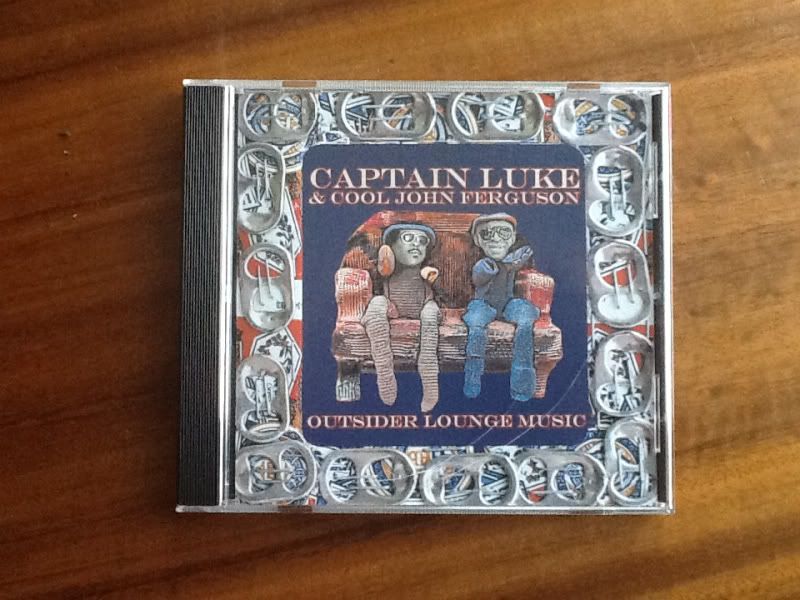
Outsider Lounge Music - Captain Luke and Cool John Ferguson
Provenance: Saw an excellent documentary on the Music Maker Relief Foundation about the work they do helping musicians from the American South. From paying utilities bills to getting the performers back on stage, they do a lot of good work. They're nice people to boot - so go help them out!
Review: I first caught sight of the charismatic Captain Luke in the superb documentary Toot Blues, profiled as one of a group of musicians who have been assisted by the Music Maker Relief Foundation. Amidst a slew of great performances, a real stand out for me was the Captain's rendition of 'Rainy Night in Georgia'. The fact that this CD contained another Tony Joe White number, the immortal 'Polk Salad Annie', helped to swing my decision to make the purchase.
There is always a sense of trepidation when approaching an album such as this. What if it's terrible? Perhaps even worse, what if I'm only left with the traces and fragments of the artist's talent, hints at the man's former gifts peering through sporadically as a faded palimpsest? After all, Captain Luke was in his mid-seventies when this was recorded, a time when most people are well into their retirement. In addition, it seems especially cruel to criticise such a worthy endeavour - buying an album from the foundation isn't about generating royalties or exposure, but it could mean an extra bag of groceries for somebody who's fallen on hard times.
Thank goodness, then, that 'Outsider Lounge Music' not only comes up to snuff but exceeds all expectations. From front to back this album is an utter joy. The foundations of this recording are rock-solid, from the immaculate song selection to the unfussy production, but there are two stand-out elements that really make the album shine.
The first is Captain Luke himself, or rather his wonderful, warm baritone, full of personality and an understated authority. Although he performs admirably on jaunty numbers such as 'Old Black Buck' (a Captain Luke composition) and 'Put On Your Red Dress', it's on the ballads where he really sparkles. Luke is nothing less than a master at tackling the slower numbers, his voice tinged with tenderness, sadness and regret. Nowhere is this better exhibited than on the aforementioned 'Rainy Night in Georgia' and the doleful 'Still Water', a song redolent of lonely Southern nights.
The second factor that pushes this album into the higher echelons is the masteful guitar playing of Cool John Ferguson. The listener is left with the impression that Ferguson can play pretty much anything he's minded to. He brings a welcome jazz sensibility to the slower numbers, evoking George Benson and Wes Montgomery amongst others. When the tempo rises, Ferguson demonstrates a busy picking style underscored with impeccable technique and inventiveness. Although ostensibly accompaniment to Luke, on 'Polk Salad Annie' its the singer who anchors the song, Ferguson scurrying around the vocal with some breakneck bluesy improvisation.
'Outsider Lounge Music' is a potent brew of soul, blues and jazz, performed with evident vim and relish. A fine achievement for anyone, but it's almost disgustingly good considering that Captain Luke was crafting this fine testimony at a time where most others are content to trade on former glories.
Friday, 7 June 2013
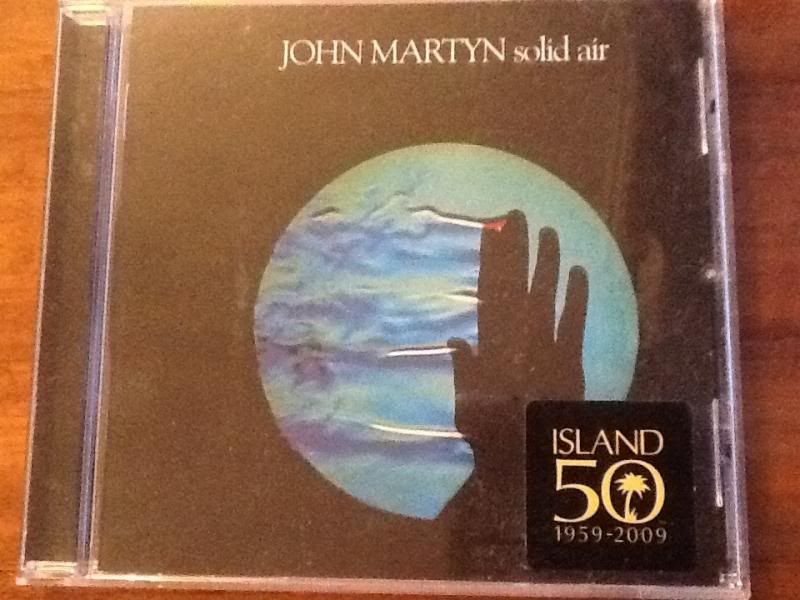
Solid Air - John Martyn
Provenance: My parents heard a documentary about John Martyn on the radio and bought the album. I loved it and bought it for my wife. Now it's been subsumed into the collection.
Review: I feel something almost akin to shame when I reflect on the fact that I hadn't heard of John Martyn until the age of 26. It's very possible that I glossed over his name in an article or two but to my discredit I paid absolutely no heed.
As a teenager, I spent far too much time listening to Joe Satriani, Steve Vai and (whisper it) Yngwie Malmsteen. Unless you could rattle off half a million notes on guitar with your fucking tongue or something, I didn't want to know. We all do stupid things when we're young, and mine was listen to shred. Even worse, I would then hold everything else through the prism of shred. Neil Young was a whiner with a band who couldn't play. Roy Orbison was some blind guy that sounded like he was crying all the time. John Martyn didn't exist.
It's all behind me now, though the odd Satch album gets a spin when I'm feeling particularly masochistic. Solid Air, on the other hand, is played on an almost weekly basis.
I was hooked within twenty seconds of pressing play, not least of all because of the extraordinary singing. It managed to be both alluring and alienating, the natural warmth of Martyn's voice undercut by the slurred drawl which renders every other word incomprehensible. The music was no less compelling, a woozy combination of folk and jazz, electric piano riding over finger-picked guitar to glorious effect. One of the real stars of the album is Danny Thompson, whose elastic double-bass playing provides a languid counterpoint to Martyn's flurrying, cascading arepeggios.
Why pick out individual songs? "Over the Hill" is a carefree strummer featuring spiky rhythm mandolin from the great Richard Thompson. "I'd Rather Be the Devil" is a thrilling deconstruction of the haunting Skip James classic, Martyn's Echoplexed guitar spinning notes off into the cosmos. Meanwhile, "Go Down Easy" is a heavy-lidded, seductive slice of minimalism and "May You Never" is sweet without crossing the line into saccharine (though Eric Clapton managed the dubious achievement of rendering it both sickly and soulless. Nice job, Slowhand).
I'm hardly flirting with originality by proclaiming this one of the defining albums of the British folk scene, if not British popular music. It's sublime, and nothing else sounds like it. What else is there to say? Buy it.
Labels:
British folk,
danny thompson,
john martyn,
solid air
Tuesday, 28 May 2013
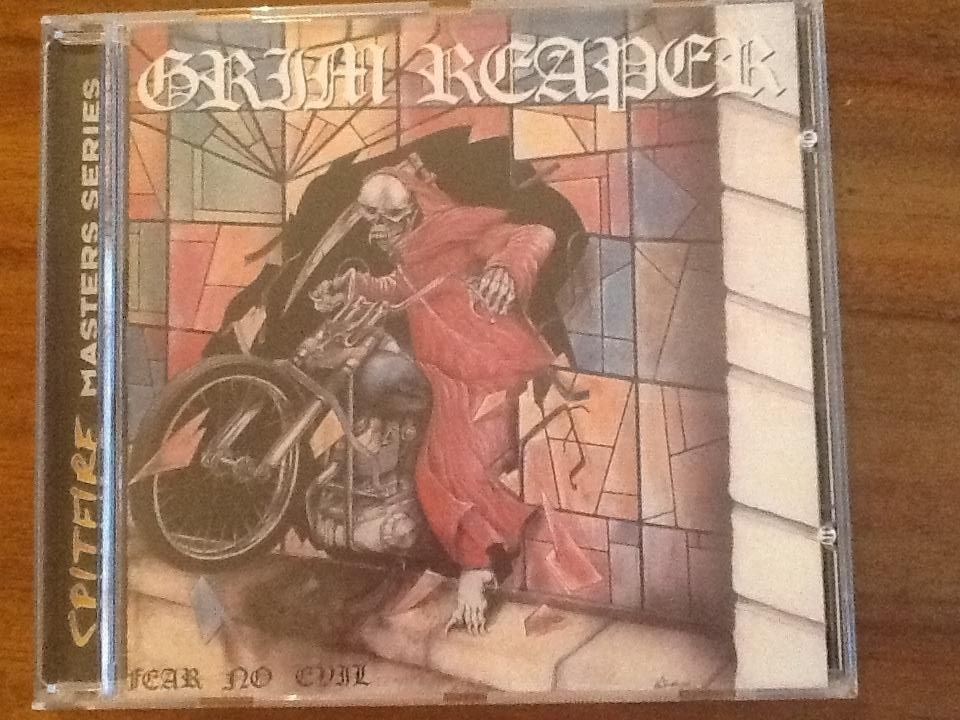
Fear No Evil - Grim Reaper
Provenance: I saw the video of the title track being torn apart on Beavis and Butthead. I knew right away that I needed the album.Review: Aside from NWOBHM die-hards who may have bought this the first time around, I imagine the majority of people alert to the charms of Grim Reaper were introduced via Mike Judge's finest creation to date. As a way of announcing yourself it was hard to beat.
You see, the video to 'Fear No Evil' was truly something to behold. Amazingly, given that the budget for recording the album must have been no more than six or seven quid, Grim Reaper somehow sourced an amphibious landing craft for the opening shot. Sailing up what appears to be the Aylesbury stretch of the Grand Union Canal at 4am in the morning, you half expect to see some poor carp angler hunched over his keepnet as the heavy metal juggernaut chugs past.
Grim Reaper then reach their destination (a warehouse) where a man in a bad Hallowe'en mask has captured about eight spotty headbangers (i.e., Grim Reaper's entire fan base) and put them to work grinding corn. The band, taking umbrage at this ghoulish welfare-to-work scheme, set about liberating the callow youths using the power of metal alone. The only real shame is that GR didn't don any masks or hoods themselves as they are spectacularly unsuited for the video medium, least of all the wonderfully-monikered lead-screamer Steve Grimmett.
So, what of the music? It's...fantastic. Genuinely. The only misstep, musically speaking, is the laboured and unfunny introduction to 'Final Scream'. Not only does it jar by trying to introduce a note of humour, it also kills the momentum stone dead. The rest of the album, until that point, had been nothing more than some of the most wild-eyed, hysterical metal committed to tape. The intro to 'Final Scream' brings it all stuttering to a halt and the track, one of the album's weakest, never quite reclaims the lost territory.
If it seems like I'm labouring the point, it's because the rest of the album is so endearingly insane. Grimmett sounds like Rob Halford after electro-shock therapy; I can't make any useful comparison in terms of tone, however, because whilst Halford regularly dips into his rich mid-range Grimmett seems to be on a personal crusade to belt out every note as if it were his last. Even through the rickety production, the power of the Grimmet pipes is evident, as is guitarist Nick Bowcott's dexterity. How do they fare on the ballads? There are no ballads.
That's not to say that it isn't derivative; it is. Almost every heavy metal cliche in the book is ticked off, then revisited again - and again - but it's done with such aplomb and sincerity that you want to believe that thunder will roar, that fights will be carried to the end that what you're hearing is genuine, one-hundred percent proof red hot rock 'n' roll. As you can probably tell, the lyrics could've easily been written in crayon - nobody is going to confuse the Grimmett/Bowcott partnership with Lennon/McCartney or David/Bacharach in a hurry, but nor would they wish to.
Glorious stuff. Grim Reaper were never in the first rank, or even second rank of British metal bands. It doesn't matter; this is one of those albums where you can hear the sweat pouring out of the speakers. So, are we left with nothing more than a quixotic triumph of perspiration over inspiration? Not a chance; this is fine, fine metal music made with passion and, dare I say it, love.
Labels:
fear no evil,
grim reaper,
grimmett,
nick bowcott,
NWOBHM,
steve grimmett
Welcome to Swinetunes
A while ago my partner suggested that I should do something with my album collection. I chose to ignore 'throw it in the trash' and instead plumped for reviewing every CD I own. I have no idea quite how many CDs I have, nor am I of a disposition to care. All I know is that month on month the number grows whilst our apartment remains the same size.
Here are a few caveats:
- I make no claims to be a great writer. The reflections here are mine alone, or relate to the things that are important to me. If I go off on a seemingly irrelevant tangent, please deal with it or go somewhere else
- I won't try and psychoanalyse every last semibreve or inhalation of air. Sometimes I will talk about individual tracks, sometimes I may focus on the album as a whole
- Four star album? An eight out of ten? I can't think of a more asinine way to describe music, save for writing about it. This blog will probably contain enough stupid without me ascribing a star rating to an album
- I'm pretty lazy, so don't be dismayed if I don't add anything for a while. I'm probably asleep or watching University Challenge
What do I want out of this? Fundamentally, I want to enthuse people about music. I'm not solely talking about the music I love (though that would be great), but for readers to think of music as more than just a statement or something to be traded off as cultural capital. Sit back and enjoy, or bang your head furiously - I'll be doing one or the other.
Labels:
hello,
intro,
music,
swinetunes
Subscribe to:
Posts (Atom)